China Top Valve Automation Manufacturers for Global Buyers

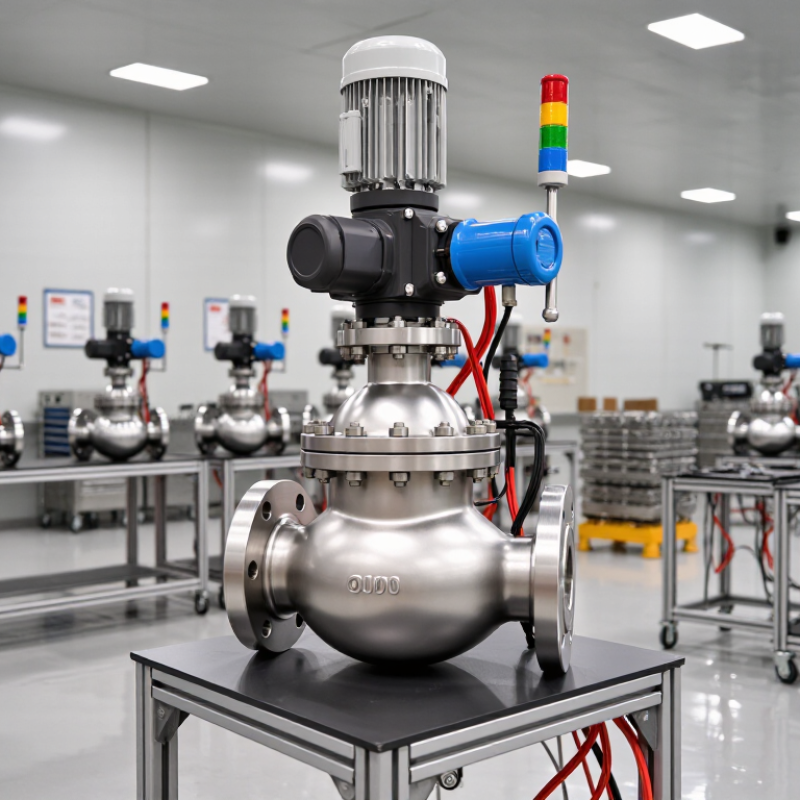
China Top Valve Automation Manufacturers for Global Buyers is a practical guide for engineers, procurement teams, and distributors evaluating industrial suppliers. Valve Automation now supports safer flow control across water treatment, oil and gas, chemical processing, power generation, and manufacturing. A motorized actuator turns a manual valve into a controllable system. On a factory floor, that can mean faster isolation, steadier pressure, and fewer maintenance visits.

Market reports show why this sector deserves careful attention. MarketsandMarkets projects continued growth in the global industrial valves market, driven by infrastructure upgrades, process automation, and energy investment. Grand View Research also identifies automation, digital monitoring, and smart manufacturing as important market trends. However, published forecasts vary because researchers define valve categories differently. That limitation matters. Buyers should not treat one headline figure as a purchasing decision.

Reliable supplier selection requires evidence beyond a polished website. Manufacturers should demonstrate actuator torque testing, enclosure protection, material traceability, and documented quality procedures. ISO 9001 certification can indicate a structured quality system, but it does not replace product inspection. Buyers should also review ISO 5211 mounting compatibility, control signal options, fail-safe performance, and local service capacity. Small details matter. A stainless-steel nameplate, clear wiring diagram, and traceable test record can reveal more than a sales presentation.

This overview compares Chinese manufacturers through practical criteria, including product range, engineering experience, certifications, export capability, customization, and after-sales support. Some supplier information may change. Verification remains essential. Factory audits, sample testing, and reference checks help global buyers separate durable capability from attractive claims. That process is slower, but usually safer.

China Top Valve Automation Manufacturers for Global Buyers

Definition and Role of Valve Automation in Modern Industry

China Top Valve Automation Manufacturers for Global Buyers

Definition and Role of Valve Automation in Modern Industry

Valve automation combines an actuator, positioner, sensors, and control logic to operate process valves accurately. It converts a control signal into physical movement. Operators can adjust flow, pressure, temperature, or isolation without constant manual intervention.

Its value appears in ordinary details. A pneumatic actuator can close a steam valve within seconds during a pressure rise. A digital positioner can detect travel errors before leakage becomes visible. According to the MarketsandMarkets Industrial Valves Market report, the global market was projected to grow from about USD 78 billion in 2023 to over USD 97 billion by 2028. This expansion reflects wider process automation in energy, water treatment, chemicals, and manufacturing.

Automation also supports safer and more efficient operation. The International Energy Agency reported that industry consumed about 37% of global final energy in 2022. Better valve control can reduce throttling losses, unstable heating, and unnecessary pump demand. However, automation is not magic. A poorly sized actuator may respond slowly. An incorrectly tuned positioner can cause hunting, vibration, and premature seat wear. Field experience shows that installation quality matters as much as the equipment itself. Dust, moisture, incorrect air pressure, and weak calibration can quietly undermine a sophisticated control system. Buyers should therefore examine lifecycle support, diagnostic functions, enclosure protection, compliance documentation, and spare-part availability, not only the initial purchase price.

Key Types of Automated Valves and Their Industrial Applications

China’s valve automation manufacturers supply solutions for water treatment, energy, chemical processing, and general manufacturing. Global buyers should match valve design, actuator type, and control requirements before selecting equipment. A poor match can cause leakage, slow response, or unnecessary maintenance.

Automated ball valves provide quick quarter-turn control for clean liquids, gases, and isolation duties. Butterfly valves suit large pipelines because they are lightweight and space-efficient. Globe valves offer finer throttling for steam, cooling water, and process lines. Gate valves work well for fully open or fully closed service, but they are not ideal for regular flow adjustment. Pneumatic actuators respond quickly and perform reliably in repetitive production cycles. Electric actuators support precise positioning where compressed air is unavailable. Control valves need careful sizing, especially when pressure drops fluctuate. Small details matter.

Tips: Check media compatibility, pressure class, temperature range, fail position, and connection standards. Request test records, material certificates, and actuator cycle data. Confirm local service support before ordering. In practice, published specifications may not reveal installation problems. Pipeline vibration, wet air, or incorrect wiring can reduce performance. A site survey is still worth the extra day.

How to Evaluate China’s Top Valve Automation Manufacturers

Choosing among China’s top valve automation manufacturers requires more than comparing online catalogs. A reliable evaluation starts with application details: valve size, medium, pressure range, temperature, cycle frequency, and control signal. Ask for drawings, material certificates, actuator torque calculations, and recent inspection records. Experienced manufacturers should explain their selection clearly, not simply recommend the most expensive configuration. Their engineers should also understand fail-safe requirements, enclosure ratings, and corrosion risks in your operating environment.

Visit the production site when possible. Observe machining, assembly, wiring, and final testing. A clean test area matters, but it is not proof by itself. Request a sample inspection using your own acceptance criteria. Check response time, leakage, torque performance, signal accuracy, and manual override operation. Review how serial numbers connect each actuator to test reports and component records. Confirm whether spare parts, commissioning support, and technical documents are available in your language. Small gaps often become costly delays.

Tips: Compare at least three qualified suppliers. Ask identical technical questions. Verify certificates with the issuing organization. Inspect packaging details, especially for long-distance transport. Clarify warranty exclusions and response times before signing. A factory may present impressive equipment yet lack stable process control. I have found that honest answers about limitations are often more valuable than polished promises. Also, do not judge quality from price alone; an inexpensive actuator can create repeated downtime and difficult field adjustments.

How to Evaluate China’s Top Valve Automation Manufacturers

Recommended evaluation weighting for global valve automation buyers

Product quality and certification receive the highest weighting because reliable valve automation depends on material consistency, testing procedures, traceability, and compliance with applicable international standards. Buyers should also assess engineering capability, customization, delivery performance, after-sales support, and total cost before selecting a manufacturer.

Quality Standards, Certifications, and Manufacturing Capabilities

China’s leading valve automation manufacturers are increasingly judged by documented quality, not catalogue size. The MarketsandMarkets Industrial Valves Market report estimated the global market at about USD 78.5 billion in 2023. This scale raises buyer expectations for repeatable production and traceability. Reliable factories should maintain ISO 9001 quality systems, calibrated test equipment, and batch records for castings, seals, actuators, and control components. Buyers should request recent audit evidence, not only certificate copies.

For oil, gas, and process applications, API 6D compliance may support pipeline valve selection, while ISO 15848-1 addresses fugitive emissions. IEC 61508-based functional safety documentation is important for automated shutdown systems. Testing should include pressure, leakage, torque, cycle life, and fail-safe action. I have found factory acceptance tests more useful when witnessed with real serial numbers and signed inspection sheets. Small details matter.

Manufacturing capability also needs practical verification. Check machining capacity, coating control, clean assembly areas, and spare-part continuity. The International Energy Agency reports that energy infrastructure is becoming more complex and digitally monitored, increasing demand for dependable automation. Still, a certificate alone proves little. Some suppliers present strong paperwork but weak after-sales response. That risk deserves honest discussion. A capable manufacturer can explain tolerances, failure modes, inspection limits, and corrective actions without vague promises. Evidence beats confidence.

China Top Valve Automation Manufacturers for Global Buyers - Quality Standards, Certifications, and Manufacturing Capabilities

Evaluation Area Recognized Standard or Requirement Relevant Manufacturing Scope Evidence Global Buyers Should Request Buyer Verification Focus
Quality Management System ISO 9001:2015 quality management system certification Design control, purchasing, production, inspection, nonconformity handling, and continual improvement Valid certificate issued by an accredited certification body, including the certified site and scope Confirm certificate validity, manufacturing-site address, audit status, and product scope
Environmental Management ISO 14001:2015, where environmental certification is required by the project or customer Waste management, machining fluids, energy use, emissions control, and environmental compliance Current environmental management certificate and applicable regulatory records Check whether the certificate applies to the actual production facility rather than only an office entity
Occupational Health and Safety ISO 45001:2018, when required by the buyer or project documentation Worker safety controls for casting, machining, welding, assembly, pressure testing, and handling Valid certificate and documented safety procedures Review the certificate scope and confirm that high-risk manufacturing activities are covered
Industrial Valve Design Applicable API, ASME, ISO, EN, or project-specific valve standards Ball, gate, globe, check, butterfly, control, and specialty valves according to the purchase specification Approved drawings, technical data sheets, design calculations, and applicable design certificates Verify pressure class, end connection, temperature range, materials, and applicable design code
Pipeline Valve Qualification API 6D or ISO 14313 for applicable pipeline valves Pipeline isolation valves, including design, pressure testing, marking, documentation, and functional requirements Current product or facility qualification evidence, type-test reports, and inspection records Ensure the qualification covers the exact valve type, size range, pressure class, and design configuration
Fire-Safe Performance API 607 or ISO 10497 for applicable quarter-turn and soft-seated valves Fire-tested valve construction, stem sealing, body joints, seat integrity, and post-fire operability Fire-test report from a competent laboratory and a clear link to the supplied valve design Check test standard, valve model, materials, pressure rating, and whether design changes invalidate the report
Fugitive Emissions ISO 15848-1 or another specification stated in the purchase order Stem and shaft sealing performance for valves used with hazardous or volatile media Type-test reports identifying leakage class, temperature range, cycles, and tested configuration Confirm that the tested packing, stem design, pressure, temperature, and number of cycles match the application
Pressure and Functional Testing Applicable API, ISO, EN, or project test requirements; shell and seat tests are commonly specified Hydrostatic shell testing, seat leakage testing, pneumatic testing where specified, and operational testing Calibrated test equipment records, pressure-test charts, inspection and test plans, and signed test reports Verify calibration dates, test medium, pressure, duration, acceptance criteria, and serial-number traceability
Materials Traceability EN 10204 Type 3.1 inspection certificate when specified by the buyer Body, bonnet, ball, disc, stem, fasteners, pressure-retaining parts, and trim materials Heat numbers, material certificates, positive material identification records, and traceability matrix Match heat numbers and material grades from raw material certificates through machining and final assembly
Corrosion-Resistant Materials NACE MR0175/ISO 15156 for applicable sour-service oil and gas environments Material selection, hardness control, heat treatment, and manufacturing restrictions for hydrogen-sulfide service Material compliance statement, hardness results, heat-treatment records, and supporting laboratory reports Confirm compliance against the actual temperature, partial pressure, environment, and material condition
Actuator and Valve Integration Applicable ISO 5211, IEC 60534, or project-specific interface and control requirements Electric, pneumatic, or hydraulic actuator mounting; torque or thrust sizing; limit switches; and accessories Actuator sizing calculation, mounting dimensions, wiring diagrams, control logic, and functional-test records Check breakaway torque, running torque, safety factor, fail position, duty cycle, and operating time
Hazardous-Area Applications ATEX or IECEx certification when equipment is installed in a designated explosive atmosphere Electric actuators, solenoid valves, positioners, switches, and other electrical accessories Certificate, marking details, protection concept, equipment group, temperature class, and installation instructions Confirm the certificate applies to the complete supplied assembly and the destination-zone classification
Machining and Production Equipment Documented process control and calibrated inspection equipment are essential; specific equipment certification depends on the process CNC turning, milling, drilling, grinding, lapping, welding, assembly, coating, and marking Equipment list, process flow chart, preventive-maintenance records, and inspection-capability overview Assess whether critical operations are performed in-house or controlled through qualified subcontractors
Casting and Forging Control Applicable material, casting, forging, heat-treatment, and nondestructive-testing requirements Pressure-retaining castings, forged bodies, trim components, heat treatment, radiographic, ultrasonic, magnetic-particle, or dye-penetrant testing Approved supplier list, foundry or forging records, heat-treatment charts, NDT procedures, and qualified personnel records Verify subcontractor control, acceptance criteria, inspector qualifications, and component traceability
Dimensional and Visual Inspection Approved drawings, applicable dimensional standards, and customer inspection plans Face-to-face dimensions, flange drilling, bore, stem geometry, surface finish, coating, marking, and assembly orientation Inspection reports, calibrated gauges, coordinate-measuring records where applicable, and photographic evidence Confirm actual measurements against the latest approved drawing and identify any approved deviations
Coating and Surface Protection Project coating specification, surface-preparation standard, and required dry-film thickness Blast cleaning, painting, fusion-bonded epoxy, internal coating, corrosion protection, and repair control Coating procedure, surface-profile readings, environmental records, dry-film-thickness reports, and repair log Check coating compatibility with the medium, operating temperature, immersion conditions, and installation environment
Documentation and Data Book Inspection and Test Plan, purchase-order requirements, and applicable international standards Manufacturing record book covering drawings, certificates, inspection, testing, deviations, and release documentation Index of records, certificates, test reports, calibration records, nonconformance reports, and final release note Require document approval before shipment and ensure all records identify the correct purchase-order and equipment numbers
Export Readiness Destination-country regulations, customs documents, packaging requirements, and applicable conformity assessment Export packing, corrosion protection, labeling, spare-parts identification, manuals, and shipment coordination Packing list, commercial invoice, certificate of origin, export package specification, and operation and maintenance manuals Confirm destination requirements, preservation period, lifting points, package dimensions, and shipping-mark accuracy

Note: Certification and testing requirements depend on the valve type, service conditions, destination market, and purchase specification. Buyers should verify the validity, scope, issuing body, and product applicability of every certificate before placing an order.

Global Purchasing, Customization, Logistics, and After-Sales Support

Global buyers need more than a valve quotation. They need clear specifications, traceable documents, and dependable communication. Experienced manufacturers should confirm media, pressure, temperature, connection standards, and operating cycles before pricing. Details matter. A practical supplier also provides material certificates, inspection records, and testing evidence. Factory audits, video inspections, and sample reviews can reduce purchasing risks. However, documents are not enough. Engineers should explain limitations honestly, especially when a requested design may reduce service life.

Customization often includes body materials, sealing systems, actuator sizing, control signals, and emergency operating functions. Fit comes first. A supplier with application experience can review drawings and suggest safer, simpler adjustments. Factory acceptance testing should reflect actual operating conditions, not only basic movement tests.

Global logistics require stronger planning. Wooden cases, moisture protection, spare parts, labeling, and complete export documents must match the destination and transport method. Small packaging errors can delay installation for weeks.

After-sales support should remain available after delivery. Remote troubleshooting, installation guidance, replacement seals, and actuator manuals are useful during commissioning. A reliable manufacturer keeps serial numbers, test reports, and configuration records for future service. Not every project runs smoothly. Delivery changes, unclear drawings, or field conditions can expose weak communication. Good support means admitting the problem early and proposing a documented correction. Response time matters, but technical accuracy matters more. Buyers should also request a realistic service process before signing, because promises without defined responsibilities are difficult to measure.

Get In Touch

Drop Us A Message

    Our Contact Details

    • IPS Group BV | Head Office (NB), Technopol 4, 5026 SB Tilburg, The Netherlands

      IPS Group BV | Rhijnspoor 239, 2901 LB Capelle a/d IJssel, The Netherlands
    • sale@qbhardware.org
    • +31 (0) 10 303 2625