Inventory Management plays a critical role in the success of businesses in China. A recent report by the China Federation of Logistics & Purchasing reveals that efficient inventory systems can reduce costs by up to 30%. In a rapidly evolving market, companies must adapt to fluctuating consumer demands. This challenge requires innovative management techniques to maintain balance and avoid excess stock.
Many businesses struggle with inventory management. The right techniques can streamline operations and improve profitability. A study by Deloitte highlights that effective inventory management can enhance service levels by 20%. However, implementing these techniques is not always straightforward. Organizations must grapple with data accuracy, supply chain disruptions, and changing regulations that impact inventory flow.
Improving inventory management is an ongoing process. Companies need to adopt best practices tailored to their specific industry needs. This adaptability is essential for staying competitive. The landscape of inventory management is constantly shifting, demanding vigilance and periodic reassessment of current strategies. Understanding the top techniques can provide valuable insights for any business aiming to thrive in China’s dynamic market.

In China, diverse inventory management techniques shape businesses. Local companies often rely on
Just-In-Time (JIT) strategies. JIT helps reduce excess stock
and boosts efficiency. However, implementing JIT may lead to stockouts if demand unexpectedly spikes.
Flexibility becomes essential.
Another technique gaining traction is the use of technology. Many firms adopt
automated tracking systems. These systems enhance accuracy in
stock monitoring. Yet, over-reliance on technology can create vulnerabilities.
Data breaches may disrupt operations and affect consumer trust.
Additionally, demand forecasting is crucial.
Analyzing market trends can improve inventory levels. However, inaccurate forecasting can lead to
financial losses.
Businesses must find a balance. Proper training for staff enhances their skills in this area.
Engaging employees in inventory practices increases accountability.
It may also reveal areas for improvement.

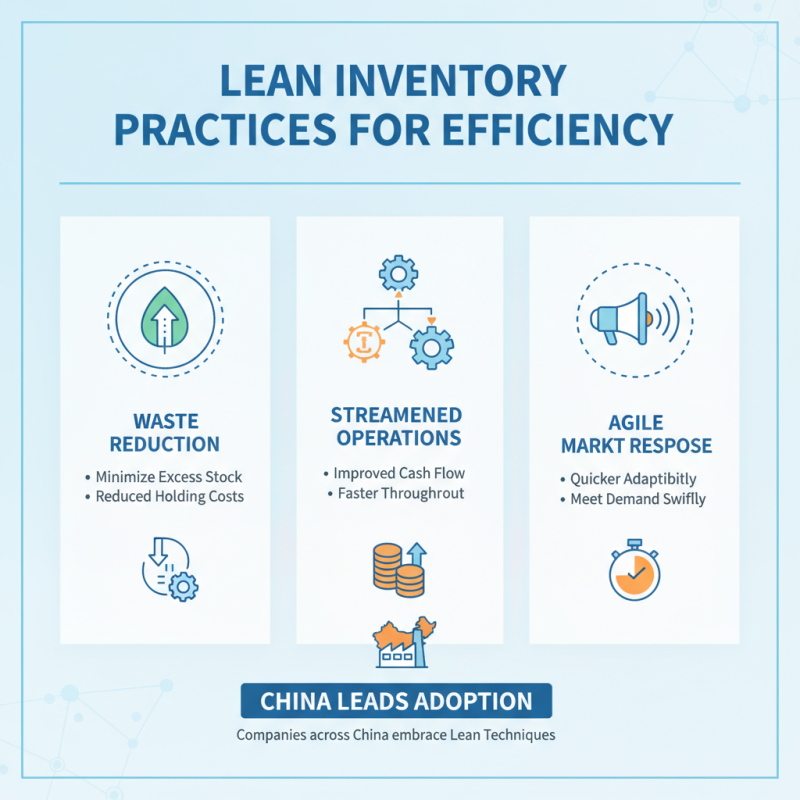
Lean inventory practices focus on efficiency and waste reduction. In China, many companies are adopting these techniques to streamline their operations. By minimizing excess stock, businesses can save costs and improve cash flow. This approach leads to more agile responses to market demands.
One method includes just-in-time (JIT) inventory, where materials arrive exactly when needed. This reduces storage requirements and lowers overhead costs. However, it requires precise planning and reliable suppliers. Any delay can disrupt operations. Companies sometimes struggle with this balance and must continuously refine their processes.
Another strategy involves continuous improvement, or Kaizen. This encourages employees to contribute ideas for process enhancements regularly. While empowering workers can lead to innovation, it may also introduce variability. Frequent changes might create confusion. Companies need to ensure that improvements are communicated clearly and implemented effectively. This ongoing journey towards leaner inventory management involves careful monitoring and adjustment.
In the landscape of inventory management in China, embracing technology through automation is essential. Automation can streamline processes, reduce human error, and enhance efficiency. Utilizing automated systems allows for real-time inventory tracking. This precise monitoring helps businesses maintain optimal stock levels.
Tips for successful automation:
Despite the advantages, challenges remain. The initial cost of automated systems can be high. Some companies may struggle to adapt to new technologies. Resistance to change is often a barrier. It's crucial to create an open environment where feedback is welcomed. Addressing concerns can lead to smoother transitions and improved outcomes. In the rapidly evolving market, continuous refinement of your approach is necessary.
Just-In-Time (JIT) inventory strategies focus on reducing waste and improving efficiency. This approach aims to have the right goods at the right time. Companies adopt JIT to maintain low inventory levels. This method minimizes storage costs but demands precise timing and coordination. A single disruption can lead to shortages or production delays.
Implementing JIT requires much discipline. It involves clear communication with suppliers and careful planning. Real-time data is crucial for tracking inventory levels. Businesses need reliable forecasts to anticipate demand. However, relying heavily on JIT poses risks. Unexpected spikes in demand can lead to stockouts. Adopting safety stock can cushion these surprises but may counteract JIT principles.
The beauty of JIT lies in its simplicity and focus on efficiency. Still, companies should reflect on their supply chain resilience. Sometimes, a balance must be struck between efficiency and safety. Understanding local market dynamics is vital for successful JIT implementation. In a rapidly changing environment, flexibility and adaptability become essential for sustained success.
| Technique | Description | Benefits | Challenges |
|---|---|---|---|
| Just-In-Time (JIT) | Inventory strategy that aligns raw-material orders with production schedules. | Reduces inventory costs and increases efficiency. | Requires precise forecasts and reliable suppliers. |
| ABC Analysis | Classification of inventory into three categories (A, B, C) based on importance. | Helps prioritize inventory management efforts. | May oversimplify complex inventory situations. |
| First-In, First-Out (FIFO) | Inventory management method that sells oldest stock first. | Prevents inventory obsolescence and maintains freshness. | Can be challenging with multiple product lines. |
| Last-In, First-Out (LIFO) | Sells most recently acquired inventory first. | Can optimize tax liabilities in certain situations. | Risk of holding outdated stock. |
| Dropshipping | Retail fulfillment method where a store doesn't keep the products it sells in stock. | Lower overhead costs and reduced risk. | Less control over inventory and shipping times. |
| Consignment Inventory | Inventory owned by a supplier but held at a retailer until sold. | Minimizes cash flow pressure for retailers. | Requires strong relationships with suppliers. |
| Periodic Review System | Inventory levels are reviewed at set intervals. | Simplifies inventory management process. | Inflexible adjustments between review periods. |
| Perpetual Inventory System | Keeps real-time track of inventory levels through technology. | Provides accurate inventory data instantly. | Higher implementation costs and requires training. |
| Vendor Managed Inventory (VMI) | Suppliers manage inventory levels for their clients. | Improves stock availability and reduces stockouts. | Requires trust and collaboration between suppliers and retailers. |
In inventory management, data-driven decision making is crucial. Companies collect vast amounts of data from various sources. This data helps in predicting demand and optimizing stock levels. The right tools can enhance accuracy in forecasting. However, many businesses struggle to interpret this data effectively.
It’s important to analyze sales trends, seasonality, and customer behavior. Utilizing software for data analysis can make a difference. Yet, reliance on technology without understanding underlying metrics may lead to errors. Inventory levels can become imbalanced if decisions are based on incomplete data. A holistic approach is necessary to connect the dots.
Training staff to understand data insights is essential. Empowered employees can make informed choices. They can spot potential issues before they escalate. This proactive stance can improve overall efficiency. Data-driven strategies, while not foolproof, increase the chances of success in inventory management. Balancing technology and human insight is the key to forming effective strategies.
This bar chart illustrates the efficiency ratings of various inventory management techniques commonly used in China. Techniques such as Just-In-Time (JIT) and Inventory Turnover score the highest, indicating their effectiveness in optimizing inventory processes.