Top 10 Steel Plate Suppliers for Global Buyers?

Choosing reliable Steel Plates suppliers requires more than comparing prices on a website. Global buyers need consistent quality, verified production capacity, and dependable export experience. A supplier may offer attractive rates, yet struggle with documentation or delivery schedules. That difference can affect an entire construction or manufacturing project.

This guide examines ten leading steel plate suppliers for international buyers. The evaluation considers product range, material grades, thickness options, certifications, inspection procedures, and global logistics. It also reviews how suppliers handle mill test certificates, surface treatment, packaging, and traceability. These details matter when plates arrive at a busy port or a fabrication yard with strict deadlines. Strong suppliers usually explain their testing methods clearly and respond with precise technical information.

No ranking is perfect. Market conditions change.

Some companies perform better in specific regions or industries. A supplier trusted for shipbuilding may not be ideal for pressure vessels or heavy machinery. Buyers should confirm applicable standards, production dates, minimum order quantities, and after-sales support before signing an agreement. Independent inspections can add confidence, especially for large orders or unfamiliar suppliers. This article aims to provide a practical starting point, not a substitute for technical due diligence. Supplier capabilities, certifications, and delivery performance should be checked directly. A careful comparison can reduce costly surprises and support safer, more efficient purchasing decisions.
Top 10 Steel Plate Suppliers for Global Buyers?

Global Steel Plate Market: 1.89 Billion Tonnes of Crude Steel in 2023

In 2023, global crude steel production reached approximately 1.89 billion tonnes. This figure shows the market’s enormous scale, but it does not represent finished steel plate. Crude steel becomes plate only after casting, rolling, heat treatment, inspection, and cutting. Global buyers should understand this difference before comparing the top ten steel plate suppliers.

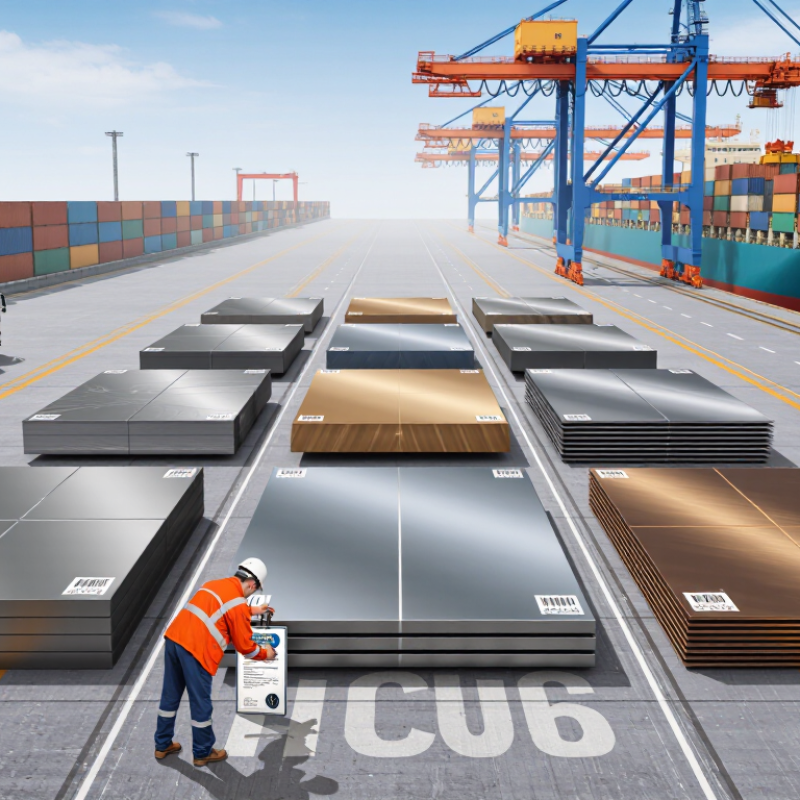
A reliable supplier should provide traceable mill certificates, chemical analysis, mechanical test results, and clear dimensional tolerances. Buyers should check plate thickness, yield strength, impact performance, surface condition, and ultrasonic testing requirements. Packaging also matters. Heavy plates need protected edges, dry storage, secure lifting points, and readable labels. Small failures here can create expensive delays at ports or fabrication sites.

Supplier ranking requires more than production volume. A large producer may not offer the right grade, minimum order quantity, or delivery route. Ask for recent production evidence, inspection records, export experience, and realistic lead times. Verify that certificates match the actual heat number. This step is often overlooked. It should not be. Even experienced buyers can trust polished documents too quickly. I would compare at least three qualified suppliers and request sample documentation before placing a major order. No list remains perfect for every project. Need varies by thickness, application, country, and risk tolerance.
Steel Plate Grades Explained: ASTM A36 at 36 ksi and EN S355 at 355 MPa

Steel plate grades can look similar in a supplier’s table, yet their performance may differ significantly. ASTM A36 specifies a minimum yield strength of 36 ksi, or approximately 248 MPa, for common plate thicknesses. EN S355 specifies 355 MPa under defined thickness limits. These numbers are not interchangeable.

Thickness matters. S355 yield strength can decrease as plate thickness increases, while chemical limits and impact requirements depend on the exact grade, such as S355JR or S355J2. A36 also requires careful review of tensile strength, elongation, weldability, and delivery condition.

In practical purchasing work, many mistakes begin with a simple unit conversion. Strength is only one part of the specification. A plate may meet the nominal yield value but still fail a project requirement for low-temperature toughness or certified testing. That detail is easy to overlook.

Tips: Ask for the complete standard and grade designation. Confirm thickness ranges, heat treatment, mill test certificates, and impact-test temperature. Check whether the design code accepts the selected grade. Also compare actual tolerances, not only advertised thickness. A 12 mm plate should be verified after rolling. Small differences can affect fabrication and fit-up. More review is worthwhile here.

Supplier Ranking Criteria: Capacity, ISO 9001, Lead Time, and EN 10204 3.1

Top 10 Steel Plate Suppliers for Global Buyers?

Ranking steel plate suppliers requires more than production volume. Capacity shows whether a mill can support repeat orders, but claimed capacity needs evidence. Check monthly output, plate dimensions, steel grades, rolling equipment, and export loading records. A large plant may still struggle with small, customized lots. That happens.

ISO 9001 indicates controlled processes, not automatically perfect steel. Ask for certificate scope, validity, corrective-action records, and traceability procedures. Lead time should be measured from technical approval to shipment, not from an optimistic quotation. Request recent delivery data for similar thicknesses and quantities. Weather, port congestion, and testing queues can change schedules. A reliable supplier explains these risks before signing.

EN 10204 3.1 is central to document reliability. The inspection certificate should identify the heat number, chemical analysis, mechanical results, dimensions, and applicable standards. Match every certificate with plate markings and packing lists. If independent inspection is required, define it before production begins. Samples should be reviewed by a qualified engineer, especially for pressure, structural, or low-temperature service. No ranking is permanent. A supplier with excellent capacity may provide weak documentation, while a smaller producer may control records better. Score evidence, not promises, and record exceptions openly.

Top 10 Steel Plate Suppliers by Standards, Product Range, and Export Reach

Top 10 steel plate suppliers for global buyers should be assessed by standards, product range, and export reach. Reliable suppliers provide plates certified to ASTM, EN, JIS, or equivalent specifications. Mill certificates should show grade, heat number, thickness, and test results. Buyers should also check whether certificates come from recognized laboratories.

Product range matters during real projects. Strong suppliers may offer carbon steel, alloy steel, stainless steel, boiler plate, ship plate, and wear-resistant plate. Thickness can range from thin sheets to heavy plates exceeding 100 millimeters. Some suppliers provide cutting, shot blasting, priming, and edge preparation. These services can reduce workshop delays. However, wider catalogs do not always mean better quality. That assumption needs careful review. A buyer should request recent samples, dimensional records, and weldability data before placing a large order.

Tips: Compare tolerances, not only prices. Confirm plate availability, minimum order quantities, packaging, and loading methods. Ask for moisture-resistant wrapping and steel straps for long sea voyages. Review export experience by destination, including customs documents and port handling. A supplier with regular shipments to your region may understand local inspection practices better. Still, past export reach is not proof of current performance. Check recent references, response times, and replacement procedures for nonconforming plates. Clear communication often reveals more than a polished website.

Buyer Checklist: Verify Mill Test Certificates, Tolerances, and Delivery Terms

Top 10 Steel Plate Suppliers for Global Buyers?

Buyer Checklist: Verify Mill Test Certificates, Tolerances, and Delivery Terms

A competitive price means little without dependable documents. Request the Mill Test Certificate before approving the purchase order. Check the heat number, plate grade, chemical composition, tensile strength, yield strength, and impact results. The heat number must match the plate markings and packing list. Ask whether testing followed the required standard and whether an independent inspection is available. Small gaps matter.

Dimensional accuracy deserves equal attention. Confirm thickness, width, length, flatness, and edge condition in writing. A plate listed as 12 millimeters may require a permitted negative tolerance. That difference can affect fabrication weight and structural calculations. Ask for the applicable standard, measuring method, and inspection stage. Do not rely on a verbal promise. It is easy to overlook flatness.

Delivery terms should describe more than a shipment date. Confirm the agreed trade term, loading port, destination, insurance responsibility, and document release process. Clarify production lead time separately from ocean transit time. Review packaging, corrosion protection, marking, and moisture control for long voyages. A delayed certificate can hold a vessel-side clearance even when the steel arrives. That detail is often missed. A checklist is not foolproof; suppliers may provide complete paperwork while measurements remain inconsistent. Keep retained samples, inspection photos, and signed records. Recheck critical plates before fabrication, especially after storage or repacking.

Top 10 Steel Plate Suppliers for Global Buyers? – Buyer Checklist: Verify Mill Test Certificates, Tolerances, and Delivery Terms

Rank Supplier Profile Primary Supply Region Common Plate Categories Relevant Standards Typical Thickness Range MTC Requirements Tolerance Verification Common Delivery Terms Buyer Check
01 Integrated flat-steel mill East Asia Carbon, structural, shipbuilding, pressure-vessel plate ASTM A36, A516; EN 10025; JIS G3101 6–200 mm EN 10204 3.1 or 3.2, heat number, chemistry, tensile and impact results where specified Confirm ordered standard, thickness class, flatness, width and length tolerances FOB, CFR or CIF; shipment normally arranged after production and inspection High-volume capability
02 Heavy-plate specialist Northern Europe Offshore, bridge, wind-tower and heavy structural plate EN 10025-2, EN 10025-3/4/6; EN 10164 8–350 mm 3.1 certificate with heat traceability; Z-quality results when EN 10164 is ordered Check EN 10029 thickness and flatness classes against the purchase order FCA, FOB, CFR or CIF; project schedules should include inspection lead time Suitable for critical projects
03 Shipbuilding-plate producer East Asia Grade A, AH36, DH36, EH36 and higher-strength marine plate IACS Rules; ASTM A131; EN 10025 where applicable 6–100 mm MTC must identify heat, grade, delivery condition and classification approval if required Verify class-approved dimensions, ultrasonic testing and surface-condition requirements FOB, CFR or CIF; coordinate vessel, port and marine-insurance responsibilities Class approval required
04 Pressure-vessel plate producer Central Europe Normalized and normalized-rolled pressure-vessel plate ASTM A516; EN 10028-2; ASME Section II material specifications 6–250 mm Chemical analysis, tensile, yield, elongation, impact testing and heat-treatment records Confirm permitted under-thickness, flatness and ultrasonic-testing class before release FCA, CPT, CIP, CFR or CIF; third-party inspection may affect dispatch date Documentation-intensive
05 Weathering and high-strength plate producer North America Weathering, HSLA, bridge and construction plate ASTM A588, A709, A572 and A656 6–150 mm ASTM-compliant test report with heat identification and applicable supplementary tests Check ASTM dimensional tolerances and any customer-specified camber or flatness limits EXW, FCA, FOB, CFR or CIF; confirm export classification and port routing Strong specification control
06 API line-pipe plate producer Middle East and Asia High-strength plate for line pipe and energy infrastructure API 5L; ISO 3183; project-specific material standards 6–40 mm Heat chemistry, tensile, Charpy impact, hardness and sour-service tests when specified Verify dimensional tolerances, plate orientation, ultrasonic testing and weldability controls FCA, FOB, CFR or CIF; align delivery batches with pipe-mill production windows Project approval essential
07 Stainless and corrosion-resistant plate supplier Western Europe and Asia Austenitic, ferritic, duplex and heat-resistant plate ASTM A240; EN 10088-2; ASME SA-240 0.5–150 mm Grade chemistry, mechanical properties, heat treatment and corrosion-related tests as ordered Confirm thickness, width, length, surface finish and edge condition tolerances EXW, FCA, CPT, CIP, CFR or CIF; protect surfaces during packing and ocean transport Surface condition matters
08 Cut-to-size service center Regional hubs worldwide Processed carbon, structural and alloy plate Customer-specified ASTM, EN, JIS or equivalent standards 3–200 mm Original mill certificate should remain linked to each cut piece or production batch Separate mill tolerances from cutting tolerances; request inspection records EXW, FCA, DAP or local delivery; confirm cutting and packing lead times Fast, value-added supply
09 Stockholding export distributor Mediterranean and Gulf logistics hubs Standard carbon, structural and boiler plate from inventory ASTM A36, A516; EN 10025; JIS G3101 5–100 mm Request original mill certificate, stock identity, heat number and certificate date Measure actual stock before purchase; verify rust, scale, flatness and edge condition FCA, FOB, CFR, CIF or DAP; availability may shorten production lead time Best for urgent orders
10 Project-approved trading and sourcing partner Multi-origin global supply chain Multi-standard structural, offshore, pressure-vessel and alloy plate ASTM, EN, JIS, API, ABS, DNV or other approved specifications Project-dependent Require manufacturer-issued 3.1/3.2 documentation and full chain-of-custody records Use independent inspection for dimensions, marking, surface quality and traceability FCA, FOB, CFR, CIF, DAP or DDP subject to contract and import responsibilities Flexible, verify carefully
Buyer checklist: Match the heat number on the plate with the MTC, confirm the exact product standard and revision, review thickness and flatness tolerances, specify testing and inspection requirements before production, and define the Incoterm, named destination, shipment window, insurance responsibility and document package in the purchase contract.

Get In Touch

Drop Us A Message

    Our Contact Details

    • IPS Group BV | Head Office (NB), Technopol 4, 5026 SB Tilburg, The Netherlands

      IPS Group BV | Rhijnspoor 239, 2901 LB Capelle a/d IJssel, The Netherlands
    • sale@qbhardware.org
    • +31 (0) 10 303 2625