
2026 Top Plastic Cup Lids Making Machine Types?

Choosing the right Plastic Cup Lids Making Machine can shape production speed, product quality, and long-term operating costs. In 2026, manufacturers face more choices than ever. Thermoforming machines remain popular for lightweight lids and high-volume orders. Injection molding machines offer precise dimensions and stronger structural performance. Compression molding systems are also gaining attention for selected materials and specialized designs.

This guide compares the leading machine types through practical production factors. These include output capacity, forming accuracy, material compatibility, energy use, mold-change time, and automation level. It also examines trimming, stacking, inspection, and packaging functions. A modern production line may include servo-driven feeding, temperature monitoring, and automatic defect detection. Small details matter. A poorly adjusted heater can create thin edges or uneven sealing surfaces.

Real factory experience shows that the most expensive machine is not always the best choice. A compact thermoforming line may suit a regional supplier with limited floor space. A high-speed system may benefit a large beverage producer with stable demand. No machine is perfect. Actual performance depends on lid design, resin quality, mold engineering, operator training, and maintenance discipline. Some manufacturers focus heavily on speed and overlook changeover losses. That can weaken the final return on investment.

The following overview presents the main Plastic Cup Lids Making Machine types expected to attract attention in 2026. It uses technical principles, application examples, and realistic selection criteria. Buyers should verify supplier records, sample results, warranty terms, and after-sales support before making a final decision. A careful comparison protects both quality and budget.
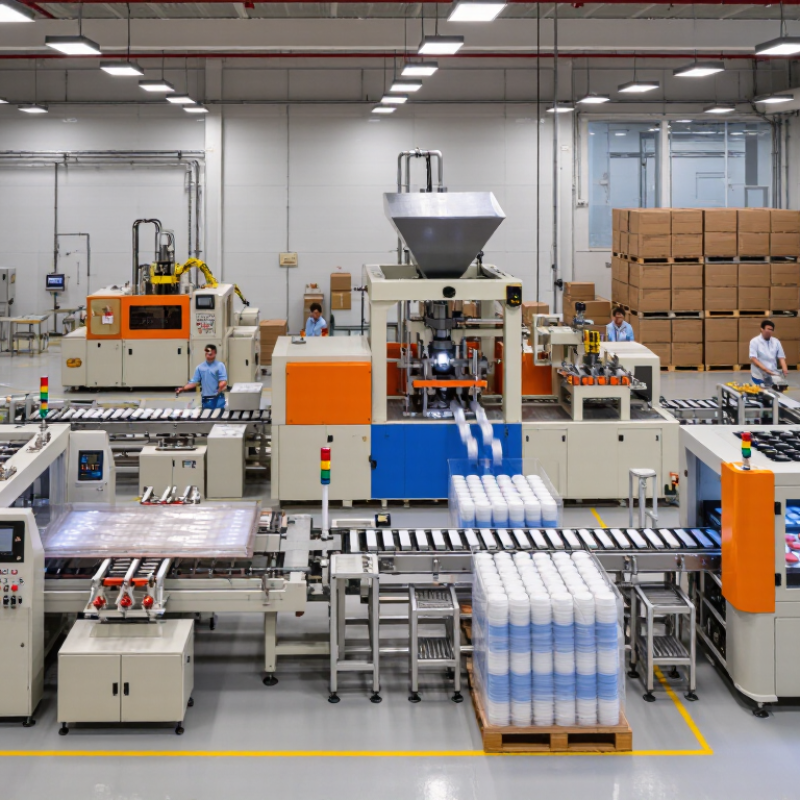
2026 Top Plastic Cup Lids Making Machine Types?

Plastic Cup Lid Making Machines: Definition and Core Functions

Plastic cup lid making machines are production systems that shape polymer materials into secure, usable lids. Their core job is simple: heat or melt plastic, form the lid, trim its edge, and prepare it for packaging.

Common machine types include roll-fed thermoforming, sheet-fed thermoforming, injection molding, and compression molding equipment. Thermoforming machines heat a plastic sheet until it becomes flexible. A forming tool then creates openings, rims, and sealing features. Injection molding machines melt plastic pellets and push the material into a precision mold. They often produce stronger lids with detailed designs, but tooling costs can be higher.

In daily operation, operators monitor heating zones, forming pressure, cooling time, and cutting accuracy. A lid may look acceptable but fail during stacking if its rim is slightly uneven. Good machines include automatic feeding, servo-driven plugs, edge trimming, scrap collection, and counting systems. Inline cameras can inspect cracks, blocked openings, and incomplete shapes. Small defects matter.

Material handling is equally important. The machine must match the selected plastic, thickness, mold design, and production speed. Recycled content can change heating behavior, so old settings may need adjustment. This is where practical testing matters. Engineers should check seal performance, lid fit, surface appearance, and dimensional stability before continuous production. Energy monitoring and quick mold changes are becoming more valuable in 2026, although automation cannot replace careful process judgment.

Major Types of Plastic Cup Lid Making Machines in 2026

Plastic cup lid production in 2026 is moving toward more specialized machine choices. Thermoforming machines remain the practical option for thin, lightweight lids. They heat plastic sheet, shape it over molds, and trim several lids per cycle. Roll-fed systems suit high-volume lines. Sheet-fed machines offer easier material changes and smaller production batches. According to Smithers’ thermoforming market analysis, global demand continues growing at roughly 4% annually through the decade.

Injection molding machines produce thicker lids with precise rims, drinking openings, and locking features. They handle detailed designs well, but tooling costs and cooling time can be significant. Compression molding is another option for high-output production. It uses controlled pressure and heat, often reducing material stress and improving cycle stability. Recent market data from Fortune Business Insights places the global plastic caps and closures market above 79 billion dollars in 2023, with continued growth expected through 2032. Cup lids represent only one segment, but the scale signals strong equipment demand.

Automation now includes inline stacking, vision inspection, and scrap recycling. Useful, but not always essential. A smaller factory may gain more from reliable temperature control than complex robotics. Plant trials should measure cycle time, seal performance, lid weight, and rejected pieces. One weakness remains easy to overlook: a faster machine can create more waste when molds, sheet thickness, or cooling settings are poorly matched.

How Plastic Cup Lid Machines Form, Trim, and Stack Lids

Plastic cup lid machines usually use thermoforming, injection molding, or compression forming. Thermoforming remains common for lightweight lids and high-volume production. A heated plastic sheet softens above the mold, then vacuum or air pressure draws it into each cavity. The mold controls the lid’s dome, rim, drinking opening, and stacking profile.

Forming is only the middle step. After cooling, a trimming unit removes the web around every lid. Rotary knives, steel-rule dies, or matched cutting tools can create clean edges. Poor temperature control may cause thin rims or uneven openings. These small defects can affect cup fit and consumer use. Operators should inspect samples regularly, not trust the machine display alone.

Stacking follows trimming. A conveyor separates lids through guided channels, then counts and aligns them into neat columns. Air jets or mechanical fingers may assist with separation. Sensors check gaps, jams, and missing pieces. A stable stack protects the rim during packing. It also reduces manual handling. However, faster stacking is not always better. Excessive speed can create tilted columns and surface scratches. In practical production, the best setting balances output, cooling time, and lid geometry. Maintenance teams should clean cutting edges and inspect guides each shift. This is often overlooked. Even advanced equipment needs careful adjustment when materials, mold designs, or lid thicknesses change.

Materials, Specifications, and Production Factors

2026 Top Plastic Cup Lids Making Machine Types?

Plastic cup lid production usually relies on thermoforming, injection molding, or compression molding. Thermoforming suits high-volume lids from PP, PET, or PS sheets. It heats the sheet, forms cavities, then trims each lid. Injection molding offers tighter dimensions and stronger sealing features. Compression molding can reduce material stress and support thin-wall designs. The right machine depends on lid diameter, stacking shape, and required output.

Materials, Specifications, and Production Factors

PP remains practical for flexible snap-fit lids and moderate heat resistance. PET provides clarity and stronger stiffness, but its drying requirements can complicate production. PlasticsEurope reported global plastics production of about 400.3 million tonnes in 2022, showing the scale of material demand. Still, volume does not guarantee efficiency.

Check more than advertised speed. A thermoforming line may process 20 to 60 cycles per minute, depending on cavity count and lid geometry. Typical sheet thickness ranges from 0.25 to 1.00 millimeters. Mold temperature control, plug-assist accuracy, trimming pressure, and stacking stability affect real output. Smithers’ thermoformed packaging research highlights lightweighting as a continuing industry driver. Thin lids save resin, but they may wrinkle, leak, or deform during transport.

In factory trials, measure usable lids per hour, not theoretical cycles. Track scrap separately. Small temperature changes can alter sealing performance. Energy consumption, compressed-air demand, tool-change time, and operator access also deserve attention. A machine specification can look excellent on paper. Production reality is less tidy.

How to Choose the Right Plastic Cup Lid Making Machine

2026 Top Plastic Cup Lids Making Machine Types: How to Choose the Right Plastic Cup Lid Making Machine

Choosing a plastic cup lid making machine starts with the lid design, not the advertised output. Thermoforming machines suit thin lids, high-volume production, and common recyclable sheet materials. Injection molding machines handle thicker lids, detailed features, and tighter dimensional control. Compression molding can provide stable results for selected materials and demanding applications.

Examine your lid diameter, sealing edge, stacking design, and opening feature. A small change in the sealing rim can affect leakage and customer complaints. Check forming pressure, mold cooling, cycle time, and automatic trimming accuracy. The machine should match your material thickness range. Otherwise, operators may waste several rolls before finding stable settings. Ask for sample production using your actual material. Catalog demonstrations are useful, but they rarely show every production problem.

Tips: Measure your current daily demand and future peak demand. Leave reasonable capacity for cleaning, mold changes, and maintenance. Confirm spare-part availability, operator training, safety systems, and technical support before purchase. Review energy use per cycle, because heating and cooling can quietly increase costs. Inspect sample lids for warping, uneven edges, weak sealing, and inconsistent stacking. Do not choose the fastest machine automatically. A slower machine with dependable quality may perform better over a full year. I would also request a written acceptance test. It may feel unnecessary, but vague promises create expensive misunderstandings.

Get In Touch

Drop Us A Message

    Our Contact Details

    • IPS Group BV | Head Office (NB), Technopol 4, 5026 SB Tilburg, The Netherlands

      IPS Group BV | Rhijnspoor 239, 2901 LB Capelle a/d IJssel, The Netherlands
    • sale@qbhardware.org
    • +31 (0) 10 303 2625