What Are the Top Cement Rubber Hose Suppliers Worldwide?

Choosing the right Cement Rubber Hose supplier affects safety, pumping efficiency, and project continuity. Concrete plants, construction sites, and precast facilities often work under severe conditions. Fine cement particles can wear the tube quickly. Heavy couplings can also stress the hose ends.

This guide examines leading Cement Rubber Hose suppliers worldwide through practical purchasing criteria. It considers product construction, abrasion resistance, pressure ratings, temperature limits, and connection quality. Experienced suppliers should explain their rubber compounds clearly. They should also provide test reports, dimensional data, and traceability records. ISO 9001 certification can support confidence, but it does not guarantee every hose will perform well.

Real performance matters most. A four-inch hose may look strong on a catalog page. However, its actual service life depends on concrete mix, pumping pressure, bending radius, and cleaning habits. Suppliers with field experience can recommend suitable reinforcement and end fittings. They should discuss failures honestly, including cover cracking, tube wear, and coupling separation. That honesty is valuable.

No ranking is perfect.

Supplier claims need verification. Buyers should compare samples, inspection procedures, warranty terms, and delivery reliability. Regional stock can reduce project delays, while technical support can prevent expensive installation mistakes. This article highlights manufacturers and distributors that demonstrate consistent quality, responsive communication, and dependable global service. It also recognizes that the cheapest quotation may become costly after repeated hose replacement. Careful evaluation remains essential.

What Are the Top Cement Rubber Hose Suppliers Worldwide?

Define Cement Rubber Hoses in a 4.1-Billion-Tonne Global Cement Industry

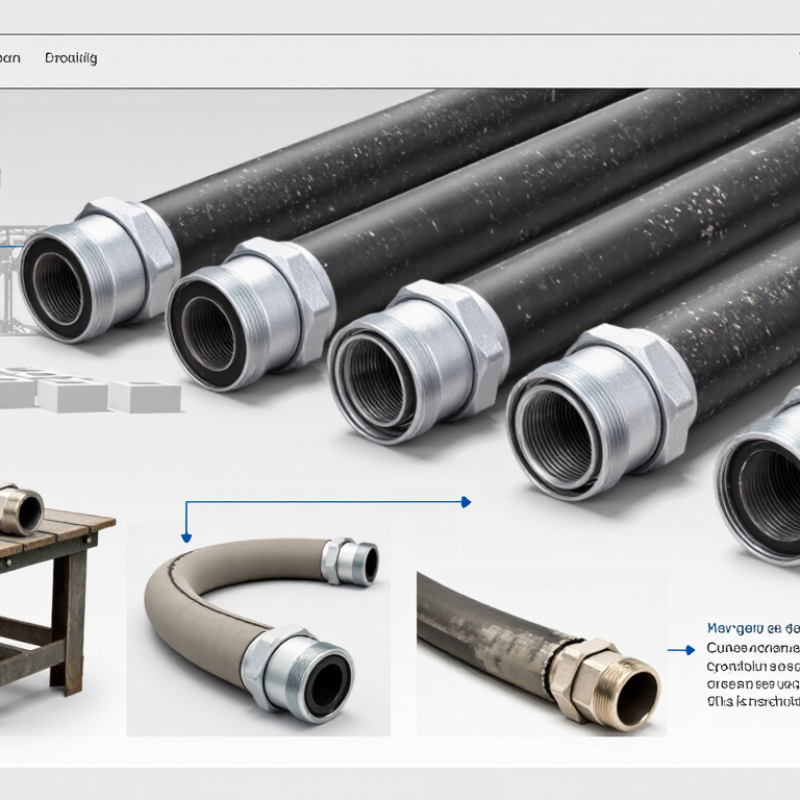
In a global cement industry producing about 4.1 billion tonnes annually, cement rubber hoses support demanding material transfer. They are flexible, reinforced pipelines designed to move cement-based slurries, wet concrete, grout, or abrasive mixtures. A typical hose combines an abrasion-resistant inner tube, textile or steel reinforcement, and a weather-resistant outer cover. The structure must tolerate pressure, bending, vibration, and rough construction sites.

The definition is not always tidy. Some suppliers use “cement hose” for concrete-pump delivery lines, while others describe pneumatic hoses for dry cement powder. These applications require different designs. Wet concrete hoses need strong resistance to aggregate wear and pressure surges. Dry-powder hoses need controlled static discharge and suitable inner-wall performance. Confusing them can cause early failure, blocked lines, or unsafe handling.

Reliable worldwide suppliers should provide measurable evidence, not broad promises. Useful documents include working-pressure ratings, burst-pressure data, temperature limits, bend radius, coupling details, and abrasion-test results. In practical inspections, technicians should check exposed reinforcement, cracked covers, soft spots, and worn end sections before every shift. Small details matter. A hose may look serviceable outside while its inner tube is already damaged. No hose lasts forever. Selection also depends on particle size, pumping distance, cleaning methods, and site conditions. A thoughtful supplier asks these questions before recommending a product, although even experienced teams can overlook changing material conditions.

What Are the Top Cement Rubber Hose Suppliers Worldwide? - Define Cement Rubber Hoses in a 4.1-Billion-Tonne Global Cement Industry

Brand-neutral comparison framework based on recognized hose-performance requirements, common cement applications, and internationally used testing references.
Evaluation Dimension Relevant Cement-Hose Requirement Typical Technical Range or Reference Why It Matters in a 4.1-Billion-Tonne Industry
Product definition Flexible rubber hose designed to convey cement, mortar, grout, concrete mixtures, or other abrasive mineral materials. Usually supplied with abrasion-resistant inner tubes and reinforced pressure or suction constructions. Cement particles can rapidly wear unsuitable hose linings during continuous conveying and pumping.
Primary applications Pneumatic cement transfer, concrete pumping, shotcrete, grout injection, silo discharge, and bulk-material loading. Application-specific hose construction is required; dry-powder conveying and wet concrete pumping are not interchangeable duties. Correct application matching reduces blockage, premature failure, material loss, and unplanned shutdowns.
Inner-tube material Abrasion-resistant rubber compound compatible with alkaline cementitious materials and the conveyed medium. Common compound families include natural rubber, styrene-butadiene rubber, and blends selected for abrasion resistance. The inner tube is the main wear surface and strongly influences service life and maintenance frequency.
Reinforcement construction Textile, wire-braid, spiral-wire, or steel-cord reinforcement selected according to pressure, bending, and suction loads. Pressure, suction, and discharge hoses require different reinforcement designs; construction should be verified on the technical datasheet. Incorrect reinforcement can cause kinking, collapse, burst failure, or excessive bending fatigue.
Nominal bore selection Bore must match the conveying equipment, flow rate, particle size, and connection diameter. Common industrial hose bores include approximately 25–203 mm, with larger sizes available for specialized conveying systems. An undersized bore increases pressure drop and velocity, while an oversized bore may reduce conveying efficiency.
Working-pressure verification The stated working pressure must exceed the maximum operating pressure, including transient pressure surges. Industrial cement and concrete hoses are commonly specified from low-pressure transfer duty to high-pressure pumping duty; the exact rating is product-specific. Pressure ratings cannot be inferred from appearance, bore size, or reinforcement count alone.
Temperature capability The hose must tolerate the temperature of the conveyed material, ambient conditions, and cleaning process. Many general-purpose rubber hoses operate near −40°C to +80°C, while the allowable range varies by compound and construction. Temperature outside the rated range accelerates hardening, softening, cracking, and loss of pressure capability.
Abrasion-performance evidence Supplier should provide compound information and test documentation for abrasive service. ISO 4649 is commonly used to determine abrasion resistance of vulcanized or thermoplastic rubber; test results should be compared using the same method. Standardized test evidence provides a more reliable comparison than unsupported claims such as “heavy duty.”
Dimensional and pressure documentation Technical documents should state bore, outside diameter, minimum bend radius, working pressure, test pressure, and temperature range. ISO 1307 is an established reference for rubber and plastics hoses, including nominal bore and dimensional tolerances. Complete documentation supports safe installation, interchangeability checks, and preventive maintenance.
Connection compatibility Ends must match the equipment using suitable flanges, threaded couplings, cam-and-groove fittings, quick couplings, or victaulic-style connections. Connection type, gasket material, clamp design, and locking method must be specified for the operating pressure and medium. Connection failures can create serious safety risks even when the hose body is correctly rated.
Static-control requirements Electrically conductive or antistatic construction may be needed for dry-powder conveying systems. Electrical resistance and continuity should be stated and verified according to the selected hose specification and site safety requirements. Static accumulation may damage equipment or create ignition hazards where combustible dust is present.
Quality and traceability Each hose should be identifiable by production batch, manufacturing date, specification, and pressure rating. Preferred supplier documentation includes inspection records, conformity declarations, material information, and installation guidance. Traceability supports audits, warranty claims, failure analysis, and consistent replacement purchasing.
Supplier selection priority Select suppliers based on verified technical conformity, application experience, delivery capability, and after-sales support rather than price alone. A robust procurement scorecard should assess abrasion resistance, pressure rating, bend radius, connection quality, documentation, lead time, and lifecycle cost. Global cement production requires dependable hose supply for continuous quarrying, grinding, transport, batching, and construction operations.

Compare Suppliers by 85-Bar Pressure, Abrasion Life, and ISO 1307 Compliance

When comparing cement rubber hose suppliers worldwide, pressure data deserves careful reading. A hose marked 85 bar should state whether this means working or burst pressure. The difference is critical. Ask for hydrostatic test records, reinforcement details, and a documented safety factor. Serious suppliers also identify temperature limits, coupling methods, and batch traceability. These details reveal practical engineering, not just sales language.

Abrasion life is harder to compare. Cement slurry, dry powder, velocity, bends, and moisture change wear rates. Request test results using a comparable abrasive medium, not a vague “long-life” claim. Liner thickness matters, but compound hardness alone can mislead. Inspectors should check cut samples, bend zones, and the outlet area, where wear may accelerate. A supplier with inspection support can recommend rotation schedules and replacement criteria. Useful advice should survive a dusty jobsite.

ISO 1307 compliance should cover hose dimensions, tolerances, and documented verification. A certificate without matching production records is weak evidence. Compare independent test reports, quality-control procedures, and response time for technical questions. Suppliers should explain failures openly, including rejected batches and pressure-test deviations. No scorecard is perfect. One supplier may lead on 85-bar capability, while another offers longer abrasion life. The better choice depends on the cement system, routing, and maintenance discipline. Recheck every claim against current production samples.

Worldwide Cement Rubber Hose Supplier Benchmark

The chart compares anonymized supplier profiles against an 85-bar working-pressure requirement. Abrasion performance is shown as a relative index, where 100 represents the benchmark reference level. ISO 1307 is scored as documented dimensional and tolerance compliance. Actual certificates, test methods, hose construction, and product datasheets should be verified before purchase because abrasion-life results are not directly comparable across different test procedures.

Profile Parker, Gates, Trelleborg, Continental, and Kuriyama Worldwide

What Are the Top Cement Rubber Hose Suppliers Worldwide?

Five global manufacturers are frequently compared for cement-transfer hose supply. Their profiles differ. One emphasizes hydraulic and industrial systems, while another focuses on engineered rubber compounds. A third offers strong distribution across Europe and Asia. The remaining two are known for broad product portfolios and North American availability. These differences matter when cement plants need consistent delivery, local support, and replacement parts.

MarketsandMarkets estimates the global industrial hose market at about USD 14.7 billion in 2023, with continued growth through 2028. Cement hose demand remains tied to infrastructure, ready-mix production, and dry-bulk transport. However, market size does not prove hose quality. Buyers should check abrasion resistance, working pressure, bend radius, tube composition, and coupling design. ISO 1307 helps define hose dimensions, while application testing confirms practical performance.

Field experience often exposes details that catalogs miss. A hose may survive pressure but fail early near a sharp bend. Fine cement dust can act like sandpaper inside the tube. Suppliers with compound-development expertise may offer longer service life, but the evidence should come from test reports and customer records. I would not rank the five providers by brand visibility alone. Delivery speed, technical training, traceability, and fitting compatibility can be more valuable than a lower purchase price. Some selection decisions remain imperfect. Site conditions vary.

Rank Suppliers by DN Size, Temperature Range, Certifications, and Lead Time

What Are the Top Cement Rubber Hose Suppliers Worldwide?

For cement transfer projects, supplier ranking should begin with DN capacity.

Supplier A ranks highest for DN 25–300 hoses, offering flexible assemblies for mixers, pumps, and silo connections. Its usual temperature range is -40°C to +80°C. Documented ISO 9001 quality systems and material test records support routine industrial purchasing. Typical lead time is two to four weeks, depending on flange preparation.

Supplier B performs better for large-bore applications, including DN 400–600 cement discharge lines. Its hoses are designed for abrasive powder and slurry service, with a working temperature range near -30°C to +100°C. Buyers should request pressure ratings, tube compound data, and batch traceability. EN 10204 inspection documents may be available, but certification scope must be checked carefully. Lead times often reach six to eight weeks.

Supplier C is suitable when high-temperature service matters more than maximum diameter. It commonly supports DN 50–250 and temperatures approaching +120°C. Independent inspection, ISO 9001 registration, and hose assembly testing improve purchasing confidence. Standard orders may ship within three weeks. Custom lengths can take longer. I would not rank it first for urgent projects. Delivery promises sometimes change after technical approval. Actual performance also depends on routing, bending radius, and coupling quality. A supplier with impressive certificates can still be a poor fit if the hose is poorly installed.

Assess Total Cost Through Service Life, Warranty, and Replacement Data

What Are the Top Cement Rubber Hose Suppliers Worldwide?

The strongest suppliers are not always the cheapest at purchase. Cement hose costs continue through abrasion, downtime, fittings, freight, and replacement labor. A practical assessment should compare delivered price with service-life evidence. Ask for hose life data from similar cement plants, including pressure, slurry density, bend radius, and operating hours. A hose lasting 14 months may outperform one costing 20% less but requiring replacement every six months. Small details matter.

Tips: Request warranty terms in writing. Check whether coverage includes abrasion, premature cracking, and fitting separation. Review exclusions for incorrect storage, twisting, temperature, and unsupported bends. Ask suppliers for replacement records, not only laboratory test results. An anonymized maintenance log can reveal recurring failures more clearly than sales claims.

I once focused too heavily on unit price. That comparison was incomplete. The cheaper hose created extra shutdown work and urgent freight costs. A better review tracks cost per operating hour and records each failure location. Look for suppliers that provide installation guidance, inspection training, and responsive technical support. Warranty length alone proves little; claim response time and replacement procedures matter more. Suppliers should explain how they verify rubber compound quality, reinforcement strength, and coupling security. If data is vague, treat the projected service life as an estimate, not a promise.

Get In Touch

Drop Us A Message

    Our Contact Details

    • IPS Group BV | Head Office (NB), Technopol 4, 5026 SB Tilburg, The Netherlands

      IPS Group BV | Rhijnspoor 239, 2901 LB Capelle a/d IJssel, The Netherlands
    • sale@qbhardware.org
    • +31 (0) 10 303 2625