Top 10 Deep Boring Machine Suppliers Worldwide
Choosing among the Top 10 Deep Boring Machine Suppliers Worldwide requires more than comparing catalog prices. A reliable supplier must control bore accuracy, tool stability, coolant pressure, vibration, and service response. These details become visible on the shop floor: a long steel tube, a heated cutting head, dark coolant returning through the bore, and a measurement report showing micrometer-level consistency. Machine capacity matters, but process control matters more.
Dr. Wilfried Schäfer, Executive Director of the German Machine Tool Builders’ Association, has repeatedly stressed the importance of manufacturing quality, noting, “Precision is created by the entire production system, not by one machine alone.” This principle fits the Deep Boring Machine sector well. A supplier may offer impressive spindle power, yet weak training or delayed spare parts can damage productivity. That is easy to overlook.
This introduction examines ten global suppliers through practical criteria, including boring diameter range, maximum workpiece length, automation options, control systems, energy efficiency, and after-sales support. It also considers experience in demanding industries such as aerospace, oil and gas, hydraulic cylinders, mold manufacturing, and heavy equipment. Certifications and published specifications provide useful evidence, but they do not tell the whole story. Real performance depends on material, tooling, operator skill, and maintenance discipline.
No ranking is perfectly neutral. Buyer priorities differ. A compact factory may value flexibility, while a large plant may require continuous production and remote diagnostics. The strongest supplier is not always the largest one. It is the supplier that matches the application honestly, even when that means admitting a machine’s limitations.
What Is a Deep Boring Machine?
What Is a Deep Boring Machine?
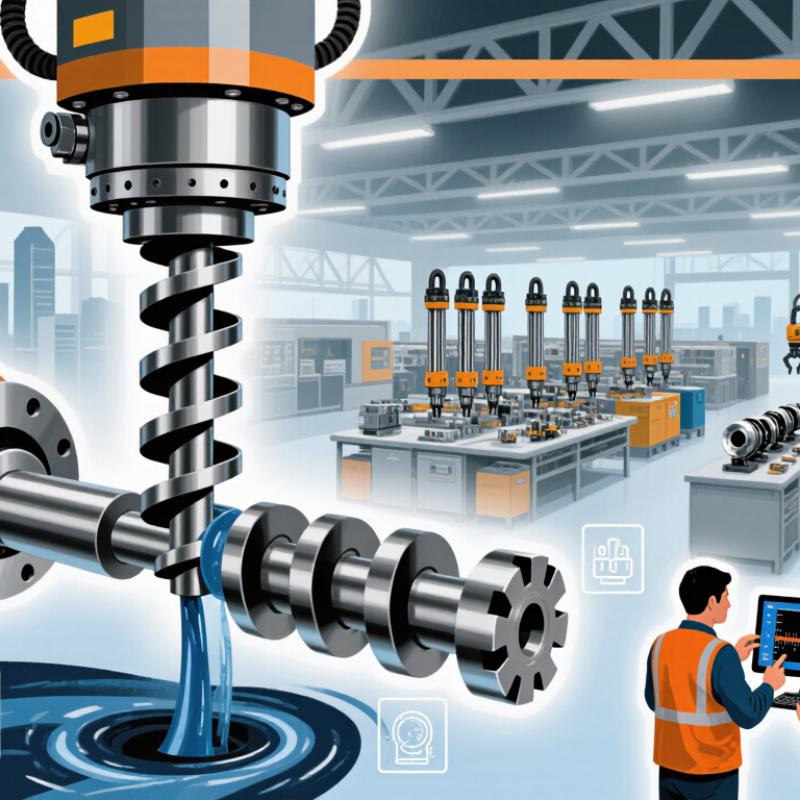
A deep boring machine is a precision tool for producing long, accurate holes inside metal components. Unlike a standard drill, it controls the hole’s diameter, straightness, surface finish, and internal alignment. The cutting tool travels through the workpiece while coolant carries chips away from the cutting zone. This process reduces heat and helps protect the finished bore.
In workshop practice, operators check the workpiece length, material hardness, and required tolerance before machining. A steel housing may need a bore several meters deep, with only a small dimensional error allowed. The machine uses a rigid boring bar, steady supports, and controlled feed movement. Vibration can leave spiral marks inside the hole. Small errors grow.
Different systems use single-point tools, trepanning heads, or specialized deep-hole tooling. Each method suits different diameters, depths, and production volumes. Engineers also monitor coolant pressure, chip shape, spindle load, and tool wear during operation. These details often reveal trouble before measurements confirm it. No setup is perfect. Support spacing, alignment, and cutting speed still require practical judgment.
A reliable machine should provide stable motion, repeatable positioning, and accessible inspection points. Digital controls improve consistency, but they cannot replace skilled observation. An operator may hear a sudden change in cutting sound before a sensor reacts. Material distortion can also appear after machining, especially in thin-walled parts. That risk deserves attention when comparing deep boring equipment and technical suppliers.
Key Features and Industrial Applications
Top 10 Deep Boring Machine Suppliers Worldwide: Key Features and Industrial Applications
Deep boring machines produce accurate, long internal holes in shafts, cylinders, molds, and energy components. A serious supplier should offer rigid beds, vibration control, programmable feed systems, and reliable chip removal. Through-coolant delivery matters when boring holes several meters deep. Even a small temperature shift can affect diameter and straightness.
The U.S. Department of Energy reports that motor-driven systems consume about 23% of American electricity. Therefore, efficient spindle motors, regenerative drives, and standby controls deserve attention during supplier evaluation.
Modern CNC systems also support tool monitoring, automatic offset correction, and digital production records. The International Federation of Robotics recorded 541,302 industrial robot installations worldwide in 2023. This growth encourages boring-machine suppliers to improve loading automation and connection with factory software.
Industrial applications
Industrial applications vary widely. Heavy equipment producers bore hydraulic cylinders, while power-generation workshops machine turbine shafts and valve bodies. Oil and gas component manufacturers require stable cutting over long distances, often using specialized tools and high-pressure coolant.
In practice, I would compare ten suppliers using test-cut results, service response, spare-part availability, and operator training. Catalog specifications are not proof. A machine may claim exceptional accuracy, yet perform poorly with difficult alloys. This is where factory trials reveal uncomfortable details. No supplier is perfect.
How to Evaluate Deep Boring Machine Suppliers
Choosing among the top 10 deep boring machine suppliers requires more than comparing catalog prices. A serious evaluation begins with application evidence. Check boring diameter, maximum depth, spindle torque, and workpiece stability against your actual parts. Ask for recent acceptance-test records, not polished brochures. ISO 230-2 provides a useful framework for testing positioning accuracy and repeatability. Without measured data, “high precision” means very little.
Supplier experience should appear on the factory floor. Request references for comparable steel grades, hole depths, tolerances, and production volumes. Review service response times, spare-parts availability, operator training, and software support. The International Federation of Robotics reported 541,302 industrial robot installations worldwide in 2023. That figure signals rising automation expectations, so a machine supplier should explain integration with loading systems, inspection equipment, and production data platforms. Vague answers are warning signs.
Ownership cost deserves equal attention. Compare energy consumption, tooling life, coolant filtration, maintenance intervals, and expected machine utilization. Require a documented factory acceptance test using your sample workpiece. Independent calibration records add credibility. Ask how performance changes after several years, not only on delivery day. Standards help, but they do not replace site visits. I would also examine the supplier’s financial stability and technician turnover, although reliable public data can be surprisingly limited. That uncertainty deserves discussion. A lower quotation may hide commissioning delays, imported components, or weak local support. Reported market figures, including automation data from World Robotics 2024, provide context, but your own trial boring cycle remains the most dependable evidence.
Top 10 Deep Boring Machine Suppliers Worldwide
Top 10 Deep Boring Machine Suppliers Worldwide
The worldwide deep boring machine market is shaped by accuracy, rigidity, and after-sales engineering. A supplier’s catalogue alone proves little. Buyers should examine spindle stability, boring-bar support, coolant pressure, and documented test results. Deep holes punish weak process control.
According to the 2024 World Machine Tool Survey, global machine-tool consumption remained concentrated in Asia, Europe, and North America. This distribution makes regional service coverage a practical ranking factor. MarketsandMarkets projects the CNC machine tools market to grow at roughly 6% annually through the late 2020s. That growth supports continued investment in automated boring systems. However, broad CNC figures do not perfectly represent deep boring equipment. That distinction matters.
The top ten suppliers should therefore be assessed through measurable evidence: boring diameter range, depth-to-diameter capability, positional accuracy, cycle time, and installation support. ISO 230 testing can help verify machine geometry, while ISO 17025-accredited measurement strengthens confidence in inspection data. In field evaluations, operators often value chip evacuation more than brochure speed. A clogged hole stops production quickly. Some suppliers report impressive tolerances, yet provide limited information about material, tool wear, or test conditions. That is a weakness worth questioning. Buyers should request sample parts, maintenance records, training plans, and spare-part lead times before ranking any supplier. Availability still varies sharply by region.
Top 10 Deep Boring Machine Suppliers Worldwide
Distribution of ten leading publicly identified deep-boring machine suppliers by headquarters region
The chart summarizes the geographic distribution of ten leading suppliers without displaying company or brand names.