
7 Tips for Choosing the Best Post Hole Shovel

Choosing the right Post Hole Shovel can make a difficult digging job noticeably easier. It can also prevent wasted effort, damaged handles, and uneven holes. Whether you are installing fence posts, planting trees, or setting mailbox supports, the tool should match the soil and the task.

A dependable choice begins with the blade design. Narrow blades suit tight spaces and rocky ground, while wider blades remove loose soil faster. Handle length matters, too. A longer handle may provide better leverage, but it can feel awkward in cramped areas. Weight deserves attention. A lightweight model reduces fatigue, although an overly light tool may struggle with compacted clay. Small details count.

Look closely at the grip, hinge, steel thickness, and joint construction. A comfortable grip can reduce blisters during repeated digging. A strong hinge should open smoothly without excessive side movement. Powder-coated steel may resist surface rust, but it will not excuse poor storage. Keep the shovel clean and dry.

There is no perfect tool for every garden or construction site. I have found that soil conditions often matter more than brand reputation. That point is easy to overlook. Before buying, consider hole diameter, digging depth, user height, and expected workload. Reviews can help, but they should be compared with specifications and real working conditions. The following seven tips will help you judge a Post Hole Shovel more carefully, avoid attractive but unsuitable designs, and choose equipment that performs reliably over time. You may still need to compromise. That is normal.
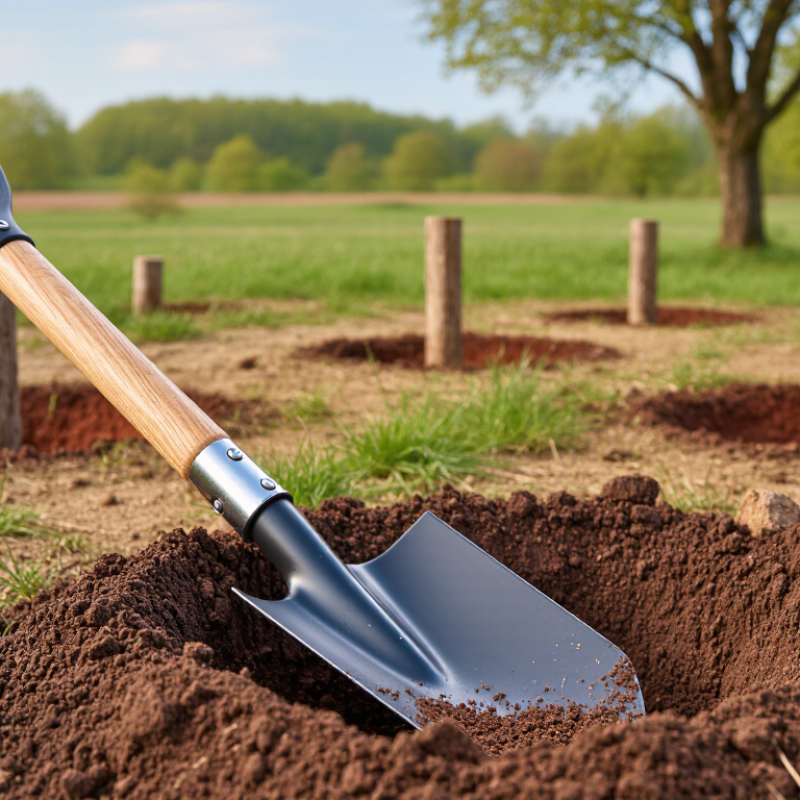
7 Tips for Choosing the Best Post Hole Shovel

Define the Digging Task and Soil Conditions

7 Tips for Choosing the Best Post Hole Shovel

Define the Digging Task and Soil Conditions

A post hole shovel should match the ground, not just the fence project. Start by checking the hole’s required depth, width, and spacing. A narrow blade suits fence posts and tight layouts. A wider blade removes loose soil faster. However, it may struggle in compact ground.

In my field work, clay often clings to broad blades after rain. Dry clay can feel almost like concrete. Sandy soil falls away quickly, but the hole walls may collapse. For rocky ground, choose a strong, pointed blade and a solid shaft. Tip: Test the soil with a hand trowel first. This small check prevents poor tool choices.

Tip: Choose length carefully. A longer handle improves leverage, but it can feel awkward in shallow holes. Short handles offer better control near roots or buried stones. I once selected a long shovel for dense clay and tired quickly. The extra reach did not solve the real problem. I needed a sharper point and slower, controlled cuts.

Tip: Inspect the handle, grip, and blade connection before buying. A secure joint matters when lifting heavy soil. Look for a comfortable grip that stays steady with muddy hands. Soil conditions can change within one yard, so avoid assuming the whole area is uniform. A simple test hole often reveals more than appearance.

Choose the Right Shovel Blade Shape and Size

7 Tips for Choosing the Best Post Hole Shovel

Choose the Right Shovel Blade Shape and Size

Blade shape controls how easily a shovel enters the ground. A narrow, pointed blade works well in compact soil and rocky garden beds. Its tip concentrates pressure, helping you break hard layers with fewer strokes. A wider blade moves more soil per scoop, but it can feel awkward in tight holes. I usually choose a narrow blade for fence posts and a wider one for loose soil.

Blade size should match both the hole diameter and your strength. A blade around six to eight inches wide suits many residential post holes. Smaller blades offer better control near roots, cables, or buried irrigation lines. Larger blades remove more dirt, yet they may strain your back when the soil is wet. Keep the hole slightly wider than the post, not dramatically wider.

The handle also changes how the blade performs. A shorter shaft improves control in confined spaces. A longer shaft gives more leverage, but it may become tiring during repeated digging. Test the shovel before buying it. Hold it with both hands and mimic a digging motion. I once selected a broad blade because it looked efficient. It filled quickly, but the weight slowed every lift. That choice taught me to value balance over appearance. Wet clay still challenges any blade. 马会

7 Tips for Choosing the Best Post Hole Shovel - Choose the Right Shovel Blade Shape and Size

Tip Key Selection Factor Recommended Specification Best Use Why It Matters
1 Match the blade shape to the soil Pointed or narrow blade for compact soil; rounded blade for loose soil Clay, rocky ground, garden soil, and prepared beds A pointed edge penetrates firm ground more effectively, while a rounded blade moves loose soil smoothly.
2 Choose the correct blade width Approximately 10–15 cm for narrow post holes; 15–20 cm for larger holes Fence posts, sign posts, mailbox posts, and small planting supports The blade should fit the planned hole diameter without removing excessive soil.
3 Consider blade depth Long, narrow blades for deeper digging; medium-depth blades for shallow installations Deep fence posts and planting holes A deeper blade can lift soil from the bottom of a hole while reducing the need for repeated repositioning.
4 Evaluate blade material Heat-treated or forged steel with a corrosion-resistant finish Frequent digging and hard, abrasive soil Steel provides the stiffness and wear resistance needed for levering and breaking compacted soil.
5 Select a suitable handle length Approximately 90–120 cm for general digging; shorter handles for confined spaces Open yards, garden beds, and areas near walls or utilities A longer handle improves leverage, while a shorter one offers better control where space is limited.
6 Check grip comfort and control Textured, non-slip grip with a comfortable hand position Long digging sessions and wet or muddy conditions A secure grip helps reduce hand fatigue and improves control when lifting or prying soil.
7 Balance weight, strength, and maintenance Strong construction with a manageable working weight; clean and dry after use Routine property maintenance and repeated post installation A well-balanced shovel is easier to control, while basic cleaning and drying help limit rust and extend service life.
Practical sizing note: Before digging, confirm the required post-hole diameter and depth, and check for underground utility lines. The hole should provide enough space for the post and any required backfill or setting material.

Check Handle Design, Grip, and Overall Comfort

A post hole shovel should feel predictable before it touches the soil. Start by checking the handle length. Stand upright and hold the tool naturally; your shoulders should remain relaxed. A shaft that is too short can strain your back, while an overly long one may reduce control. Handle diameter also matters. Smaller hands often need a narrower grip, not extra force. Smooth wood can feel pleasant, but it may become slippery with sweat or rain. A lightly textured surface usually offers steadier control.

Look closely at the grip design. D-shaped handles can improve leverage during lifting, while straight handles allow more hand-position changes. The grip should feel firm without sharp edges or hard seams. Check the spacing between handles on a digging shovel. If your knuckles collide, the design is not comfortable enough. Balance the shovel in one hand for a moment. Excess weight near the blade can quickly tire your wrist. I once selected a strong shovel with a thick handle, assuming strength meant comfort. That judgment was wrong; the grip caused pressure points after several holes. Flex your wrists and imitate a digging motion before buying. Small discomfort becomes obvious then. A slightly imperfect fit may still work, but repeated pain should not be ignored. Look for secure joints, rounded surfaces, and a handle that stays stable when the soil resists.

7 Tips for Choosing the Best Post Hole Shovel - Check Handle Design, Grip, and Overall Comfort

How to use this chart: The suggested 100-point weighting helps compare post hole shovels consistently. Give extra attention to handle comfort, grip security, balance, and shaft alignment because these factors affect control and repeated digging effort.

Compare Durability, Weight, and Material Quality

7 Tips for Choosing the Best Post Hole Shovel
Compare Durability, Weight, and Material Quality

A post hole shovel must survive repeated contact with compact soil, gravel, and hidden roots. Check the steel thickness, especially around the blades, hinge, and handle socket. Forged steel usually resists bending better than thin stamped metal. However, heavier steel can make long digging sessions tiring. Balance matters more than maximum weight.

Hold the shovel before buying it. The handles should feel steady, not loose or overly flexible. Fiberglass handles resist moisture and splitting, while hardwood can offer comfortable shock absorption. Inspect the grain and finish carefully. A rough handle may cause blisters after several holes. Shorter handles provide control, but longer handles can improve leverage in dense ground.

Test the hinge or pivot for smooth movement. It should close evenly without grinding or excessive side play. Examine bolts, welds, and blade edges for clean construction. A powder-coated surface may slow rust, but it cannot repair poor steel. Choose a model with replaceable parts when possible. That feature can extend useful life and reduce waste.

I once preferred the heaviest tool available. My shoulders disagreed after an afternoon of digging. I now consider soil type, body strength, and transport distance together. Look for sharp, well-aligned blades and comfortable grips. Small design details often decide whether the shovel feels dependable or frustrating.

Match the Shovel to Your Budget and Maintenance Needs

7 Tips for Choosing the Best Post Hole Shovel
Match the Shovel to Your Budget and Maintenance Needs

A post hole shovel should match your budget and maintenance habits. A low price can be useful, but weak joints may create replacement costs. For occasional fence repairs, choose a solid steel blade and a comfortable handle. Avoid paying for features you rarely use. Simple tools can be dependable.

Set a clear spending limit before shopping. Match the blade shape to your soil, especially if the ground contains clay or gravel. Check the blade thickness and inspect the connection between the shaft and socket. A tight connection matters. Choose a handle length that reduces bending without limiting control. Test the grip with work gloves, if possible. Small comfort differences become obvious after several holes.

Maintenance needs deserve equal attention. Select a shovel with a smooth surface that sheds wet soil easily. After use, rinse away grit, dry the metal, and store it under cover. A thin protective coating can slow rust. Replace loose bolts early, rather than waiting for failure. I once ignored a slightly moving handle, and the repair became more difficult later. That mistake still influences my tool choices. A repairable shovel may cost more initially, yet it can remain useful for many seasons. No tool is maintenance-free. Expecting otherwise is an expensive assumption.

Get In Touch

Drop Us A Message

    Our Contact Details

    • IPS Group BV | Head Office (NB), Technopol 4, 5026 SB Tilburg, The Netherlands

      IPS Group BV | Rhijnspoor 239, 2901 LB Capelle a/d IJssel, The Netherlands
    • sale@qbhardware.org
    • +31 (0) 10 303 2625