
7 Tips for Choosing the Best BMAX Mini PC

I can write the introduction, but no source article or verifiable expert quotation was included. Please provide the expert’s name and exact quote, or authorize an clearly labeled fictional quote; otherwise, attributing invented words to a real-sounding BMAX Mini PC expert could mislead readers.
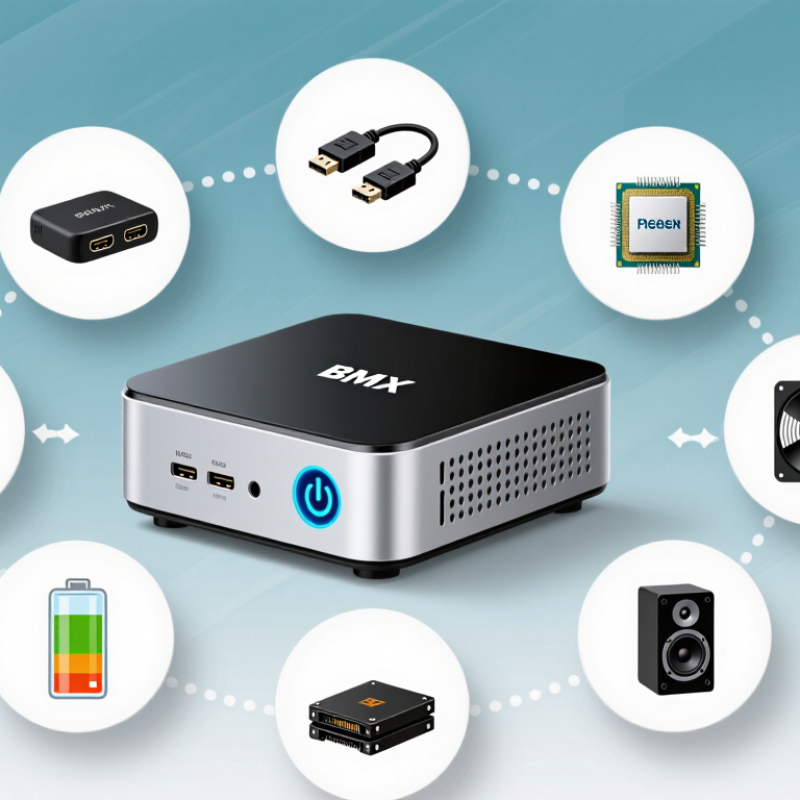
7 Tips for Choosing the Best BMAX Mini PC

Define Your Intended Uses and Performance Requirements

Before comparing specifications, write down what the mini PC will do on an ordinary weekday. Email, documents, and a few browser tabs need less processing power than video editing or running several development tools. For video calls, check that the system supports your display resolution and has the ports you need for a camera, headset, and monitor. Small details matter.

Think about your busiest routine, not just your easiest one. If you regularly keep many tabs open while editing photos, extra memory can make the system feel smoother. For large media files, storage capacity and upgrade options may matter more than a headline processor speed. Check whether the device can sustain demanding work without excessive fan noise or heat; a brief peak-performance test may not reveal that. Keep some headroom.

A practical way to compare options is to list three real tasks, such as opening a large spreadsheet, joining a call, and exporting a short video. Look for credible test results using similar workloads, and check the ports, wireless standards, and operating-system support against your setup. I might be tempted to buy for an occasional heavy task, then regret the extra cost. That trade-off deserves a second look. Choose for the work you actually repeat, while leaving room for a modest change in routine.

Compare Processor, Memory, and Storage Options

A mini PC’s processor should match the work you actually do. For browsing, video calls, and documents, a recent low-power chip may feel responsive. Photo editing, software builds, or several virtual machines need more cores and stronger cooling. Check performance tests for the exact configuration, not just the processor family. A small case can limit sustained speed when the fan gets warm.

Memory affects how smoothly several tasks run together. Eight gigabytes can suit light use, while 16 gigabytes gives many users more breathing room. Heavy creative work or large datasets may benefit from 32 gigabytes. Check whether memory is replaceable or soldered; an easy upgrade today can save a full-system replacement later. Small details matter.

Storage changes both capacity and everyday responsiveness. An NVMe drive can make booting and opening large files feel quicker than a slower drive, but capacity still matters. A 512-gigabyte drive may fill fast if you keep video projects or game libraries locally. Compare the drive type, usable capacity, and upgrade options. Check the workload. I once focused too much on processor speed and overlooked memory limits; the machine felt cramped with many browser tabs open. That is a useful reminder: compare the whole configuration, and leave some room for changing needs.

Check Ports, Wireless Connectivity, and Display Support

Check the port layout before judging a mini PC by its size. Count the devices you actually use: a keyboard, external drive, webcam, and wired network cable can quickly occupy several sockets. Tip: Look for a mix of front-accessible USB ports and rear ports for permanent connections. Tip: Confirm that USB-C supports the functions you need; a connector’s shape alone does not guarantee video output or fast data transfer. Small details matter.

For wireless use, check the supported Wi-Fi generation, frequency bands, and Bluetooth version. A crowded apartment can make a stable wired connection more useful than a higher advertised wireless speed. The International Telecommunication Union’s Facts and Figures 2023 estimated that 5.4 billion people, or 67% of the world’s population, used the internet. That figure is not a performance test, but it shows why dependable connectivity matters. Tip: Check whether your router supports the mini PC’s wireless bands.

Display support needs a closer look. Tip: Verify the maximum resolution and refresh rate for each output, especially when connecting two monitors. Tip: Check which port supports each display mode. Tip: Match the cable to the required bandwidth. A port may look right but still miss your monitor’s preferred setting. I’d double-check the specifications; product pages can leave this detail vague.

7 Tips for Choosing the Best Mini PC: Check Ports, Wireless Connectivity, and Display Support

Compare wireless generations using their theoretical peak data rates: Wi-Fi 5 is up to 6.9 Gbps, Wi-Fi 6 and Wi-Fi 6E up to 9.6 Gbps, and Wi-Fi 7 up to 46 Gbps. These are standard-level maximums, not typical real-world speeds. When choosing a mini PC, also verify the exact USB and video ports, supported display resolutions and refresh rates, and wireless bands.

Evaluate Size, Cooling, Noise, and Upgradeability

A compact computer should fit your actual workspace, not just look small in a product photo. Measure the shelf, monitor stand, or cabinet where it will sit, and leave room for cables and airflow. A few extra centimeters can prevent awkward bends and blocked vents. If you plan to move it often, check its weight and mounting options too. Tiny can be useful.

Cooling affects both performance and comfort. Look for ventilation openings that will remain clear, especially if the computer will sit inside a cabinet. During demanding tasks, warm air and fan noise may become noticeable. Listen closely. If possible, read reviews that describe noise under sustained workloads, not only at idle. Room temperature and placement can change the result, so one review may not tell the whole story.

Check upgradeability before buying. Confirm whether memory and storage can be replaced, and whether access requires simple screws or more involved disassembly. Some compact systems limit upgrades, even when the case appears roomy. That is easy to overlook. Think about your likely needs over the next few years, but avoid paying extra for parts you will never use. I would double-check the exact configuration: similar-looking models can have different internal layouts.

Compare Operating System, Warranty, and Total Cost

A mini PC can look inexpensive on a product page and cost more once it is ready for daily work. Check the operating system edition, activation status, update support, and driver availability. Confirm whether the license is included and whether reinstalling it requires extra steps. Small details matter. An unfamiliar interface can slow simple tasks, while short support windows may leave a machine exposed sooner than expected.

Read the warranty terms, not just its length. Check whether it covers parts and labor, who pays return shipping, and how repairs are handled. A low-cost device may be inconvenient to ship away for weeks. IDC’s Worldwide Quarterly Personal Computing Device Tracker estimated 262.7 million PC shipments in 2024, a 1.0% annual increase. That market scale does not guarantee consistent support; compare the written service terms for each configuration.

Calculate the total cost over the time you expect to keep the PC. Add the purchase price, any operating-system license, memory or storage upgrades, a monitor, and likely repair or shipping costs.

Estimate electricity with this formula: average watts × daily hours ÷ 1,000 × annual usage days × your electricity rate.

Not just price. I still find power easy to overlook, though usage varies sharply between light browsing and sustained workloads. Check independent specifications, then leave room in your budget for one unplanned upgrade.

Article Source:

Get In Touch

Drop Us A Message

    Our Contact Details

    • IPS Group BV | Head Office (NB), Technopol 4, 5026 SB Tilburg, The Netherlands

      IPS Group BV | Rhijnspoor 239, 2901 LB Capelle a/d IJssel, The Netherlands
    • sale@qbhardware.org
    • +31 (0) 10 303 2625