
7 Coil Transfer Cart Buying Tips for Global Buyers

Moving heavy steel coils is not just a matter of choosing a cart with enough capacity. The right Coil Transfer Cart must match the coil dimensions, production route, floor conditions, and handling method at your facility. A cart designed for a smooth indoor track may not suit a rough floor or frequent changes in direction. Small details matter.

Global buyers often compare quotations across suppliers, but price alone reveals little about long-term suitability. Confirm the rated load, coil support design, travel speed, braking method, and power supply. Ask how the cart handles your largest coil, not only the typical one. That matters. Also check whether operators can load and unload coils safely, and whether the controls are clear under real working conditions.

Before placing an order, share practical site information with the supplier: route length, turning points, floor condition, duty cycle, and available maintenance support. Request drawings and written specifications, then compare them against your actual workflow. A low price can still be the wrong choice. I have seen buyers focus on capacity while overlooking turning clearance or service access; those omissions can create costly delays. No checklist replaces a site review, but careful questions reduce guesswork. The seven buying tips below help you assess performance, safety, customization, supplier support, and total ownership needs with greater confidence. Ask for evidence.
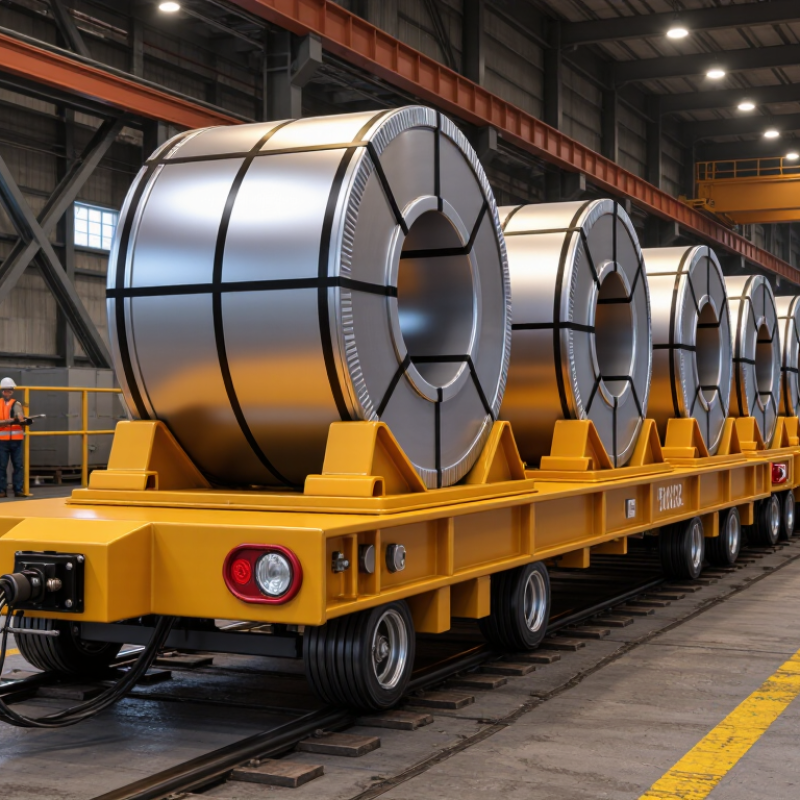
7 Coil Transfer Cart Buying Tips for Global Buyers

Define Coil Handling Requirements and Operating Conditions

Define Coil Handling Requirements and Operating Conditions

Before comparing coil transfer carts, record the heaviest coil’s weight, outside diameter, width, and core size. Include the maximum load, not just the average. A narrow coil and a wide coil can need different support spacing. Measure twice.

Decide how the coil will sit on the cart: eye horizontal or eye vertical. Confirm the loading method, lifting equipment, and required restraints. Then map the full travel route, including turns, ramps, doorways, and stopping points. A smooth floor can still have joints that affect wheel choice and ride quality. Note whether the cart will run indoors, outdoors, or between both areas. Dust, moisture, temperature, and shift length all matter.

Tips: Share a simple route drawing and coil-size range with suppliers. Ask them to verify capacity under your actual operating conditions, including starts, stops, and floor limits. Leave room for future coil sizes if practical. That allowance may cost more now, and it can be easy to overestimate future needs. Compare the trade-off before finalizing the specification.

7 Coil Transfer Cart Buying Tips for Global Buyers - Define Coil Handling Requirements and Operating Conditions

Tip Requirement to Define Illustrative Project Data Why It Matters / What to Verify
1. Set the load envelope Maximum and minimum coil mass, outside diameter, width, and inside diameter. Maximum mass: 8,000 kg; outside diameter: 1,200 mm; width: 1,500 mm; inside diameter: 508 mm. Size the cart and load-support structure for the heaviest and largest permitted coil. Confirm whether the stated mass includes packaging or a pallet, and account for the actual load distribution.
2. Specify coil orientation State whether the coil travels eye-horizontal or eye-vertical, and whether more than one orientation is required. Example: eye-horizontal transport, with the coil axis parallel to the floor. Orientation determines the support arrangement and affects stability, loading, and unloading. Confirm the orientation at pickup and delivery, not only during travel.
3. Choose the load interface Define how the coil is placed on and removed from the cart, including support shape and contact surfaces. Example: V-shaped cradle with replaceable, non-marking contact pads; overhead crane loads the coil from above. Match the cradle geometry to the coil diameter and loading method. Check that the support prevents rolling and does not damage coil edges or surface finishes.
4. Map the travel route Record route length, aisle width, turning space, door openings, floor joints, ramps, and pickup and delivery positions. Example: 120 m one-way route; 3.0 m minimum aisle width; maximum floor gradient 1%; two 90-degree turns. Measure the narrowest and most restrictive points on the loaded route. Verify turning clearance, floor capacity, wheel suitability, and the ability to stop safely on any slope.
5. Define the duty cycle Estimate trips per shift, operating hours, loaded versus unloaded travel, and expected peak demand. Example: 20 round trips per day across two 8-hour shifts, with approximately 60% of travel time under load. Duty affects drive, braking, motor, and power-system selection. Ask suppliers to size equipment against the actual route, payload, stops, and operating schedule.
6. Document the operating environment Identify indoor or outdoor use, ambient temperature, dust, moisture, washdown, and any hazardous-area requirements. Example: indoor production hall; 5–40 °C ambient temperature; occasional metal dust; no routine washdown. Environmental conditions affect electrical protection, components, traction, and maintenance needs. Specify any unusual heat, cold, water, or combustible-dust conditions for engineering review.
7. Set control and safety expectations Define operating mode, stopping locations, operator visibility, traffic interaction, and required site safety measures. Example: trained operator uses a pendant control; marked travel lane; audible and visual warnings; emergency-stop access at the controls. Review the complete route and workplace risk assessment with the supplier. Confirm guarding, braking, warnings, emergency stops, and applicable local regulations before purchase.

All figures are illustrative planning examples, not universal design limits. Confirm final specifications through a site survey and application-specific engineering review.

Evaluate Load Capacity, Coil Dimensions, and Cart Configuration

A coil transfer cart should be rated for more than the coil’s listed weight. Add the weight of any cradle or fixture, then discuss acceleration, stopping, and floor conditions with the cart supplier. A nominal 10-ton load may behave differently during movement than it does at rest. Keep a practical safety margin. Do not guess.

Record the coil’s outside diameter, inside diameter, width, and orientation before comparing cart layouts. A narrow coil may need different support from a wide one, even at the same weight. Check that the saddle or V-shaped cradle supports the coil securely without pressing on delicate edges. Also measure aisle width, turning space, and floor clearance. These details can rule out a configuration that looks suitable on paper.

Choose rail-guided or steerable wheels based on the actual route, not just the production layout. A fixed path can simplify repeatable transfers, while steering may help around changing work areas. Confirm how the cart will be loaded, positioned, and unloaded, including space for forklifts or overhead lifting equipment. One detail is easy to miss: coil dimensions can vary between orders. I would recheck them. The first specification is not always the last.

Compare Power Systems, Controls, and Safety Features

A coil transfer cart’s power system should fit its route, duty cycle, and floor conditions. Battery power allows flexible movement between work areas, but buyers should confirm charging time, battery access, and shift demand. Cable reels or conductor rails can support frequent travel on fixed routes, though they need suitable installation space. Ask suppliers to state rated load, operating speed, and expected running time under your actual working conditions. A brochure figure alone may not reflect repeated starts with a heavy coil.

Controls affect how precisely operators position coils near processing equipment. A pendant offers direct control, while a wireless remote can improve visibility from a safer viewing point. Check that controls provide clear direction labels, responsive stopping, and a practical low-speed mode. Keep it simple. Complex interfaces can slow training, especially when operator teams change. One detail buyers sometimes overlook is whether the control system can be serviced locally.

Safety features should match the cart’s load and travel path. Review the coil cradle, restraints, emergency stops, warning lights or alarms, and protection against unintended movement. Ask where sensors detect obstacles and whether they remain effective around dust, glare, or floor irregularities. These details deserve a walk-through, not just a checklist. A design can look complete on paper yet leave blind spots beside racks or machine entrances. Share route drawings and coil dimensions before comparing offers, then verify the proposed features during a site acceptance test.

Verify Compliance, Customization Options, and Supplier Capability

For a coil transfer cart, compliance starts with the actual route and load, not a generic checklist. Confirm rated capacity, coil dimensions, floor condition, travel speed, stopping distance, and operator controls. Ask for drawings, risk-assessment documents, and test records that match your configuration. Requirements differ by destination and site, so verify applicable standards with qualified local specialists. Small details matter. A narrow aisle or uneven floor can change the right design.

Customization should fit the work: V-cradle width, coil orientation, powered or manual steering, and control layout. MHI’s 2024 Annual Industry Report found that 55% of surveyed supply-chain professionals planned to increase technology investment. That is a useful signal, not proof that a particular cart will perform. Check the supplier’s engineering process, production capacity, load-test method, spare-parts plan, and delivery schedule. Request evidence from comparable projects. A polished quotation is not enough. Ask how design changes affect testing and lead time; this step is easy to overlook, and buyers sometimes do.

Assess Global Shipping, Installation, Warranty, and After-Sales Support

7 Coil Transfer Cart Buying Tips for Global Buyers
Assess Global Shipping, Installation, Warranty, and After-Sales Support

Buying a coil transfer cart across borders means planning beyond the machine itself. UNCTAD’s Review of Maritime Transport 2024 reports that over 80% of world trade by volume moves by sea. Ask suppliers for packed dimensions, gross shipping weight, lifting points, and corrosion protection. A timber crate may look sturdy, yet poor moisture protection can still leave electrical parts vulnerable during a long voyage. Confirm who handles customs documents and final-site unloading before the cart leaves the factory.

Tip: Share a site layout and coil specifications early. Confirm aisle width, floor capacity, turning clearance, and available power. Request installation instructions, commissioning requirements, and operator training details in writing.

Warranty wording deserves a close read. Check when coverage begins, which components are excluded, and who pays for international freight on replacement parts. Ask for realistic response times, local service options, and a stocked-spares list. A long warranty sounds reassuring, but it matters less if a failed wheel or control component takes weeks to arrive. This can feel overly cautious; sometimes it is. Still, clarify the support process before purchase, including what evidence is needed to make a claim. Keep drawings, inspection records, and commissioning notes accessible to both your maintenance team and the supplier.

7 Coil Transfer Cart Buying Tips for Global Buyers

Assess global shipping, installation, warranty, and after-sales support alongside cart specifications.

Suggested review priorities are scored from 1 (lower emphasis) to 5 (higher emphasis). These illustrative planning scores are not survey results; prioritize each item according to your route, site, and operating requirements.

Get In Touch

Drop Us A Message

    Our Contact Details

    • IPS Group BV | Head Office (NB), Technopol 4, 5026 SB Tilburg, The Netherlands

      IPS Group BV | Rhijnspoor 239, 2901 LB Capelle a/d IJssel, The Netherlands
    • sale@qbhardware.org
    • +31 (0) 10 303 2625