How to Choose a Rough Terrain Pallet Truck?
Choosing a Rough Terrain Pallet Truck begins with the ground beneath your wheels. Gravel, mud, ramps, broken concrete, and uneven loading areas create different demands. A truck that performs smoothly indoors may struggle badly outside. That mistake is common.
Industrial safety pioneer H. W. Heinrich famously stated, “Safety is a condition of employment.” His principle still matters here. A suitable truck must protect the operator, the load, and the surrounding work area. Buyers should examine rated capacity, load center, ground clearance, wheel construction, braking performance, and handle control. Manufacturer specifications should guide every comparison.
Picture a 1,200-kilogram pallet crossing wet gravel beside a construction site. Small wheels may sink. Narrow forks may destabilize the load. Limited clearance may damage the chassis. A powerful motor alone cannot solve these problems. It may even encourage careless operation.
Look closely at tire design. Pneumatic or solid rubber tires often provide better stability on irregular surfaces. However, each option involves compromises in puncture resistance, traction, comfort, and maintenance. Electric models can reduce noise and emissions, but battery performance may change in cold or steep conditions. Manual models may suit short movements, yet repeated hauling can quickly exhaust workers.
Experience matters. Ask where the truck will operate, how often it will move, and who will use it. Test the turning radius with the actual pallet. Check visibility from the operator’s position. Review service access and spare-parts support, too. One overlooked detail can become an expensive delay.
There is no universal winner. The best Rough Terrain Pallet Truck matches real surfaces, real loads, and real operators. Recheck the choice before purchase. Assumptions fail in the field.
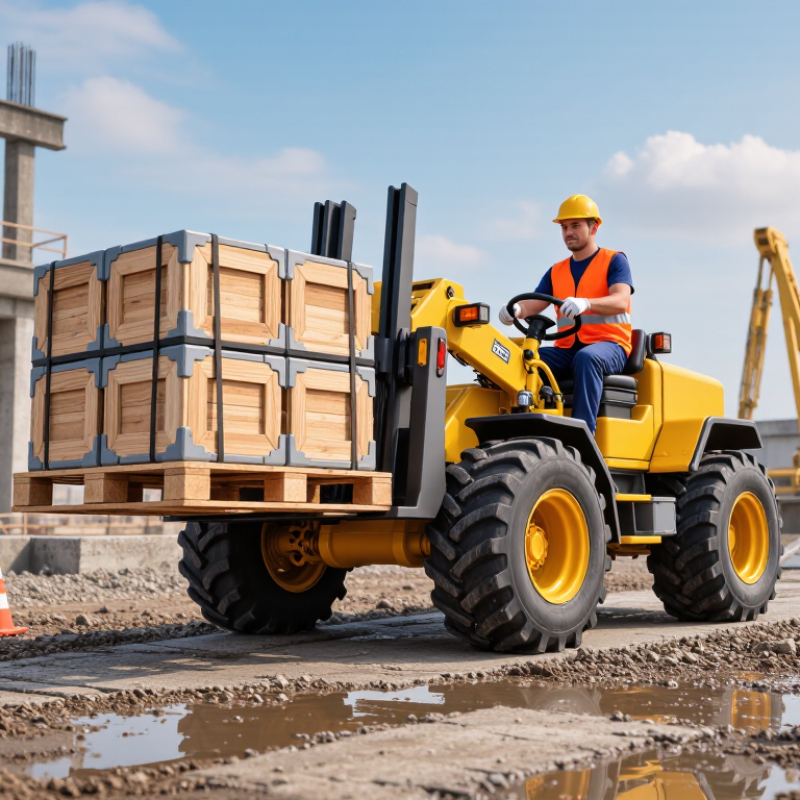
Define the Load: Match 1,000–2,500 kg Capacity to Pallet Weight
How to Choose a Rough Terrain Pallet Truck?
Define the load before comparing equipment. A 1,500 kg rating is not a working target. It is a boundary under specified conditions. Weigh the heaviest pallet, including packaging, moisture, and uneven contents. Then check the load centre. A long pallet can reduce usable capacity, even when its total weight stays unchanged. ISO 3691-5:2014 provides safety requirements for pedestrian-controlled trucks, but site conditions still demand practical verification.
For loads between 1,000 and 2,500 kg, match capacity to real terrain. Gravel, mud, slopes, and broken concrete increase rolling resistance. A 1,200 kg pallet may need more pulling force than a heavier load on smooth flooring. HSE’s 2023/24 injury statistics recorded handling, lifting, or carrying in 17% of non-fatal workplace injuries. That figure supports careful planning, not guesswork. Field estimates are often imperfect. Recheck them during wet weather.
Tips: Weigh the heaviest pallet first. Mark its centre of gravity. Add a safety margin, but do not hide poor load distribution behind extra capacity. Test the truck on the steepest route, with the actual pallet and surface. Check ground clearance, wheel traction, braking, and turning space. OSHA estimates that powered industrial truck incidents cause about 85 workplace fatalities and 34,900 serious injuries annually in the United States. Rough terrain pallet trucks are not identical, but the warning remains relevant: capacity, stability, and operator control must be assessed together.
Assess Terrain: Choose 70–100 mm Ground Clearance for Uneven Surfaces
Choosing a rough terrain pallet truck starts with measuring the surface, not guessing from product photographs. For uneven yards, gravel paths, and damaged concrete, 70–100 mm of ground clearance helps the chassis pass over shallow ridges and loose debris. Measure the clearance at the lowest fixed point, with the rated load installed. Fork tips do not count.
Field experience shows that extra clearance is useful near loading docks and outdoor storage areas. However, higher clearance can raise the load centre and reduce stability on slopes. Keep the load low, travel slowly, and cross broken surfaces at a controlled angle. OSHA reports approximately 34,900 serious powered industrial truck injuries annually in the United States, although its data covers many truck types and not rough terrain pallet trucks specifically (OSHA, Powered Industrial Trucks Safety Topic). That limitation matters.
Check the route after rain. Mud can remove the practical advantage of a 100 mm specification. Measure ruts, drainage channels, and dock thresholds with a steel rule. ISO 3691-5 addresses safety requirements for pedestrian-propelled industrial trucks, but it does not make one clearance value suitable for every site. A 70 mm model may work on firm asphalt. A 100 mm design gives more tolerance on uneven ground, but only when steering control and braking remain predictable. Test with the actual pallet weight. Small details often decide the result.
Select Fork Dimensions: Check 1,150 × 550 mm Compatibility with Pallets
When choosing a rough terrain pallet truck, begin with the pallet openings, not the truck’s appearance.
A 1,150 × 550 mm fork configuration can suit many common pallets, but compatibility is never automatic. Measure the pallet’s entry length, opening height, and usable width. Do not rely only on a catalog drawing.
The 1,150 mm fork length should enter deeply enough to support the load without striking the opposite pallet board. Limited entry can leave the load unstable, especially on gravel or sloped ground. The 550 mm dimension also needs careful checking.
Is it the outside fork width, the distance between forks, or the frame width? Specifications can be misunderstood. Ask for a dimensional diagram when wording seems unclear.
Test the loaded pallet if possible. Keep the forks level, insert them fully, and check for contact with deck boards. A few millimeters may matter. Also inspect ground clearance, wheel position, and the pallet’s load center.
A pallet that fits indoors may behave differently outdoors. I once treated a “standard” pallet as universal; that assumption caused poor fork alignment.
Measure twice. Then confirm the rated capacity at the intended load center. Uncertain dimensions deserve a second check before purchase.
Compare Mobility: Evaluate 200–300 mm Wheels and 10–15% Gradeability
How to Choose a Rough Terrain Pallet Truck?
Mobility starts with the wheels, not the brochure. For gravel, compact soil, and broken concrete, 200–300 mm wheels usually provide better ground clearance and smoother movement. Larger wheels cross shallow ruts more easily. They also reduce sudden handle shocks. Smaller wheels may turn faster inside tight loading areas. That advantage disappears on loose ground. OSHA estimates that powered industrial truck incidents cause about 85 fatalities and 34,900 serious injuries annually in the United States. Uneven travel deserves serious attention.
Gradeability needs equal scrutiny. A rated capability of 10–15% may suit moderate ramps, but the figure is not a universal promise. Load weight, tire material, surface moisture, and ramp length can change actual performance. A 15% grade rises 15 metres over 100 metres horizontally. That is steeper than many operators expect. Test the truck with a realistic pallet, not an empty unit. MHI’s 2024 Annual Industry Report highlights persistent labor pressure and stronger demands for operational efficiency. That makes controlled mobility valuable, but speed should not replace stability. ISO 3691-5 also supports risk-based evaluation for rough-terrain industrial trucks. Check braking, steering response, and rollback behavior. Small details matter. I would question any specification measured only on clean, dry pavement. Loose gravel may expose the real weakness. A practical site trial remains more reliable than a maximum rating.