
How to Choose the Right Lead Apron for Global Buyers?

Global buyers need more than a low unit price when selecting a lead apron. They need protection, comfort, traceability, and dependable quality evidence. A lead apron may look sturdy on a product page, yet its internal shielding, stitching, and fit require closer examination. Poor sizing can create gaps near the chest, shoulders, or sides. Those small gaps matter during repeated fluoroscopy procedures.

The UNSCEAR 2020/2021 Report identifies medical exposure as a major contributor to population exposure from artificial ionizing radiation. The IAEA publication Radiation Protection and Safety in Medical Uses of Ionizing Radiation emphasizes optimization, workplace monitoring, and appropriate protective equipment. NCRP Report No. 160 also documented the significant growth of medical radiation exposure in the United States. These reports support a practical buying principle: protection should be evaluated through evidence, not appearance.

In practice, buyers should compare lead equivalence, coverage area, weight, flexibility, and tested durability. IEC 61331-3 provides relevant requirements for protective clothing and devices used against diagnostic X-rays. Ask suppliers for current test reports, material declarations, batch information, and clear care instructions. Weight matters. A heavy apron may reduce compliance during a long procedure. A lighter, lead-free design may be suitable, but only when independent testing confirms its stated equivalence.

Global purchasing adds another layer of risk. Confirm sizing charts, packaging conditions, warranty terms, and service support before ordering. Suppliers should explain how aprons are folded, stored, inspected, and replaced. No checklist is perfect. Even reputable data can become outdated when materials or manufacturing sites change. A thoughtful choice combines recognized standards, clinical experience, supplier transparency, and regular inspection after delivery.
How to Choose the Right Lead Apron for Global Buyers?

Define Lead Apron Protection Levels and Intended Applications

How to Choose the Right Lead Apron for Global Buyers?

Define Lead Apron Protection Levels and Intended Applications

Lead apron protection is commonly described by lead equivalence, such as 0.25, 0.35, or 0.50 mm Pb. A higher value generally offers stronger attenuation, but it also adds weight. The right level depends on exposure time, radiation direction, and workplace procedures. A 0.25 mm apron may suit occasional radiography when staff can stand behind a barrier. Fluoroscopy and interventional work often require 0.35 mm or 0.50 mm protection, especially during longer procedures. However, local requirements may differ.

Coverage matters as much as thickness. A front-protection apron can work for staff facing the radiation source. Wraparound designs provide broader coverage for mobile positioning or frequent movement. Some workplaces also need thyroid collars, protective eyewear, or gloves. Aprons should fit the wearer’s body closely without restricting movement. Poor fit creates gaps. It may also cause unsafe posture.

Tips: Match the apron to the actual procedure, not only the product label. Ask for test reports, material specifications, and inspection guidance. Check the stated lead-equivalent value across the full protective area. Store aprons flat or on suitable hangers, and inspect them regularly for cracks or creases. A small crease can become a serious weakness over time. Buyers should also confirm sizing, cleaning instructions, and compliance with applicable regional standards. No apron replaces distance, shielding, exposure monitoring, and trained supervision. I have seen teams focus on thickness while overlooking comfort, and that mistake can reduce consistent use.
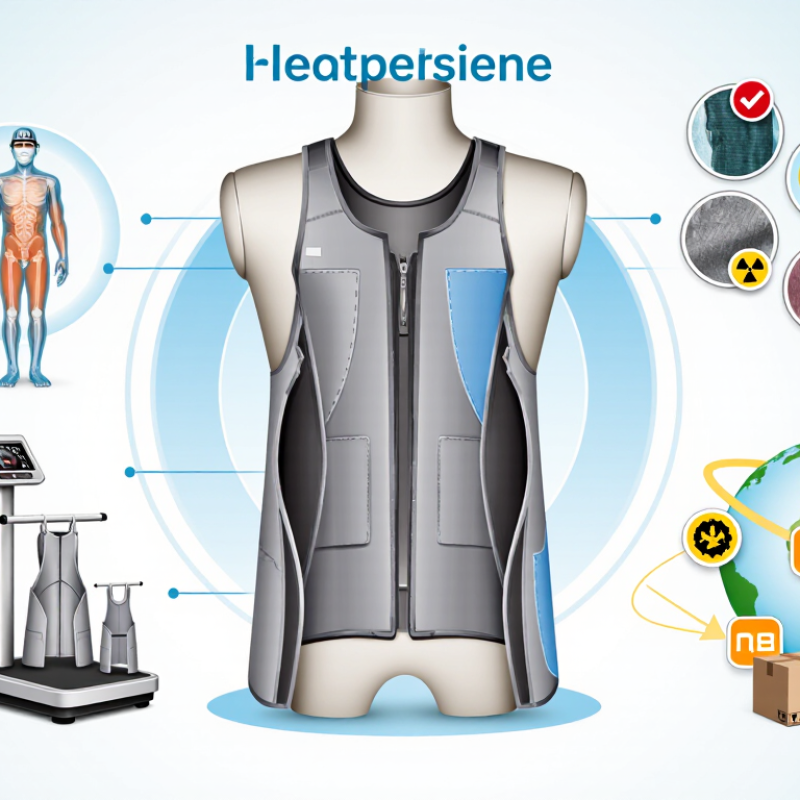
Assess Material Types, Weight, Fit, and User Comfort

Choosing a lead apron for global use requires more than comparing price tags. Material affects protection, flexibility, and long-term handling. Traditional lead aprons can provide reliable shielding, but they may feel heavy during extended procedures. Lead-composite and lead-free materials can reduce weight, yet their performance must be confirmed through independent test reports. Marketing claims are not enough.

Weight should match the user’s working position. A 4-kilogram apron may feel manageable while standing for ten minutes, then become uncomfortable during a longer examination. Check the manufacturer’s stated protection level, weight distribution, and size range. Shoulder straps should sit flat, while the front panel should cover the chest and lower abdomen without restricting movement. Try it with normal work clothing.

Fit is often underestimated. An apron that hangs too loosely can shift during use. One that fits too tightly may create pressure around the neck and waist. Small details matter, including adjustable closures, smooth edges, and ventilation near the back. Comfort supports consistent use. It does not replace correct safety procedures.

Ask for material specifications, testing dates, care instructions, and batch traceability. Inspect seams, surface cracks, and fastening points regularly. I would not assume a lighter apron is automatically superior. In practice, comfort, verified protection, and realistic daily wear must be considered together. Some choices remain imperfect, especially when users have different body shapes and working habits.

Check Global Safety Standards, Testing, and Product Certification

Global buyers should treat lead aprons as tested protective equipment, not ordinary workwear. Medical imaging remains the largest artificial source of public radiation exposure, according to UNSCEAR’s 2020/2021 report. NCRP Report No. 160 also identified medical imaging as the largest contributor to artificial radiation exposure in the United States. These findings make verified attenuation data essential.

Check whether the apron follows IEC 61331-3 and whether its material was tested under IEC 61331-1 methods. ASTM F2547 can provide additional attenuation testing information. Ask for reports showing lead-equivalent protection at specific tube voltages, such as 60, 80, and 100 kVp. A vague “0.5 mm protection” claim is not enough. Inspect stitching, overlap areas, closures, and protective seams. Certification should be traceable to an accredited laboratory, with batch numbers and test dates. For European distribution, also verify applicable personal protective equipment requirements and conformity documentation. Country rules can differ.

Tips: Request independent reports before ordering samples. Hang each apron flat and inspect it with fluoroscopy or radiography when possible. A heavy apron is not automatically safer. Fit matters, but comfort is often overlooked. I have seen buyers focus on lead equivalence while ignoring cracks caused by poor storage. That mistake deserves more attention. Replace damaged garments, even when the label still looks acceptable.

Compare Sizes, Designs, Customization, and Supplier Reliability

How to Choose the Right Lead Apron for Global Buyers?

Size and coverage should match the work, not merely the wearer’s measurements. A wraparound apron protects more effectively than a front-only model during frequent angled procedures. However, extra coverage increases weight. That trade-off is often underestimated. Measure chest, waist, height, and shoulder width before ordering. Check overlap at the front when standing and sitting. Common protection levels include 0.25, 0.35, and 0.50 mm lead equivalence. Select the lowest suitable level after reviewing the facility’s radiation assessment. UNSCEAR 2020/2021 identifies medical exposure as the largest human-made source of population exposure, making practical protection decisions important.

Design details affect daily use. Lightweight composite materials can reduce fatigue, but buyers should request independent attenuation results. The test method should align with IEC 61331-3 or an equivalent recognized standard. Inspect stitching, closures, seams, and hanging loops. A small tear can become a costly failure. Custom colors and logos are less important than stable sizing and clear labeling. Lead-free alternatives also require evidence, not attractive marketing language. Ask for protection data at the intended tube-voltage range.

Supplier reliability needs more than a low quotation. Request batch test reports, material declarations, dimensional tolerances, and traceability records. ISO 9001 certification may support process control, but it does not prove apron performance. Confirm replacement policy, inspection guidance, and export documentation. The IAEA’s General Safety Requirements, Part 3, emphasizes optimization and suitable protective measures in medical exposure settings. Still, no apron replaces distance, shielding, or controlled working practice. I have seen buyers focus on delivery speed and regret poor fit later. Procurement reviews should include samples, user trials, and a documented acceptance checklist.

Evaluate Pricing, Shipping, Storage, and After-Sales Support

For global buyers, the lowest quoted price rarely represents the real cost of a lead apron. Add customization, export packing, insurance, duties, and replacement parts before comparing suppliers. NCRP Report 160 states that medical imaging contributed about 48% of the average American’s radiation dose in 2006. That figure is old, but it shows why dependable protective equipment deserves careful budgeting. I would request at least three landed-cost quotations, not factory prices alone.

Shipping details can quietly damage a purchase. Ask for packed dimensions, gross weight, delivery terms, and temperature limits. A folded apron may arrive with permanent cracks after rough transport. Suppliers should provide batch identification, conformity documents, and clear inspection guidance. IEC 61331-3:2014 addresses protective clothing design and testing, while IAEA GSR Part 3 requires protective equipment to be suitable, maintained, and regularly checked. Documents matter, but they do not replace physical inspection.

Storage affects service life. Hang aprons vertically on strong, rounded supports, away from heat, sunlight, chemicals, and sharp edges. Never leave them folded overnight. Storage racks, freight, and staff training should appear in the procurement budget. After-sales support should include defect reporting, inspection advice, repair limits, and a realistic replacement timeline. A two-year warranty sounds useful, yet vague exclusions can make it nearly worthless. I have seen purchasing teams overlook storage space. That mistake is easy to repeat. Ask how damaged garments will be assessed, who pays return freight, and whether inspection records remain available.

How to Choose the Right Lead Apron for Global Buyers? - Evaluate Pricing, Shipping, Storage, and After-Sales Support

Practical comparison of common lead apron configurations for international procurement

Evaluation Dimension Basic Front-Protection Apron Standard Wrap-Around Apron Premium Lightweight Apron Buyer Consideration
Typical use Short procedures, dental imaging, and low-frequency use General radiography, fluoroscopy, and regular clinical use High-frequency use where weight reduction and mobility are priorities Match the design to exposure frequency, procedure duration, and required coverage
Common lead-equivalent protection 0.25 mm Pb equivalent 0.35 mm Pb equivalent 0.35–0.50 mm Pb equivalent, depending on the material system Confirm the tested protection level at the intended X-ray energy range
Approximate unit price US$70–130 US$110–220 US$180–350 Indicative bulk-market ranges; exclude taxes, inspection, freight, and customization
Typical adult weight 3.5–5.5 kg 5.0–7.5 kg 3.0–6.0 kg Weight varies with size, overlap, protection level, and composite material
Coverage design Front torso coverage; limited side and shoulder protection Front, side, and partial back overlap Wrap-around or two-piece design with improved ergonomic coverage Use wrap-around coverage for procedures requiring frequent changes in body position
Available size range Usually S–XL Usually S–XXL Usually S–XXL, with more custom-fit options Request a size chart based on chest, waist, height, and garment length
Material options Lead-based protective material with fabric outer cover Lead-based or lead-composite protective material Lead-composite or non-lead alternative, depending on specification Non-lead alternatives may reduce weight but can increase purchase cost
Packing volume per unit Approximately 0.015–0.025 m³ Approximately 0.020–0.035 m³ Approximately 0.018–0.030 m³ Confirm carton dimensions before calculating sea, air, or courier freight
Indicative air-shipping time 5–10 business days after dispatch 5–12 business days after dispatch 5–12 business days after dispatch Transit time depends on destination, customs clearance, and documentation
Indicative sea-shipping time 25–45 days, port to port 25–50 days, port to port 25–50 days, port to port Allow extra time for inland delivery, customs, and local inspection
Estimated freight sensitivity Medium; weight and carton volume both affect freight High; heavier units can materially increase air-freight cost Medium to high; premium materials may lower weight but not always volume Compare landed cost rather than unit price alone
Recommended storage method Hang flat or on a wide support; avoid sharp folds Hang vertically or lay flat on a broad surface Follow the supplied hanging or flat-storage instructions Do not fold, crease, stack heavily, or place near excessive heat
Storage conditions Clean, dry area; commonly 15–30°C is suitable Clean, dry area away from direct sunlight and chemicals Stable indoor conditions with controlled humidity preferred Follow the product technical sheet where local climate is hot or humid
Inspection frequency Visual inspection before use and periodic detailed inspection Visual inspection before use plus scheduled condition checks Visual and documented inspection according to facility policy Replace or test items showing cracks, creases, delamination, or exposed material
Cleaning requirements Wipe with a soft cloth and approved mild disinfectant Surface cleaning only; do not machine wash unless specifically permitted Use the manufacturer’s approved cleaning procedure for the outer cover Avoid bleach, solvents, abrasive tools, soaking, and high-temperature drying
Typical warranty expectation 12 months against manufacturing defects 12–24 months against manufacturing defects 12–24 months, subject to storage and handling requirements Clarify exclusions for misuse, folding damage, chemical damage, and normal wear
After-sales response target Initial response within 1–3 business days Initial response within 1–2 business days Initial response within 1–2 business days with technical review Request a written replacement, repair, and claim-handling procedure before ordering
Replacement claim documents Order number, photos, defect description, and batch information Order number, photos, inspection record, and shipping documents Order number, photos, usage history, inspection record, and test documentation Maintain traceable records for every item and delivery batch
Best fit for global buyers Budget-sensitive buyers with occasional-use requirements Hospitals, imaging centers, and distributors seeking balanced performance Buyers prioritizing staff comfort, frequent use, and long-term ergonomics Select based on total cost of ownership, not only initial purchase price

Note: Prices, weights, packing volumes, and transit times are indicative procurement ranges. Actual values vary by size, protection level, order quantity, destination, customs requirements, shipping method, and customization.

Get In Touch

Drop Us A Message

    Our Contact Details

    • IPS Group BV | Head Office (NB), Technopol 4, 5026 SB Tilburg, The Netherlands

      IPS Group BV | Rhijnspoor 239, 2901 LB Capelle a/d IJssel, The Netherlands
    • sale@qbhardware.org
    • +31 (0) 10 303 2625