
How to Choose the Best PTO Chipper Shredder?

Choosing the right Pto Chipper Shredder is not simply a horsepower decision. It is a field-matching decision.

Dr. R. Bruce Rummer, a respected forest-products engineer, once emphasized, “The safest machine is the one matched to the job, the material, and the operator.” That principle remains useful today. A compact tractor may run a powerful chipper, but it may not control it safely on uneven ground. More capacity is not always better.

Begin with your tractor’s verified PTO output, three-point hitch rating, and hydraulic capability. Then examine the material you actually handle. Fresh branches, dry hardwood, vines, and wet brush behave differently inside the feed chute. A narrow opening may suit light pruning. It can struggle with forked limbs and tangled debris.

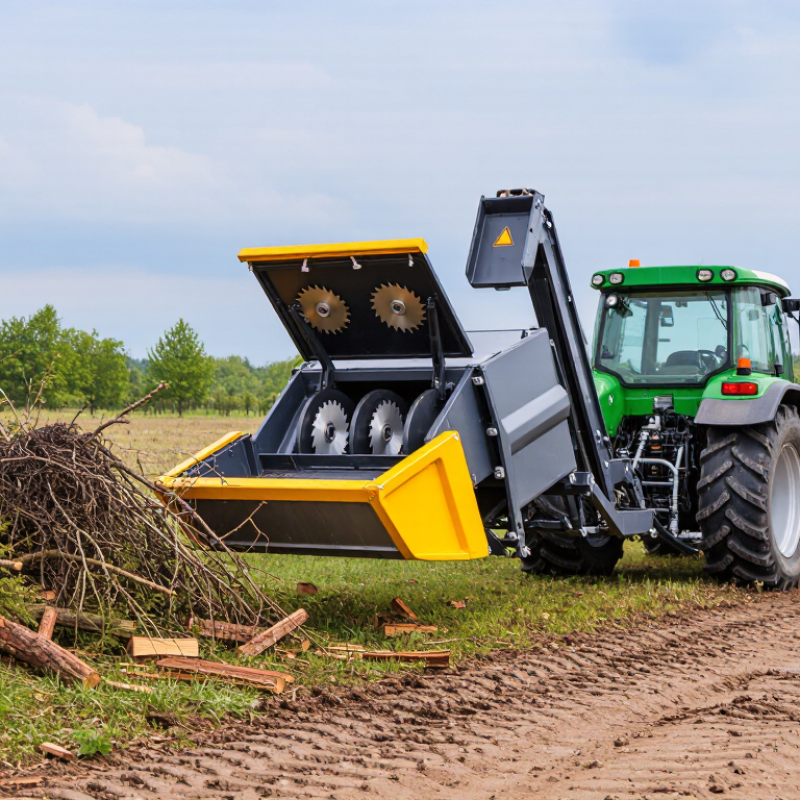
Look closely at the rotor, knives, screens, and discharge direction. Replaceable blades reduce long-term downtime. A controllable discharge chute helps keep chips away from roads, windows, and people. Guarding must remain intact. Never treat a safety shield as optional.

Noise and vibration also deserve attention. They often reveal poor balance or loose hardware before serious damage appears. Ask about lubrication points, belt access, spare parts, and local service support. These details are easy to overlook.

Real work is rarely perfect. A machine that performs well in a showroom may disappoint in a muddy orchard. Your best choice should fit your tractor, workload, terrain, maintenance habits, and safety discipline. This guide explains how to compare each factor before purchasing a PTO Chipper Shredder.
How to Choose the Best PTO Chipper Shredder?

Define Your Chipping and Shredding Needs

How to Choose the Best PTO Chipper Shredder?

Define Your Chipping and Shredding Needs

Start with the material, not the machine. Walk through your worksite and record branch diameter, moisture, length, and daily volume. Soft green brush feeds differently from dry hardwood. A unit designed for six-inch limbs may struggle with tangled vines and wet leaves. It may also waste fuel when processing smaller material.

The U.S. Department of Energy’s 2023 Billion-Ton Report projects nearly one billion dry tons of biomass could be available annually by 2040. That figure shows the scale of potential material, but your operation needs a smaller, honest estimate. Measure a typical day, then add a modest margin. Do not size the machine around an occasional storm cleanup.

Check whether you need chips for mulch, shredded material for compost, or a mixed output. Chipping favors sharp knives, controlled feeding, and a suitable discharge height. Shredding often requires screens or hammers that handle leaves and thin branches more effectively. PTO horsepower must match the tractor’s usable output, not only its advertised rating. Hydraulic flow matters too. I would test the hardest material before purchasing. That step is easy to skip, and regrettable later. Noise, access width, operator visibility, and maintenance time also deserve a place in the specification sheet.

Compare PTO Chipper Shredder Types and Power Requirements

How to Choose the Best PTO Chipper Shredder?

Choosing a PTO chipper shredder starts with the material, not the tractor. Disc chippers handle straight branches efficiently and usually feed aggressively. Drum chippers often manage mixed, crooked material more smoothly. A flail-style shredder suits leaves, brush, and smaller green waste. The U.S. EPA reported 35.4 million tons of yard trimmings generated in 2018. That volume shows why matching capacity matters. Oversized equipment can waste fuel and increase maintenance.

Power requirements depend on branch diameter, moisture, feed speed, and cutter design. Light-duty units may require 20–35 PTO horsepower. Medium machines commonly need 40–75 PTO horsepower. Heavy-duty models can exceed 80 PTO horsepower. These are working ranges, not guarantees. Check the manual carefully. PTO horsepower is more useful than engine horsepower. Also confirm PTO speed, shaft size, hydraulic flow, and tractor stability. ASABE power measurement standards emphasize consistent testing conditions, yet field performance still changes with wet wood and uneven feeding. A perfect calculation is rare.

Tips: Leave a power reserve of about 15–20 percent. Test the tractor on dry branches first. Measure the largest real branch, not the average one. Keep the feed chute level and avoid forcing crooked logs. I would also compare hourly throughput, not only advertised maximum diameter. The EPA’s Advancing Sustainable Materials Management report supports the scale of yard waste, but it cannot predict your property’s daily workload. Local experience still matters.

Evaluate Capacity, Build Quality, and Safety Features

Choosing the best PTO chipper shredder starts with matching capacity to your tractor and workload.

Check the recommended PTO horsepower, feed opening, and rated branch diameter. A wide chute saves time, but it also demands steady feeding and stronger cutting components.

Consider your typical material, not an occasional oversized log. Wet leaves and green branches can reduce throughput quickly. Small mistakes become expensive.

Build quality matters under constant vibration.

Look for a rigid steel frame, clean welds, protected bearings, and a rotor that feels balanced during operation. Replaceable knives should be easy to inspect and sharpen.

Service access is important, too. If removing a cover requires awkward tools, routine maintenance may be delayed.

That weakens reliability over time. It sounds minor.

Safety features deserve equal attention.

A properly guarded PTO shaft, secure discharge chute, and clearly marked controls should be standard expectations. Shear-bolt protection can help limit damage when foreign material enters the rotor.

Some designs include feed-stop mechanisms or accessible emergency controls, which can improve response time.

Never treat personal protective equipment as optional; use eye, hearing, hand, and close-fitting body protection. Keep bystanders away.

In practical evaluations, test the machine with ordinary branches before demanding full capacity.

Listen for unusual vibration, watch the discharge pattern, and check whether material feeds smoothly. A higher capacity rating is not automatically better.

It may require more tractor power, more maintenance, and more operator discipline.

Consider the whole working system, not just the largest number.

Check Tractor Compatibility and Operating Convenience

Choosing the best PTO chipper shredder starts with tractor compatibility, not cutting capacity. The 2022 USDA Census of Agriculture counted about 1.9 million U.S. farms, each with different tractor sizes and working conditions. Check the tractor’s PTO speed, horsepower, three-point hitch category, and lift capacity. A 540-rpm PTO is common, but some tractors use different settings. Matching the wrong speed can damage the driveline quickly.

Measure the PTO shaft carefully. It should not bottom out when the hitch rises or separate during a tight turn. Ask for a shielded shaft and confirm that the chipper’s required horsepower stays within the tractor’s safe operating range. The ASABE S318.18 safety standard addresses power-take-off shielding and operator protection, so treat guarding as a requirement, not an optional upgrade. Small details matter.

Operating convenience also affects real productivity. Look for reachable controls, clear feed openings, simple belt access, and a discharge chute that turns without forcing you to leave the operator seat. A heavy machine may lift safely in the yard but become unstable on sloped ground. USDA farm data shows many operations are small and mixed-use, so storage and transport deserve attention. I would test the three-point movement with the tractor running. Catalog measurements rarely reveal awkward access, excessive vibration, or a shaft that is simply too short.

Assess Maintenance Needs, Costs, and Long-Term Value

A PTO chipper shredder should be judged by its upkeep, not its purchase price alone. Before choosing one, inspect access to grease points, bearings, belts, knives, and the cutting chamber. If removing a guard requires half an hour, routine maintenance may be delayed. That delay can turn a small adjustment into expensive downtime.

Ask for a clear maintenance schedule and parts list. Knives should be easy to remove, sharpen, or replace safely. Belts need correct tension, while rotor bearings require suitable lubrication at specified intervals.

Check whether your tractor provides enough PTO horsepower and hydraulic flow. An underpowered setup may consume more fuel and produce uneven chips. Measure the storage area too. Moisture and poor cover can shorten component life.

Think beyond annual servicing. Estimate fuel use, replacement knives, belts, labor, and lost work hours over five years. A lower-priced machine may cost more when parts are difficult to source. A well-supported design usually offers better long-term value, but support claims should be verified in writing. I have seen owners overlook discharge controls and regret the choice during roadside clearing. Small details matter.

No machine is maintenance-free. That expectation is unrealistic. Keep a simple service log with operating hours, lubrication dates, and replaced parts. Review it after the first season. You may discover that your original cost estimate was too optimistic. That is useful information, not failure.

Get In Touch

Drop Us A Message

    Our Contact Details

    • IPS Group BV | Head Office (NB), Technopol 4, 5026 SB Tilburg, The Netherlands

      IPS Group BV | Rhijnspoor 239, 2901 LB Capelle a/d IJssel, The Netherlands
    • sale@qbhardware.org
    • +31 (0) 10 303 2625