
Choosing the best Foldable Golf Umbrella in 2026 means balancing coverage, strength, and easy transport. A wide canopy can shelter you and your golf bag, but it may feel awkward in crowded spaces. On a breezy course, a sturdy frame and a secure grip matter more than flashy features. Small details count.
Look for clear product specifications, including open canopy width, folded length, weight, and frame materials. A vented canopy may help release wind pressure, though it cannot make an umbrella storm-proof. Check how the ribs and shaft feel when opening and closing it; a stiff button or loose joint can become annoying after several holes. Numbers help, but they do not tell the whole story.
This guide compares practical features and explains what to consider for different golfers and playing conditions. It also separates useful design choices from claims that deserve a closer look. Even careful shoppers can focus too much on maximum size and overlook weight. That trade-off is easy to miss. Consider how you carry your clubs, how often you play in wet weather, and whether quick one-handed operation matters to you. The right choice should fit your routine, not just look impressive on a product page.
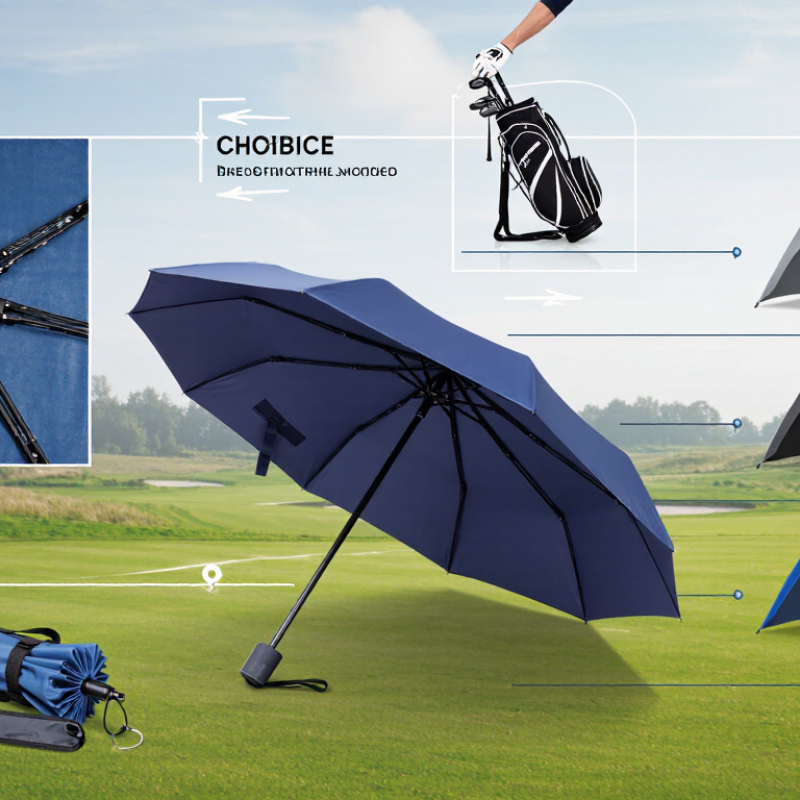
A foldable golf umbrella should protect your shoulders and golf bag without becoming a burden between shots. The National Golf Foundation’s 2025 participation report counted 28.1 million U.S. on-course golfers in 2024, making easy-to-carry rain gear useful for many players. Look beyond the closed length: compare the open canopy’s coverage with your bag and stance. A vented canopy can release some wind pressure, while a fiberglass frame may flex instead of bending sharply. Neither feature makes an umbrella storm-proof.
Check the grip with a gloved hand, and make sure the wrist strap feels secure. A water-repellent canopy and a reliable opening mechanism matter when rain starts suddenly. Small detail. Worth checking. A heavier frame may feel steadier, but it gets tiring to carry; very light models can feel twitchy in gusts. I would weigh comfort and coverage together, not chase the biggest canopy.
Tips: Test the folding action before buying, and see whether the umbrella fits beside your clubs. Open it outdoors in mild conditions to check balance and handle comfort. Don’t rely on it during lightning or severe winds; seek proper shelter instead.

A foldable golf umbrella should cover more than your head. Check the open canopy diameter and compare it with the width of your golf bag. A canopy around 60 inches can shelter a player and some equipment, but it may feel awkward on crowded paths. Measure the folded length too; a large canopy is less useful if it will not fit in your car or locker. Check the seams and the canopy’s shape. Small details matter.
Frame strength affects how the umbrella handles sudden gusts. Look for flexible ribs and a sturdy shaft, then open and close the mechanism several times. It should move smoothly, without sticking or wobbling. That matters. A heavier frame may feel reassuring, yet become tiring to carry over eighteen holes. Weather protection also depends on more than size. A vented canopy can let wind pass through, while tightly secured fabric helps limit leaks during steady rain. Check that the handle stays comfortable when wet. Still, no foldable umbrella is storm-proof, and advertised wind ratings may not reflect real course conditions. I would favor balanced construction over the biggest canopy, though that choice depends on how often you walk in rain.
| Comparison point | Compact travel design | Balanced all-around design | Maximum-coverage design | Best choice for |
|---|---|---|---|---|
| Typical canopy arc | About 54–58 in (137–147 cm) | About 58–62 in (147–157 cm) | About 62–68 in (157–173 cm) | Choose a larger canopy for more coverage of a golfer and their bag. Compare arc measurements consistently; canopy arc is not the same as the straight-line diameter. |
| Typical folded length | About 12–15 in (30–38 cm) | About 15–19 in (38–48 cm) | About 17–22 in (43–56 cm) | Travel bags and small lockers; check the listed packed length because folding designs vary. |
| Typical weight | About 1.0–1.5 lb (0.45–0.68 kg) | About 1.3–1.9 lb (0.59–0.86 kg) | About 1.6–2.3 lb (0.73–1.04 kg) | Frequent carrying favors a lighter model; larger canopies and stronger frame parts generally add weight. |
| Frame and shaft | Often aluminum or a mixed-material frame; prioritize reinforced joints and ribs. | Commonly fiberglass ribs with a steel, aluminum, or composite shaft. | Often uses fiberglass ribs and a reinforced shaft or frame structure. | Fiberglass ribs can flex rather than permanently bend, but durability depends on the full frame, joints, and construction—not material alone. |
| Wind-handling features | Look for flexible ribs and a secure opening mechanism; a small canopy is easier to carry but offers less coverage. | A vented double canopy can let some wind pass through and may reduce pressure buildup. | A vented canopy and reinforced ribs are useful, but the larger surface can be harder to control in gusts. | Windy courses; no umbrella is storm-proof, and wind-resistance claims are not measured to one universal standard. |
| Rain protection | Water-repellent polyester is common; check that seams and closure remain secure. | A tightly woven, water-repellent canopy offers practical coverage for ordinary rain. | Provides the broadest shelter, though wind-driven rain can still reach the user and equipment. | Regular wet-weather play; water-repellent finishes can wear over time and may need care according to the maker’s instructions. |
| Sun protection | Can provide shade, but protection depends on fabric, color, weave, and coverage. | A larger canopy provides more shade when positioned well. | Offers the broadest shade area in calm conditions. | Sunny rounds; look for a stated UPF rating if verified UV protection is important. Do not assume every dark or coated canopy has a tested rating. |
| Main trade-off | Most portable, but least coverage and potentially less robust than a larger frame. | Good compromise between coverage, packed size, and weight. | Best coverage, but bulkier and more demanding to manage in strong wind. | Match the size to how often you carry the umbrella, typical course weather, and whether you need room to shelter a golf bag. |
| What to verify before buying | Check the canopy measurement method, open and folded dimensions, actual weight, frame materials, vent design, opening mechanism, warranty terms, and any independently tested wind or UPF rating. | Use the product’s stated specifications rather than relying on labels such as “stormproof” or “UV protection” alone. | ||
Specification ranges are general shopping guide estimates, not guarantees for every umbrella. Dimensions and weight vary by design, and performance depends on construction, condition, and weather.
A foldable golf umbrella should open smoothly, lock securely, and close without pinching wet fabric. Compare the folding mechanism before judging canopy size. A two-section shaft often feels simpler to deploy, while a more compact multi-section design may fit better in a golf bag. More joints can mean more places to inspect for looseness. Test the release with one hand, then check whether the ribs snap straight. Small details matter. The National Golf Foundation’s 2024 participation report counted 26.6 million U.S. on-course golfers in 2023, a reminder that portable equipment serves a large, active group—not proof that every golfer needs the same umbrella.
Weight matters most when you walk between holes or carry a loaded bag. A lighter frame reduces shoulder strain, but very light materials may feel less steady in gusts. Check the listed weight, then hold the umbrella open for a minute; a number on a product page cannot show how balanced it feels. Measure its folded length against your bag’s umbrella sleeve, and leave room for a damp canopy. I once underestimated that last detail. Wet fabric can make a neat fold awkward.
Tips: Open and close the umbrella several times in a shop or at home. Listen for scraping, check the latch, and make sure the folded canopy stays secured. If possible, try it beside your golf bag. Portability is not just low weight; it is easy access, a manageable folded shape, and a mechanism you trust when rain starts.
A foldable golf umbrella should feel sturdy without becoming a burden in your golf bag. Check the canopy fabric for a tight weave, clean stitching, and a water-repellent finish. These details can help water bead and run off rather than soak through. Look closely at the ribs and joints, too. Flexible frames may tolerate gusts better than brittle ones, but construction quality matters more than material labels alone. No spec sheet tells the whole story.
The handle affects comfort over several holes. A textured rubber or foam grip is easier to hold when your palm is damp, while a narrow, slippery handle can become tiring. Try holding the umbrella at different angles. Does it feel balanced, or does the canopy pull your wrist? A wrist strap can help keep it secure, though it should not feel tight or awkward.
Ease of use matters in sudden rain. Test the opening button with one hand, then fold the umbrella and check whether its strap fastens easily. The folded length should fit your bag, and the weight should not make it unpleasant to carry. It is easy to overvalue a quick-opening mechanism; a stiff release can be frustrating with cold fingers. If possible, test it while wearing a golf glove.
Suggested buyer priorities on a 1–5 scale. These are practical selection guidelines, not measured product test results.
What to look for: Check the canopy fabric and frame construction for durability, choose a comfortable handle with a secure grip, and test how easily the umbrella opens, closes, and fits into your golf bag. Canopy coverage and packed size should suit your needs.
Match umbrella specifications to the rounds you actually play. The National Golf Foundation’s 2024 participation report counted 26.6 million U.S. on-course golfers in 2023, a reminder that golfers face varied course conditions. Check NOAA’s 1991–2020 Climate Normals for local rainfall and wind patterns before choosing canopy size. A 60-inch canopy offers broad coverage, but it can feel awkward on a narrow path or in a crowded cart area. Bigger is not always better.
For frequent wind, look for a vented canopy and a flexible frame; vents may reduce gust pressure, but they cannot make an umbrella storm-proof. Fiberglass ribs resist bending better than many rigid alternatives, while a comfortable grip matters during a long walk. Check the folded length against your bag’s umbrella sleeve, too. Test the opening button with one hand, ideally while wearing a glove. Small detail, real difference.
Weight is a trade-off. A lighter model is easier to carry, but a very light frame may feel less steady in gusts. NOAA climate averages describe patterns, not the weather on your tee time, so keep a forecast handy. I would prioritize a secure grip, manageable packed size, and dependable construction over a dramatic canopy measurement. Still, my own preference can be wrong: golfers using push carts may value shade more than compact storage.