How to Choose the Best Chandelier LED Lamp?
Choosing the right Chandelier Led Lamp is about more than finding a striking shape. It should fit the room, provide comfortable light, and work with your everyday routine. A large crystal fixture can feel overwhelming above a small dining table. A compact lamp may disappear in a high-ceilinged living room. Measure the space before comparing finishes or scrolling through product photos.
Lighting researcher Mark S. Rea’s work offers a useful principle: “Light should support comfortable seeing, not merely look bright.” This is a practical paraphrase, not a direct quotation. Check the lamp’s lumen output, color temperature, and color rendering index (CRI), then consider how those details suit the room. Warm white often feels welcoming over a dining table, while a higher CRI can help colors look more natural. Looks matter. So does comfort.
Next, check the fixture’s diameter, hanging height, dimmer compatibility, and the manufacturer’s LED specifications. These details can prevent glare, awkward proportions, and disappointing performance after installation. A dimmer is not automatically compatible with every LED lamp, so confirm both product labels. There is no perfect formula: a dramatic chandelier may suit a formal room but feel too bright during a quiet evening. Compare the specifications with the actual space, and treat attractive photos as a starting point, not proof that the lamp will work in your home.
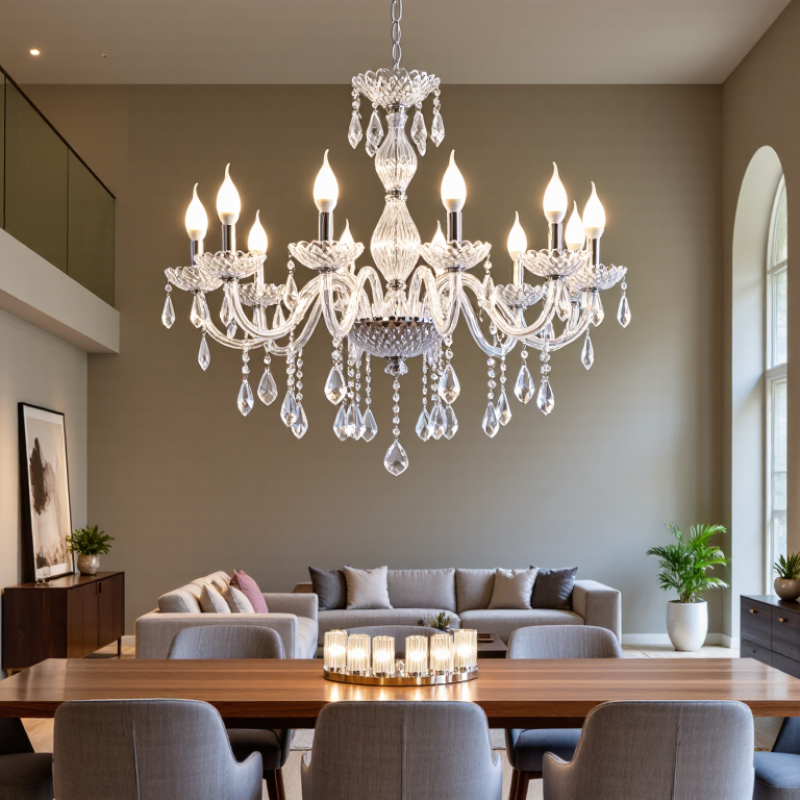
Identify the Chandelier’s Socket Type and Lamp Requirements
Before choosing a chandelier LED lamp, identify the socket printed on the fixture label or listed in its manual. Many decorative chandeliers use E12 candelabra sockets, while larger fixtures may use E26 medium sockets. The base must match exactly; a similar-looking lamp can still fit poorly. Do not guess. If the label is missing, switch off power and compare the old lamp’s base with a socket-size chart.
Check the fixture’s maximum wattage, voltage, bulb shape, and available clearance. LED lamps use less power than incandescent lamps, but the fixture’s stated limit still matters. The U.S. Department of Energy’s Energy Saver guidance reports that LEDs use at least 75% less energy and can last up to 25 times longer than incandescent lighting. That is a useful benchmark, not a promise for every lamp or installation. Also confirm dimmer compatibility if you want adjustable light; an incompatible lamp may flicker or fail to dim smoothly.
Measure the shade and space between arms before ordering. A candle-shaped lamp may look right, yet its wider body can touch nearby glass. Check color temperature and brightness too: warm white often suits dining rooms, while a lumen rating helps compare actual light output. I still find packaging confusing. Compare the lamp’s printed specifications with the fixture label, not just its appearance.
Measure the Fixture and Determine Suitable Lamp Dimensions
A chandelier can look balanced yet still need a carefully sized LED lamp. Measure the fixture before shopping. Switch off the power and let any existing lamp cool before handling it.
Measure from the socket opening to the nearest shade, glass panel, or decorative arm. This gives you the usable lamp length. Check the available width too, especially when bulbs sit close together. Compare these measurements with the lamp’s full dimensions, including its widest point and tip. Small details matter. A bulb that fits the socket may still touch a shade or look crowded.
For enclosed shades, confirm that the fixture allows LED lamps and check its care or installation instructions. Heat can build up in enclosed spaces, so use a lamp rated for that application. Note the socket type, maximum permitted wattage, and any stated size limit on the fixture label. LED wattage is usually lower, but the fixture’s rating still matters. Candle-shaped lamps often suit narrow chandelier arms, while wider globe shapes may need more clearance. There is no single size that works for every fixture. I find this easy to misjudge by eye, so measure twice and compare the numbers rather than relying on appearance alone.
Compare Brightness, Color Temperature, and Color Rendering
A chandelier can look brilliant in a showroom and feel harsh above your dining table. Compare brightness in lumens, not watts: watts measure energy use, while lumens describe light output. The U.S. Department of Energy’s lighting guidance explains this distinction. For a fixture with several exposed bulbs, consider the combined lumen output and whether a dimmer is compatible. Crystal drops may scatter light across the room, but they can also create glare on a glossy table.
Color temperature changes the mood. 2700K gives a warm, candlelike glow; 3000K usually looks slightly cleaner while remaining comfortable for evening meals. ENERGY STAR’s certified-lamp criteria list a minimum CRI of 80, a practical baseline for everyday residential lighting. CRI measures how faithfully colors appear compared with a reference source. For a chandelier above a dining table, CRI 90 or higher can help food, wood, and fabric look more natural. Check the specification sheet, not just the package photo.
Test one bulb before fitting the whole fixture. Hold a white napkin and a red apple beneath it at night. Do the colors look convincing? I once chose a cooler lamp for its crisp appearance, then found the room oddly flat. That judgment is personal, and CRI alone cannot predict every color. Also compare bulb shape and glass finish: a clear filament bulb may sparkle beautifully, yet its bright points can feel uncomfortable when viewed directly.
Check Dimming Compatibility, Energy Use, and Lamp Lifespan
How to Choose the Best Chandelier LED Lamp?
Check Dimming Compatibility, Energy Use, and Lamp Lifespan
Before choosing a chandelier LED lamp, check the fixture’s dimmer and the lamp’s compatibility. A dimmable label alone does not guarantee smooth performance. Some combinations flicker, buzz, or dim unevenly near the lowest setting. Check the dimmer instructions, and look for a compatibility list when available. If possible, test one lamp before replacing every bulb. Small differences matter.
Tips: Compare lumens for brightness, not watts. Estimate energy use with this formula: watts × daily hours ÷ 1,000 gives daily kilowatt-hours. Also check the lamp’s shape and base against the chandelier socket. A bulb that is too large may crowd decorative arms or shades.
Treat lifespan ratings as estimates, not promises. They depend on use and operating conditions. In a warm, enclosed fixture, heat can shorten an LED’s service life. Keep ventilation in mind, and follow the fixture’s instructions. A long rating looks reassuring, but real-world use may differ. I’d also consider how difficult the bulbs are to reach; replacing one high above a staircase is no small task.
Select a Lamp That Fits the Chandelier’s Style and Safety Needs
Start with the chandelier’s silhouette, then check the socket and available space. Candle-shaped LEDs suit many arms, while compact bulbs often sit neatly inside glass shades. Clear glass keeps the light crisp; frosted glass softens glare and conceals the bulb. Warm white light often feels gentler over a dining table. Small details matter. A bulb that looks balanced in daylight may feel too bright after dark.
Before buying, check the fixture label for its base type and maximum wattage. LEDs use less power than incandescent bulbs, but the stated limit still applies; compare actual watts, not equivalent brightness. Make sure the bulb does not touch a shade or decorative glass. If the lamp is enclosed, choose an LED rated for enclosed fixtures. Use a dimmable bulb only with a compatible dimmer. Turn off power before changing a lamp. If a socket feels loose, looks damaged, or becomes unusually hot, stop and have a qualified electrician inspect it.