
China Top 10 Double Spiral Twin Shaft Mixer Manufacturers

Concrete’s scale makes reliable mixing equipment a practical concern for manufacturers worldwide. The Global Cement and Concrete Association estimates that roughly 14 billion cubic metres of concrete are produced each year. The USGS Mineral Commodity Summaries 2024 puts global cement production at about 4.1 billion tonnes in 2023. These figures describe material output, not mixer sales. Still, they show why consistent batching and dependable equipment matter.

A Double Spiral Twin Shaft Concrete Mixer is designed to circulate materials through a twin-shaft mixing chamber. Its performance depends on more than the stated batch capacity. Shaft arrangement, blade design, motor power, wear-part access, and discharge speed all affect daily operation. Details matter. Buyers should also examine cleaning access and the availability of replacement parts, especially where production schedules leave little room for maintenance.

This guide introduces ten Chinese manufacturers and offers a practical basis for comparison. It considers product range, published specifications, manufacturing capability, service support, and available project references. No list can capture every factory’s strengths or every buyer’s needs. A brochure is not proof. Specifications and claims should be checked directly with suppliers, and performance figures should be compared under similar operating conditions. Readers can use the overview to narrow their options, then request technical documents and customer references before making a decision.
China Top 10 Double Spiral Twin Shaft Mixer Manufacturers

What Is a Double Spiral Twin Shaft Mixer?

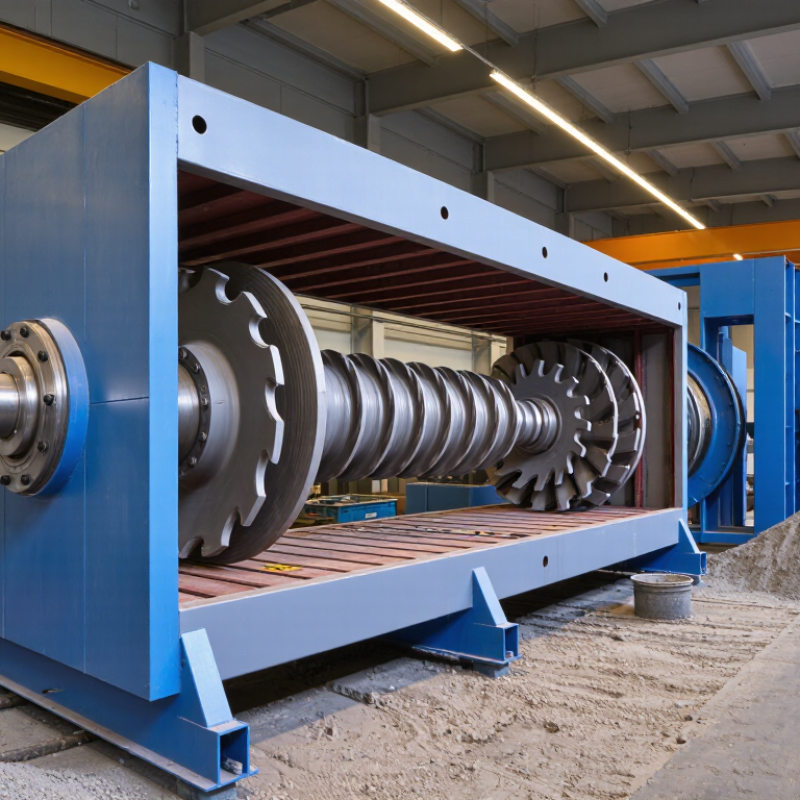
A double spiral twin shaft mixer uses two parallel, rotating shafts fitted with helical mixing elements. Their spirals move material along and across the mixing chamber, creating circulation between the shafts. Depending on the design, the elements may overlap or intermesh without touching. The result is more than simple tumbling: ingredients are repeatedly lifted, folded, and redistributed. It is commonly used for powders, granules, and some moist or paste-like mixtures. Small details matter. Shaft speed, fill level, and material properties all affect the final blend.

The USGS Mineral Commodity Summaries 2024 estimates global cement production at about 4.1 billion metric tons in 2023. That scale helps explain why consistent handling and blending of cementitious materials matter, though the figure does not measure mixer performance. In practical use, operators should check whether the machine suits the batch size and the material’s flow behavior. A damp, cohesive powder may behave very differently from dry sand. A mixer can look powerful and still leave uneven pockets. That part is easy to overlook. Double-shaft designs can shorten mixing time in some applications, but no single setting guarantees uniformity; sampling and process trials are still needed.

China Top 10 Double Spiral Twin Shaft Mixer Manufacturers - What Is a Double Spiral Twin Shaft Mixer?

A double spiral twin shaft mixer is an industrial mixer with two parallel shafts fitted with spiral or ribbon-style mixing elements. Its configuration and performance depend on the materials, batch size, and equipment design. The table below outlines key criteria for comparing mixer specifications without ranking or naming manufacturers.

No. Comparison dimension What to check Why it matters
1 Mixing elements Confirm the spiral or ribbon geometry, shaft arrangement, and clearances are suited to the material. Element design affects material movement and mixing behavior.
2 Material compatibility Check whether the specific model is intended for powders, granules, pastes, or other process materials. A mixer suitable for one material form may not handle another reliably.
3 Working volume and batch size Compare the stated working volume with the required batch volume and the supplier's recommended fill level. The usable batch is not necessarily the same as the vessel's total geometric volume.
4 Drive and speed control Review motor power, gearbox arrangement, shaft speed, and whether speed control is available. Drive requirements depend on material properties and the intended process.
5 Discharge arrangement Check the outlet type, location, and compatibility with the downstream handling system. Discharge design affects material transfer and cleanout access.
6 Wetted-part materials Verify the specified vessel and contact-part materials against corrosion, abrasion, and product requirements. Material selection influences durability and suitability for the process.
7 Sealing and dust control Ask about shaft seals, cover sealing, and provisions for dust extraction where required. Appropriate sealing helps manage leakage and airborne dust, depending on the application.
8 Cleaning and access Review inspection openings, internal access, discharge cleanout, and any cleaning-system options. Access requirements vary with the product and cleaning procedure.
9 Controls and safety Confirm the control panel, emergency stop, guarding, and interlocks included in the proposed configuration. Safety and control features should match the installation and applicable requirements.
10 Testing and documentation Request drawings, operating instructions, maintenance information, and material trials where appropriate. Documentation and application-specific testing help verify suitability before purchase.

How Does a Double Spiral Twin Shaft Mixer Work?

A double spiral twin shaft mixer uses two parallel rotating shafts to move material through a shared mixing chamber. Spiral blades or ribbons lift product from the bottom and carry it along the shafts. As the material reaches the center or chamber walls, it folds back into the moving bed. This repeated circulation helps distribute ingredients across the batch.

The shafts may rotate in opposite directions, depending on the machine’s design. Their combined movement creates both lengthwise flow and cross-mixing. Watch the material near the end plates: dead zones can form if the chamber is overfilled or the blend is poorly matched to the blade shape. A small test batch can reveal uneven color or dry pockets. It is not magic.

Operators typically load ingredients in a controlled order, then run the mixer for a set time. Fragile particles may need gentler speeds, while cohesive blends can require more mixing energy. The discharge gate opens after mixing, allowing the batch to leave through the bottom. Mixing time alone is not a reliable quality measure; sample several points and compare them. Even then, results can vary with moisture, particle size, and fill level. That detail is easy to underestimate.

How a Double Spiral Twin Shaft Mixer Works

In a common counter-rotating configuration, the two shafts turn in opposite directions. Their spiral ribbons move material through the mixing chamber, promoting circulation and repeated blending. The values shown are normalized rotation directions (+1 and −1), not measured speeds.

Key Components and Mixing Performance Factors

A double spiral twin shaft mixer combines a trough, two counter-rotating shafts, spiral blades, a drive system, seals, and a discharge gate. The blades lift material from the sides and move it toward the center, creating repeated circulation. Small details matter. Shaft alignment and blade-to-trough clearance affect both mixing action and wear. A gap that is too wide may leave material behind; one that is too narrow can increase friction. Gearboxes and bearings also need protection from dust and product leakage.

Mixing performance depends on more than shaft speed. Fill level, particle size, moisture, batch weight, and material flow all change how quickly ingredients distribute. For example, a nearly full trough may limit circulation, while a very small batch may not reach the blades consistently. Operators should check samples from different points in the batch, not just the surface. A uniform appearance can be misleading. Mixing time deserves review, too: extending it may help some blends, but can also cause heat or particle damage. There is no single setting that suits every material; trial batches and careful records help identify the practical operating range.

Common Industrial Applications of Twin Shaft Mixers

Twin shaft mixers are used when industrial materials need fast, consistent blending. Counter-rotating paddles move the batch through overlapping mixing zones, helping limit stagnant pockets. They are common in ready-mix concrete plants, precast yards, and road-material production. Concrete batches combine cement, water, sand, gravel, and carefully measured additives. That sounds simple. In practice, moisture and aggregate size can change the mixing result.

Precast operations rely on uniform batches to fill molds with fewer visible inconsistencies. Twin shaft equipment is also used for soil stabilization and blending selected dry powders, depending on the mixer design. These applications benefit from strong material movement, but not every recipe suits the same paddle layout or mixing time. A trial batch matters. Operators should check discharge uniformity, residue on the trough, and how easily the mixer cleans between recipes. Plant conditions can differ from a supplier’s test setup, so results deserve a second look.

Tips: Confirm batch size and material moisture before choosing a mixer. Inspect wear parts regularly; worn paddles can affect mixing quality. Keep a simple record of cycle time and batch consistency.

China’s Top 10 Double Spiral Twin Shaft Mixer Manufacturers

China’s Top 10 Double Spiral Twin Shaft Mixer Manufacturers deserve comparison by working conditions, not catalog claims alone. These machines use paired shafts and spiral mixing elements to move materials through the vessel. Their performance depends on more than motor power. Batch size, material density, moisture, and mixing time all matter.

Ask each manufacturer how it tests uniformity and what materials it uses during trials. A useful test should resemble your actual process. Check welds, shaft seals, access doors, and discharge gates; small design details can affect cleaning and maintenance. Request drawings, operating limits, and a clear list of included components. Practical evidence helps. A polished brochure cannot show every issue.

The top ten may differ in customization, delivery schedules, and support after installation. Compare energy use and spare-part access, too. Yet a ranking can hide important differences. A mixer suited to dry powders may not handle sticky blends well. I would not choose by price alone, though budget still matters. Ask for a sample test, inspect the results, and keep questions specific. That takes time, but it can reveal gaps before equipment reaches the plant.

Get In Touch

Drop Us A Message

    Our Contact Details

    • IPS Group BV | Head Office (NB), Technopol 4, 5026 SB Tilburg, The Netherlands

      IPS Group BV | Rhijnspoor 239, 2901 LB Capelle a/d IJssel, The Netherlands
    • sale@qbhardware.org
    • +31 (0) 10 303 2625