China Top 10 Industrial Managed PoE Switch Manufacturers?
Choosing a China Top 10 list of Industrial Managed Poe Switch manufacturers takes more than comparing product pages. A plant-floor network must keep cameras, access points, sensors, and control equipment connected through heat, vibration, and electrical noise. One cabinet may serve a dusty production line; another may sit beside a loading dock. The operating conditions are not identical. Computer scientist Andrew S. Tanenbaum observed, “The nice thing about standards is that you have so many to choose from.” His remark is not about PoE specifically, but it highlights a real selection challenge: standards, features, and vendor claims need careful comparison. That matters.
This guide introduces ten Chinese manufacturers and the details buyers can examine: PoE power budgets, port speeds, VLAN and ring-management functions, temperature ratings, redundancy options, and technical support. A managed switch can help diagnose a failed link or isolate traffic, but its label alone cannot guarantee dependable service. Check the datasheet, confirm compatibility with attached devices, and ask how firmware updates and warranty support work. Small print matters. Manufacturer rankings can shift with product availability and project needs, so this list is a starting point, not a universal verdict. It may still leave unanswered questions about long-term field performance. That is worth admitting. A thoughtful shortlist weighs documented specifications alongside real deployment requirements, rather than treating the lowest price or longest feature list as proof of quality.
What Is an Industrial Managed PoE Switch?
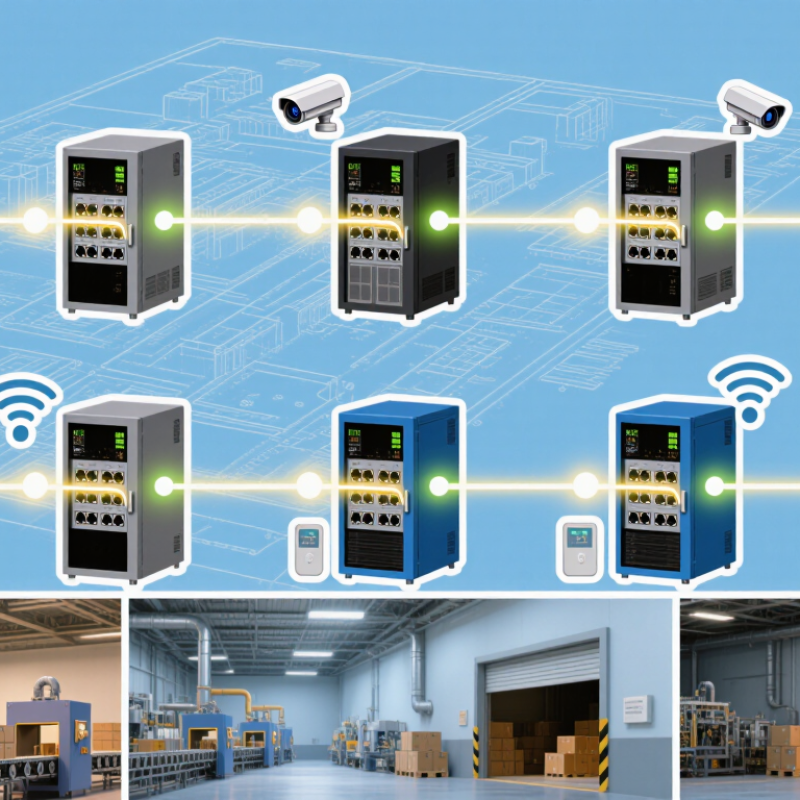
An industrial managed PoE switch carries Ethernet data and electrical power over one cable, while allowing operators to configure and monitor network traffic. It is built for demanding sites such as factory floors, roadside cabinets, and water-treatment facilities. Typical features include a metal enclosure, DIN-rail mounting, redundant power inputs, and support for wider operating temperatures. These features vary by model; “industrial” alone does not guarantee suitability for every environment.
Management functions can include VLAN separation, traffic prioritization, remote diagnostics, and network redundancy. They help isolate control equipment and locate a disconnected camera or sensor without checking every cable by hand. IEEE 802.3bt defines PoE delivery of up to 90 watts from the power-sourcing equipment, with up to 71.3 watts available at the powered device. Actual usable power depends on cable length, temperature, and the switch’s total PoE budget. That detail is easy to miss.
HMS Networks’ 2024 Industrial Network Market Shares report estimates that Industrial Ethernet accounts for 71% of newly installed industrial network nodes. This indicates why reliable Ethernet infrastructure matters, but it does not mean every endpoint needs PoE. Before selecting a switch, engineers should add up device power requirements, allow headroom, and check environmental ratings. A useful caution: port count is not power capacity. A switch may have enough ports yet fail to power all connected devices at once.
How to Evaluate Chinese Industrial PoE Switch Manufacturers
When evaluating Chinese industrial PoE switch manufacturers, look beyond port count and advertised power. IEEE 802.3bt supports up to 90 W at the power-sourcing equipment, but the usable budget depends on cable length, temperature, and the number of ports operating simultaneously. Ask for a port-by-port power test under full load. Then check operating-temperature ratings, surge protection, redundant power inputs, and documented EMC testing. A metal enclosure should feel solid, but appearance is not test evidence.
Review the management interface and lifecycle support, too. Can the switch flag a failing link, show each port’s power draw, and recover after a power interruption? Request sample test reports, firmware update procedures, and a clear warranty process. IBM’s 2024 Cost of a Data Breach Report puts the global average breach cost at US$4.88 million. That figure is not specific to industrial switches, but it underlines why access controls and timely security updates deserve scrutiny.
Tips: Ask for a thermal test report at the stated maximum load, not just an empty-unit temperature rating. Request references from installations with similar dust, vibration, and cable runs. One honest limitation: a short factory demo cannot prove years of field reliability. Check the details.
Profiles of 10 Leading Chinese Manufacturers
China’s industrial managed PoE switch manufacturers serve factories, transport networks, utility sites, and outdoor installations. This profile looks at ten manufacturer types without treating “top” as a verified ranking. Their strengths vary: some focus on rugged Ethernet hardware, while others build switches around automation and monitoring needs.
One profile may specialize in compact DIN-rail models, with metal housings and wide-temperature operation for control cabinets. Another may emphasize fiber uplinks for long cable runs. A third may offer high-power ports for cameras and wireless access points. Other profiles include makers focused on redundant ring networks, cloud-based configuration, cybersecurity features, or custom OEM production. Some concentrate on transport systems; others serve energy facilities or factory-floor networks. Details matter. Buyers should check port budgets, protocol support, operating temperature, and replacement availability against the actual installation. A feature list alone proves little.
The remaining profiles may distinguish themselves through testing, technical support, or flexible product lines. Ask for test reports and confirm how firmware updates are handled. Request a sample configuration before specifying equipment across a whole site. Not every plant needs advanced management features, and the highest port count is not always the best fit. Manufacturer claims deserve careful review; real-world performance depends on cabling, power loads, heat, and network design. One limitation in this overview is that product quality cannot be judged from category descriptions alone.
China’s Industrial Managed PoE Switch Manufacturers: Power Standards at a Glance
IEEE PoE standards define the maximum power available per port. These figures are standards-based reference values, not rankings or specifications for individual manufacturers.
Power budgets matter when selecting industrial switches for cameras, wireless access points, and other powered devices. The device-side maximum is lower than the switch-side output because of power loss in the cable.
How to Choose the Right Manufacturer for Your Project
Choosing an industrial managed PoE switch manufacturer starts with your site conditions, not a sales brochure. Check the operating temperature range, mounting method, port count, and total PoE budget against your actual devices. A switch powering six cameras and two wireless access points needs enough power headroom for startup and peak demand. Ask how the unit handles power recovery after an outage. Small details matter.
Tips: Request a sample configuration, datasheets, and relevant test reports. Confirm VLAN, QoS, redundancy, and management features with your network team. Ask for written warranty terms and realistic lead times. Compare support response times, not just purchase prices.
For a factory floor, assess whether the enclosure, connectors, and power inputs suit dust, vibration, and electrical noise at the installation point. Ask the manufacturer to explain its quality checks and how firmware updates are delivered. Verify that the proposed model supports your required redundancy design; “managed” alone does not guarantee compatibility. If possible, test a unit with your cameras or controllers before ordering in volume. Specifications can look convincing on paper, yet installation constraints are easy to miss. A careful pilot may reveal them early.