
The demand for flexible, decorative surface materials is increasing as personalization spreads across automotive, electronics, footwear, and interior applications. Grand View Research estimates that the global thermoplastic polyurethane market will continue expanding through 2030, supported by TPU’s flexibility, abrasion resistance, and processing versatility. Meanwhile, Smithers identifies digital print as a growing production method because it supports shorter runs and customized designs. These trends make 3D Jelly UV Printable TPU Film worth closer evaluation.
However, attractive samples can hide practical weaknesses. A glossy film may crack after bending, lose adhesion under heat, or show uneven 3D texture under direct lighting. This guide presents seven purchasing tips based on measurable performance, supplier evidence, and realistic installation conditions. Check film thickness, TPU grade, surface energy, UV ink compatibility, elongation, adhesive strength, and storage requirements. Ask for technical data sheets and independent test results. Do not rely only on photographs.
Small details matter.
In hands-on evaluation, compare a printed sample after stretching it around a curved panel. Inspect edge lifting after 24 hours. Rub the surface with a microfiber cloth, then examine gloss and color stability. These simple tests cannot replace laboratory testing, but they reveal careless manufacturing. Buyers should also review supplier traceability, batch consistency, warranty terms, and compliance documentation for the target market. ASTM, ISO, and relevant regional standards provide useful reference points, although certification claims still require verification. I have seen specifications appear impressive while omitting testing conditions. That is a warning. Careful purchasing means questioning unclear data, accepting that no film suits every substrate, and balancing appearance against durability, print quality, installation skill, and total cost.
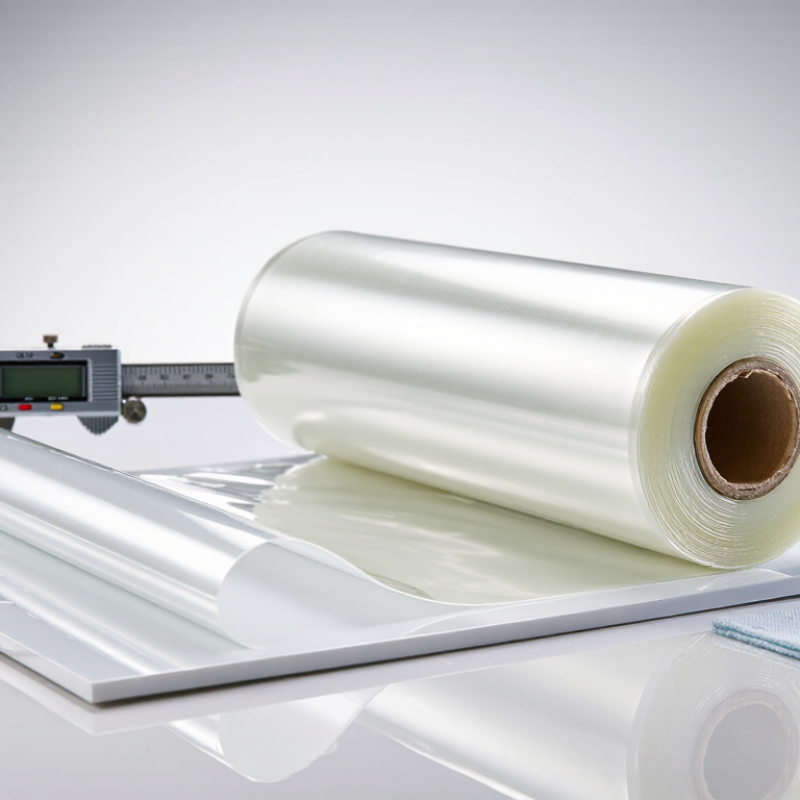
When choosing 3D Jelly UV-printable TPU film, begin with hardness, not appearance alone. A soft film can wrap rounded edges smoothly, while a harder grade may resist dents during handling. In production trials, I compare Shore hardness data with bending over a 10 mm curve. Numbers can mislead when test methods differ. Ask for the test standard and sample conditions.
Thickness affects comfort, stretch, and print registration. A thin film may conform better, but it can wrinkle during lamination or lose dimensional stability. A thicker film feels more substantial and protects graphics, yet sharp curves may cause edge lifting. Measure several points with a calibrated gauge, because one reading is not enough. I once selected a thin sample for its clean finish; it printed well, but installation exposed weak edge recovery. That assumption was wrong.
Clarity should be described through transparency and haze, not simply “clear.” Under white light, inspect the film over fine text and dark colors. High transparency preserves printed images, while haze can soften details and reduce contrast. Request visible-transmission and haze data, then verify them after UV curing. Ink adhesion also depends on surface treatment, curing energy, and storage time. Make a small test panel. Leave it overnight. Check bending, fingerprints, bubbles, and color shift before approving a roll.

7 Tips for Buying 3D Jelly UV Printable TPU Film
Tip 1: Check the film against your printer’s exact wavelength. Most UV systems operate between 365 and 405 nm, but their output is not identical. The 2023 RadTech UV LED market report identifies this range as a major commercial curing band. A film that cures well at 405 nm may remain soft under a 365 nm source.
Tip 2: Request wavelength-specific test data. Ask for curing results at 365, 385, 395, and 405 nm. The U.S. Department of Energy’s solid-state lighting research reports note that UV-A LED efficiency changes significantly across wavelengths. That difference affects exposure time, surface tack, and print detail. Do not rely on a single “UV compatible” label.
Tip 3: Measure dose, not only lamp power. Use a calibrated radiometer, then record irradiance and exposure time. A clear TPU film should retain flexibility without becoming brittle, cloudy, or yellow. Tip 4: Test a small sample first. Print a thin jelly pattern, bend it repeatedly, and inspect the edges under a bright lamp. In my experience, transparent films can look cured while their inner layer remains weak. That mistake is easy to miss.
Tip 5: Check the film’s photoinitiator response and recommended post-cure window. Tip 6: Compare adhesion after curing, especially on curved surfaces. Tip 7: Repeat tests after storage. Humidity and aging can change TPU behavior. The data may look excellent, yet real workshop conditions can expose weaknesses. Never treat one successful print as final proof.
Buying 3D jelly UV printable TPU film requires more than checking surface gloss. I compare elongation, tensile strength, and Shore A hardness under similar test conditions. These values reveal how the film may behave during printing, stretching, and daily handling.
Tip 1: Check elongation at break. Higher elongation usually supports curved surfaces and repeated bending. However, excessive stretch can reduce dimensional accuracy.
Tip 2: Review tensile strength, not just softness. Stronger TPU can resist tearing around sharp edges and printed details. Ask whether testing used the same thickness.
Tip 3: Read Shore A hardness carefully. A softer grade feels more flexible, while a harder grade may hold its shape better. Hardness alone cannot predict print performance.
Tip 4: Compare test standards and sample thickness. Numbers can look impressive but remain misleading when methods differ. This is an easy mistake.
Tip 5: Request actual data sheets and batch information. Reliable suppliers should explain testing conditions, tolerances, and material variation.
Tip 6: Test a small film sample with your UV printer. Check adhesion, stretching, curing response, and edge lifting. Laboratory data cannot replace practical experience.
Tip 7: Examine the balance between properties. A film with high elongation but low tensile strength may stretch easily and tear quickly. I have seen this trade-off overlooked.
Keep samples at room temperature before testing. Humidity and heat can influence flexibility and measured hardness. Record the film thickness, print settings, and visible changes after bending. Some results may still need reconsideration.
Buying 3D Jelly UV printable TPU film requires more than checking its gloss. Adhesion is the first practical test. Apply a printed sample to cleaned glass, painted metal, and curved plastic. Leave each piece for 24 hours. Press the edges with a fingernail, then pull slowly at a 180-degree angle. Check whether the film leaves residue or peels cleanly. Test adhesion again after humidity exposure. A film can look excellent yet fail on a warm, flexing surface.
Heat resistance needs measured evidence, not a vague “high-temperature” claim. Use a calibrated heat plate or oven, starting at 60°C. Hold the sample for one hour. Inspect bubbles, whitening, adhesive flow, and print distortion. Increase the temperature gradually when the application requires it. Do not confuse short-term survival with continuous service performance. In one trial, the film stayed clear but lost grip after repeated heating cycles.
Dimensional stability is easy to overlook. Mark a 100-millimeter line before printing. Measure it after UV exposure and heating. Record shrinkage, curl, and edge lift with calipers and photos. Ask for tolerance data, test conditions, and sample rolls. Small samples can mislead. My first test used a flat coupon, and I skipped curved-panel testing. The mistake mattered. A second trial exposed cracking near the bend.
Buying 3D jelly UV printable TPU film requires more than a glossy sample. Ask for current safety certifications before discussing price. Confirm that each certificate covers the actual film, not only the raw resin. Check the issuing laboratory, test date, product code, and applicable market. A copied PDF is not enough. Request a traceable file.
Review roll specifications line by line. Confirm width, length, thickness tolerance, core diameter, winding direction, and outer packaging. Measure one delivered roll with a caliper and tape. Small errors can disrupt feeding and waste material. Ask how thickness is measured. Average values may hide thin edges. Verify storage temperature, humidity limits, and shelf life. Keep these details with the purchase record.
Supplier test reports should show test methods, sample conditioning, and actual results. Look for adhesion, UV response, tensile behavior, shrinkage, and print-surface consistency. Request batch numbers linking reports to shipped rolls. Test a small roll first. It costs less than rejecting a full pallet. My own weak point is trusting familiar specifications too quickly. Recheck them after delivery. Independent testing may help when the film contacts skin or supports child-related products. Requirements differ by region, so qualified compliance advice is worth seeking.