7 Best Round Slings for Lifting Heavy Loads?
Choosing the right Round Slings can determine whether a heavy lift feels controlled or dangerously unpredictable. A rated sling may look simple, yet its strength depends on material, width, length, configuration, and connection points. Small details matter.
This guide examines seven Round Slings designed for lifting heavy loads. Each option is considered through working load limit, abrasion resistance, flexibility, stitching quality, protective sleeves, and available length choices. Manufacturer specifications provide the starting point, but practical handling also matters. A sling that performs well around steel beams may not suit sharp edges, oily surfaces, or repeated outdoor use.
The evaluation focuses on dependable information and realistic lifting conditions. It considers how clearly each product communicates capacity, inspection requirements, and safe-use limitations. Qualified lifting personnel should verify every load, attachment method, and site condition before work begins. Never judge capacity by appearance alone.
That mistake happens.
A clean sling can still contain hidden damage from cuts, heat, chemicals, or excessive loading. Product photographs also cannot reveal how easily a sling twists during positioning. This is where the comparison becomes less perfect. Individual results may vary with training, equipment, and working environment. Still, careful selection, documented inspections, and respect for the manufacturer’s working load limit can reduce avoidable risks. The seven choices below are intended to support informed purchasing, not replace professional lifting judgment.
Round Sling Fundamentals: WLL, Safety Factors, and EN 1492-2
Choosing a round sling for heavy lifting begins with its Working Load Limit, or WLL. This value is not the sling’s breaking point. It is the maximum permitted load under defined lifting conditions. WLL changes with the hitch, sling angle, and load distribution. Angles matter.
EN 1492-2 provides requirements for round slings made from man-made fibers. It addresses construction, marking, testing, and safety performance. Many compliant slings use a 7:1 minimum safety factor, meaning the tested breaking force greatly exceeds the marked WLL. This margin does not excuse overloading, sharp edges, heat, or poor handling. A damaged sling can fail well below its rated capacity. The label is essential. So is judgment.
Before lifting, confirm the load weight and locate its center of gravity. Keep the sling legs as vertical as practical, because wide angles increase tension in each leg. Protect the sling from rough corners with suitable padding, then check for cuts, melted fibers, abrasion, distorted stitching, or missing identification. I have seen seemingly minor edge damage become a serious warning during a pre-lift inspection. A rushed estimate can still look professional. That is where reflection matters. If the configuration is unclear, pause and recalculate rather than relying on memory. Do not use a round sling outside its marked conditions, even for a short lift.
Color-Coded Capacity Guide: 1–8 t WLL Under EN 1492-2
7 Best Round Slings for Lifting Heavy Loads?
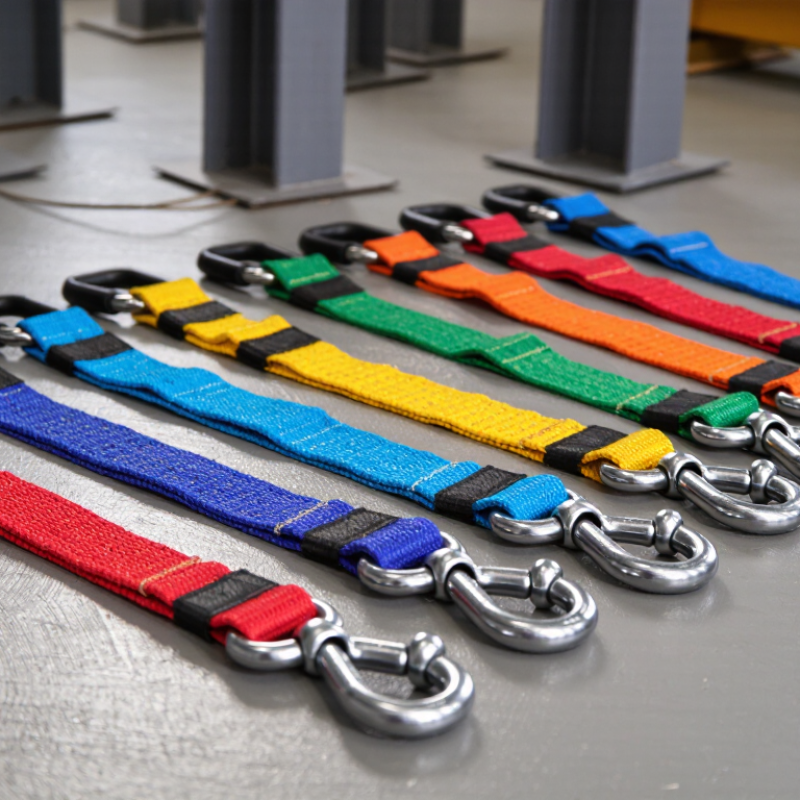
Round slings under EN 1492-2 use color coding to show their rated capacity. Violet identifies 1 tonne, green 2 tonnes, yellow 3 tonnes, grey 4 tonnes, red 5 tonnes, brown 6 tonnes, and blue 8 tonnes. These colors make selection faster around a busy lifting area. They also help crews notice an unsuitable sling before connecting a load.
Color alone is never enough. Check the sewn label for WLL, length, material, and inspection details. A 4-tonne grey sling may support different loads in vertical, choker, or basket configurations. Sling angles also affect capacity. A narrow angle can increase tension sharply. Keep the load balanced and protect the sling from sharp edges, hot surfaces, and rough corners.
A practical inspection should look for cuts, melted fibers, crushed sections, damaged stitching, and unreadable labels. Remove questionable equipment from service. Do not guess.
In real work, rushed color checks can create false confidence. I would pause when the label is dirty or partly missing. The sling may look sound but still carry hidden damage. Use compatible lifting hardware, keep hands clear, and follow the site lifting plan. A second-person check is worthwhile for heavy or awkward loads. Even experienced workers can overlook a small defect beside an eight-tonne load.
7 Best Round Slings for Lifting Heavy Loads? — Color-Coded Capacity Guide: 1–8 t WLL Under EN 1492-2
This chart shows the nominal working load limit (WLL) of single-leg endless round slings by the standard color identification system used under EN 1492-2. Straight lifting is rated at 1.0× WLL, choker lifting at 0.8× WLL, and basket lifting at 2.0× WLL when the load is properly balanced and the sling configuration is suitable. Always verify the sling label, lifting angle, inspection status, and site requirements before use.
Safety Checks: Abrasion, Cuts, Heat, UV Exposure, and Inspection Rules
Choosing a round sling for heavy loads requires more than checking its rated capacity. The sling must pass a careful inspection before every lift. Look for frayed fibers, flattened sections, exposed core yarns, cuts, burns, and crushed areas. Small surface fuzz may seem harmless. It can hide deeper damage.
Safety Check Abrasion often occurs when a sling drags across steel edges or rough floors. Use suitable edge protection, especially during choker lifts. Heat from welding sparks, exhaust pipes, or hot metal can melt synthetic fibers. Remove any sling showing glazing, hard spots, or melted strands. Ultraviolet exposure also weakens fibers over time, even when damage is difficult to see. Store slings away from direct sunlight, moisture, chemicals, and sharp tools.
Read the identification tag before lifting. It should show capacity, material, length, and inspection information. Never use a sling with a missing or unreadable tag. A competent inspector should examine slings at planned intervals and after severe events, such as shock loading or contact with chemicals. During use, watch for twisting, slipping, sudden stretching, or unusual load movement. Stop the lift if anything changes. I have seen crews focus on the load while ignoring the sling’s contact point. That habit deserves correction. When doubt remains, quarantine the sling and request a documented inspection.
Choosing the Best Sling for Vertical, Choker, and Basket Hitches
A good round sling begins with the hitch, not the color or appearance. For a vertical hitch, match the sling’s working load limit to the load’s actual weight. Check the identification tag before every lift. It should show capacity, length, material, and permitted hitch types. A clean, visible tag matters.
A choker hitch tightens around the load and can improve control. Its capacity is usually lower than a vertical hitch. The bend must remain gentle, not crushed against a sharp corner. Use edge protection where steel, concrete, or rough surfaces could cut the fibers. A basket hitch supports the load from underneath and may offer greater capacity. However, the lifting angle changes tension. A narrow angle can create surprisingly high forces. Keep the sling legs as wide as practical, within the rated limits.
Inspect the sling by hand and under good lighting. Look for cuts, melted fibers, pulled stitching, chemical damage, or stretched sections. Remove damaged equipment from service. Never rely on a sling that merely “looks strong.” That judgment can fail quickly. Keep the load balanced, find its center of gravity, and lift slowly without shock loading. A load that tilts during the first few inches needs repositioning, not faster lifting. Review the manufacturer’s capacity chart and applicable workplace lifting requirements. Even experienced crews can overlook angle effects when the work feels routine.