
10 Best RO Water Filters for Home and Business

Safe drinking water should feel ordinary, yet reliable treatment often depends on the water entering a building. The WHO/UNICEF Joint Monitoring Programme reported that 2.2 billion people lacked safely managed drinking-water services in 2022. That global figure does not mean every household needs reverse osmosis. It does show why water quality, treatment performance, and regular maintenance deserve careful attention.

A Ro Water Filter can reduce selected dissolved substances and other contaminants, but results depend on the source water, system design, installation, and upkeep. The NSF/ANSI 58 standard covers point-of-use reverse osmosis drinking-water treatment systems. Buyers should check a model’s specific certified reduction claims, rather than assume every system removes the same substances. Small details matter. A neglected prefilter, for example, can affect performance and shorten membrane life.

Homes and businesses also have different needs. A family may value compact storage and simple filter changes, while a café or office may need higher output and dependable service support. Compare daily capacity, water recovery, replacement costs, and the contaminants confirmed in your water test. WHO’s Guidelines for Drinking-water Quality provide a broader framework for assessing water safety, but no single filter suits every source. A polished product page can make the choice look simple. It isn’t always. This guide examines ten options for residential and commercial use, with attention to verified claims, practical fit, and the maintenance owners may overlook.
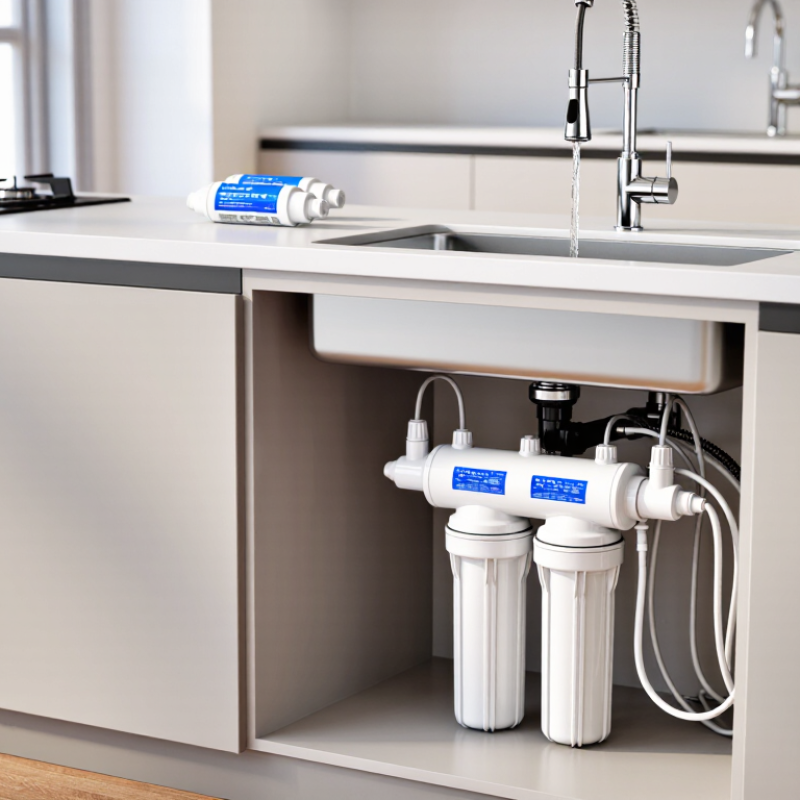
10 Best RO Water Filters for Home and Business

How Reverse Osmosis Water Filtration Works

Reverse osmosis pushes water through a semipermeable membrane under pressure. Dissolved salts and many other contaminants are held back, while water passes through. A typical system adds sediment and carbon filters before the membrane, then often uses a final carbon filter to improve taste. You can hear the unit refill its small storage tank. That sound is ordinary, but a slow refill may signal a clogged filter or low pressure.

Performance depends on the exact system and the water entering it. NSF/ANSI 58, the industry standard for reverse-osmosis drinking-water systems, sets a minimum 75% total dissolved solids reduction for systems making that claim. This is a useful benchmark, not proof that every unwanted substance is removed. Check the certified performance claims for the specific model and test your water when a particular contaminant is a concern. One trade-off remains: some feed water goes to drain. The amount varies with system design, pressure, temperature, and maintenance. I would not assume the advertised efficiency matches a busy kitchen or a small business in daily use. Replace filters on schedule, and verify performance rather than trusting taste alone.
Key Factors for Choosing a Home or Business RO Filter

Choosing an RO filter starts with the water, not the product label. Have the incoming water tested, or review a recent utility report, then match the system’s certified reduction claims to the contaminants found. The WHO/UNICEF Joint Monitoring Programme reported that 2.2 billion people lacked safely managed drinking water in 2022. That global figure is a reminder to check local conditions, not proof that a particular tap is unsafe. Small detail. It matters.

For home use, check daily capacity, storage volume, feed-water pressure, and replacement-filter cost. For a café, office, or other business, calculate peak demand too; a unit that serves a household slowly may leave staff waiting during a busy shift. Compare efficiency and wastewater figures, not just purified-water output. I would pause here: specifications can look reassuring, yet operating costs and maintenance schedules are easy to overlook.

Look for testing against NSF/ANSI 58, the standard for reverse osmosis drinking-water treatment systems. Confirm the exact contaminant-reduction claims; certification does not mean every system removes every contaminant. Check installation space, drain access, and who will change the filters. A cramped cabinet can turn routine service into a nuisance. Taste is not a test. Keep a record of filter changes, and retest water when source conditions change.

10 Best RO Water Filters for Home and Business - Key Factors for Choosing a Home or Business RO Filter

Comparison of common reverse osmosis system types. Capacity figures are approximate and depend on feed-water pressure, temperature, and water quality. Contaminant reduction varies by system; check the specific model’s independent test results and certifications.

RO system type Typical rated capacity Storage and delivery Potential treatment benefits Maintenance considerations Good fit for
1. Standard under-sink RO with tank About 50–100 gallons per day (GPD) Pressurized storage tank; steady faucet flow while stored water is available A suitably tested system can reduce dissolved salts and certain metals and other contaminants Replace sediment and carbon prefilters periodically; replace the membrane as needed Most households seeking a point-of-use drinking-water system
2. High-capacity tank-based under-sink RO About 100–200 GPD Uses a storage tank; rated capacity does not equal instant faucet flow Similar potential reduction to standard RO when the particular system is tested for the relevant contaminants Check filter-change intervals, membrane availability, and tank condition Larger households with higher daily drinking and cooking-water needs
3. Tankless under-sink RO Often about 400–800 GPD, depending on the design No large storage tank; production rate and faucet flow vary by model and conditions Can provide RO treatment with a smaller under-sink footprint; verify tested reduction claims May use proprietary multi-stage cartridges; compare replacement cost and availability Kitchens with limited cabinet space and regular water use
4. Countertop RO system Varies widely; check the manufacturer’s stated daily output Typically has an integrated reservoir or dispensing container; usually no plumbing connection May reduce selected dissolved substances; confirm independent test data for the exact unit Clean the reservoir regularly and replace filters according to the instructions Renters, temporary setups, or kitchens where under-sink installation is impractical
5. RO system with remineralization stage Commonly about 50–100 GPD for tank-based units Usually uses a storage tank; includes a post-treatment mineral cartridge RO treatment followed by mineral addition, which can affect taste and water chemistry The mineral cartridge is an additional consumable; follow the stated replacement schedule Users who prefer the taste of water treated with a remineralization stage
6. RO system with UV treatment Often about 50–100 GPD for household configurations Usually tank-based; UV operates at a specified flow rate and requires power Combines RO treatment with UV disinfection; UV does not remove dissolved chemicals or particles Requires scheduled UV-lamp replacement and a functioning electrical supply Homes considering an additional microbial treatment step, especially with a private well
7. Whole-house RO system Engineered to match site demand; capacity varies substantially May require large storage, a delivery pump, pretreatment, and dedicated drain capacity Can treat water for multiple outlets when correctly designed for the source and demand Requires professional sizing, pretreatment planning, and ongoing monitoring Properties with a documented whole-house water-quality requirement
8. Light-commercial RO system Often hundreds of GPD; confirm output under the site’s operating conditions May feed a storage tank, dispenser, food-service equipment, or a small process line Can provide treated water for defined applications when designed around the feed-water analysis Plan for prefilter changes, membrane checks, sanitation, and water-quality monitoring Small offices, cafés, and other businesses with moderate daily demand
9. High-output commercial RO system Typically specified in the thousands of GPD for larger installations Usually paired with a correctly sized storage and distribution system Treatment performance depends on system design, feed water, pretreatment, and operating controls Requires trained installation and routine checks of pressure, flow, recovery, and water quality Restaurants, production facilities, or sites with sustained high water demand
10. Brackish-water or high-TDS RO system Sized to the source-water salinity and required output; not directly comparable to household ratings Often uses higher operating pressure and may need dedicated storage and controls Designed for elevated dissolved-solids conditions; performance must be verified for the actual source water Requires source-water testing, suitable pretreatment, and more detailed system monitoring Sites with high-TDS or brackish feed water, after professional assessment

Selection tip: Test the source water first, then compare certified contaminant-reduction claims, daily demand, rated capacity, water-use efficiency, installation requirements, and replacement-filter availability. RO systems produce a reject-water stream; its amount varies with system design and operating conditions.

10 Best RO Water Filters for Home and Business

Choosing among the 10 best RO water filters for home and business starts with the water itself. Reverse osmosis can reduce many dissolved contaminants, but performance depends on the system and its certified claims. Check independent certification, replacement-part availability, and the manufacturer’s contaminant data. A “high removal rate” sounds reassuring; it is not enough without clear test conditions.

For a home, consider daily water use, under-sink space, and whether a storage tank fits your routine. A glass filling slowly during dinner is a real inconvenience. Compare filter-change schedules and replacement costs, not just the purchase price. Test your source water when possible. Hard water or sediment may call for pretreatment, and an RO unit may not address every concern.

Businesses should estimate peak demand, not just average daily use. A café serving drinks all morning needs different output than a small office with a few taps. Review rated production, recovery ratio, drainage needs, and service access before installation. Ask who will monitor leaks and replace cartridges. Details get missed. Even a well-reviewed system can disappoint if its capacity is mismatched; that is an easy mistake to make when comparing only headline specifications.

Compare RO Filters by Capacity, Cost, and Performance

Comparing the ten best reverse-osmosis (RO) filters starts with usable output, not the largest number on a box. A 50-gallon-per-day rating is usually measured under specific test conditions; cold water, low pressure, or a clogged prefilter can slow production. For a household filling a kettle and two bottles each morning, a storage tank may matter more than peak output. Busy cafés or offices should check daily demand and recovery time between draws. Check pressure.

Cost comparisons should include replacement filters, membrane life, installation, and water sent to the drain. A low purchase price can become less attractive when cartridges are costly or difficult to find. RO systems reject some feed water, but the amount varies by design and pressure. Compare published ratios under similar test conditions. Performance claims need careful reading, too. Look for independent certification covering specific contaminant-reduction claims, then compare those claims with a local water report. Better taste is subjective. Certified reductions offer more useful evidence. Still, no rating fits every site, and online cost estimates can miss real usage. I would leave room for that uncertainty.

Representative RO System Capacity Classes

Rated capacity is shown in gallons per day (GPD), using common residential and commercial rating tiers. These are capacity classes, not specific product test results. Actual production can vary with water temperature, pressure, and feed-water conditions.

Installation, Maintenance, and Filter Replacement Needs

A reverse-osmosis system needs a stable, accessible installation point, not just space beneath a sink. Measure cabinet clearance for the tank and cartridge changes, and confirm the drain connection and water pressure before fitting the unit. A small leak can damage stored items quickly. EPA WaterSense’s point-of-use RO specification sets a maximum efficiency rating of 2.3 gallons of reject water per gallon treated and a minimum recovery rate of 30%. Use these figures to compare certified options, while checking whether local water conditions require pretreatment.

Maintenance depends on feed-water quality and daily use. CDC guidance recommends replacing filters according to the system’s instructions; a calendar reminder helps prevent missed changes. Sediment and carbon prefilters often need attention before the RO membrane, but the schedule varies. Keep a written log of dates, filter types, and any change in taste or flow. For a small business, record daily usage and assign one person to check for damp fittings and a full storage tank. NSF/ANSI 58 covers performance and material-safety requirements for RO systems, but certification does not remove the need for upkeep. Honestly, filter schedules can feel arbitrary until flow slows; test water when safety or process requirements demand evidence, rather than relying on taste alone.

Get In Touch

Drop Us A Message

    Our Contact Details

    • IPS Group BV | Head Office (NB), Technopol 4, 5026 SB Tilburg, The Netherlands

      IPS Group BV | Rhijnspoor 239, 2901 LB Capelle a/d IJssel, The Netherlands
    • sale@qbhardware.org
    • +31 (0) 10 303 2625