
7 Best Metal Scaffolding Planks for Global Buyers

Global construction teams rarely choose scaffolding planks by price alone. They assess load capacity, surface grip, corrosion resistance, dimensions, and documented testing. Metal Scaffolding Planks remain popular because they offer consistent strength, predictable handling, and longer service in demanding environments. Yet “best” depends on the project, climate, scaffold system, and local safety requirements.

This guide reviews seven practical options for global buyers. It considers steel and aluminum designs, perforated or solid surfaces, locking features, edge protection, and transport efficiency. It also examines supplier transparency, including material grades, manufacturing controls, test reports, and traceable quality records. These details matter when planks cross borders and face different working conditions.

A reliable plank should feel rigid underfoot, resist unwanted movement, and drain water quickly. Small details count. A rough weld, weak hook, or unclear rating can create serious uncertainty. Buyers should verify platform width, supported span, working load, finish, and compatibility before ordering. Product photographs are not enough.

The selection process is not perfect. Specifications can vary between suppliers, and published ratings may require careful interpretation. Some lightweight designs perform well, but they may sacrifice impact tolerance or long-term durability. Therefore, this comparison balances field practicality with manufacturer evidence, while encouraging independent checks. Use the shortlist as a starting point, not a substitute for competent inspection, safe assembly, or professional engineering judgment.
7 Best Metal Scaffolding Planks for Global Buyers

Metal Scaffolding Planks: Definition, Uses, and Key Advantages

7 Best Metal Scaffolding Planks for Global Buyers

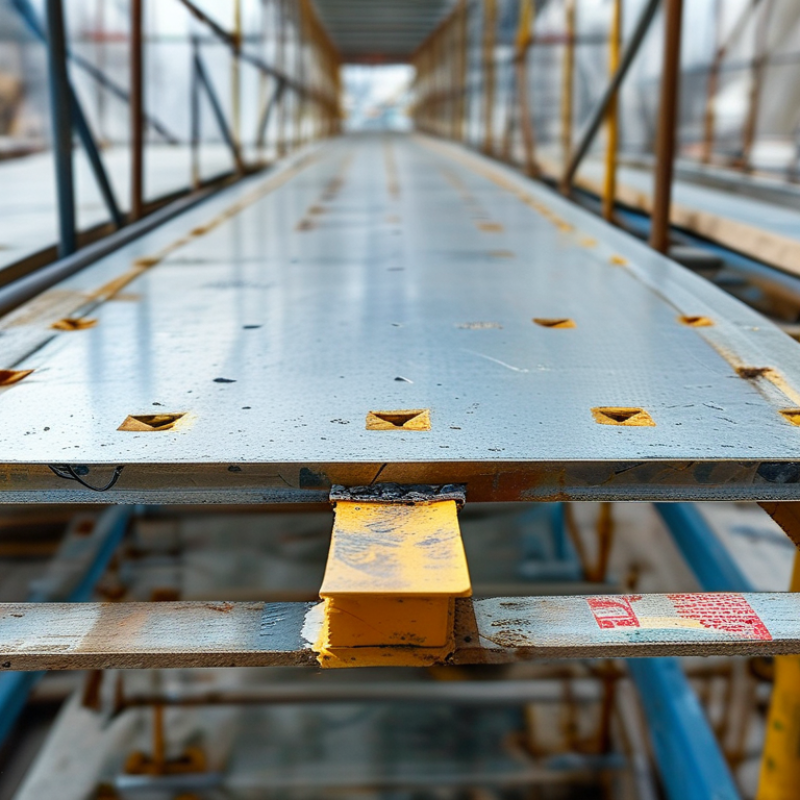
Metal scaffolding planks are temporary working platforms made from steel or aluminum. They support workers, tools, and light materials between scaffold frames. Common designs include punched surfaces, reinforced edges, and end hooks. These details improve grip and reduce movement during installation. On busy construction sites, metal planks are used for painting, masonry, maintenance, and exterior repairs. Steel versions usually provide strong load capacity, while aluminum models are easier to carry. The right choice depends on span, working height, climate, and scaffold compatibility.

Key advantages include durability, fire resistance, and better reuse than many wooden alternatives. Galvanized steel can resist moisture, although scratches may expose the base metal. That point is easy to overlook. A plank may look strong but still have bent edges, hidden corrosion, or damaged hooks. Buyers should check dimensions, surface condition, rated load, and locking details before shipment. Product documents should clearly state applicable testing and safety requirements for the destination market. Local regulations can differ, so one specification may not fit every project.

Tips: Measure the scaffold bay before ordering. Confirm the plank’s working width and maximum span. Ask for load test records and inspection photos. Check whether the surface becomes slippery when wet. Keep samples under real handling conditions when possible. Small trials often reveal awkward weight, poor fitting, or sharp edges. Perfect products are rare, and careful review prevents expensive mistakes.
Seven Metal Scaffolding Plank Types for Different Worksite Needs

7 Best Metal Scaffolding Planks for Global Buyers

Seven Metal Scaffolding Plank Types for Different Worksite Needs

Metal planks should match load, span, weather, and handling demands. OSHA requires scaffold platforms to be at least 18 inches wide. Its standard also addresses safe plank overhang and support conditions. BLS recorded 885 fatal work injuries from falls, slips, and trips in 2023. That figure makes platform selection more than a purchasing detail.

Seven practical types serve different sites. Galvanized solid-steel planks suit heavy masonry loads and long-term outdoor use. Perforated steel planks improve drainage and grip in wet areas. Aluminum planks reduce lifting strain on frequent-move projects. Hook-end planks speed installation on compatible frames.

Locking planks resist movement during repeated access. Telescopic planks fit changing bay widths, but their locking mechanism needs careful inspection. Stair-access planks support safer movement between uneven levels. No type is perfect. Aluminum can dent, while steel can corrode after coating damage.

Tips: Check the rated load, clear span, plank width, and surface condition before every shift. OSHA 1926.451 requires platforms and walkways to remain fully planked where applicable. Look for bent hooks, cracked welds, blocked perforations, and missing locks. A small defect can become a serious weakness. Keep a simple inspection record, especially when equipment moves between countries. EN 12811-1 also provides performance guidance for temporary works equipment, but local requirements may differ. Verify the receiving site’s rules before ordering.

How to Compare Load Capacity, Dimensions, and Surface Safety

7 Best Metal Scaffolding Planks for Global Buyers

How to Compare Load Capacity, Dimensions, and Surface Safety

Choosing metal scaffolding planks requires more than checking a catalogue photograph. Compare the rated working load, not only the maximum breaking load. The working load should cover workers, tools, materials, and movement. Keep a safety margin for uneven loading and changing site conditions. Ask for certified test reports and clear calculation methods. Claims without documents deserve caution.

Dimensions affect both stability and productivity. Check the plank length against the scaffold bay, including support overlap at each end. Width influences walking comfort, material storage, and the risk of stepping outside the platform. Measure twice. A small dimensional error can create dangerous gaps or unstable positioning. Confirm thickness, profile shape, end hooks, and total weight before ordering internationally.

Surface safety also needs close inspection. Expanded metal, perforated steel, and textured surfaces can improve grip while allowing rain and debris to pass through. However, very sharp patterns may damage gloves or catch footwear. Look for rounded edges, consistent perforations, and corrosion-resistant treatment. Wet, dusty, or oily conditions may reduce traction despite a good surface design. Request slip-testing information when available, and examine samples under realistic site conditions. Some comparisons remain imperfect because climate, footwear, and maintenance vary. Record those limitations instead of hiding them. Keep records. Respect local scaffold requirements and competent inspection procedures.

Global Standards, Materials, and Quality Checks for Buyers

For global buyers, a metal scaffolding plank is only as reliable as its standard, material, and inspection record. EN 12811-1 addresses working-platform performance, while AS/NZS 1577 covers metal scaffold planks in Australia and New Zealand. U.S. projects commonly reference OSHA 29 CFR 1926.451 for scaffold capacity, access, and fall protection. These frameworks differ. A certificate alone may not prove suitability.

Steel planks offer high stiffness and strong impact resistance. Galvanized surfaces can reduce corrosion, but damaged zinc exposes the base metal quickly. Aluminium planks are lighter and easier to handle. The International Aluminium Institute reports that recycling aluminium uses about 5% of the energy needed for primary production. That advantage matters when transport and repeated use are measured. Material choice should still match span, load class, temperature, and site exposure.

Small details reveal quality. Check weld continuity, plank camber, end hooks, anti-slip perforations, and sharp edges. Measure thickness at several points, not only at the center. Ask for load-test results, batch traceability, and a documented inspection method. The World Steel Association recorded about 1.89 billion tonnes of crude steel production in 2023, yet steel volume does not guarantee plank quality. I would reject bent units, even when they look repairable. No checklist catches every defect. Independent sampling is worth the extra delay.

How to Choose, Source, and Maintain Metal Scaffolding Planks

7 Best Metal Scaffolding Planks for Global Buyers

Choosing metal scaffolding planks starts with load capacity, not appearance. Check the rated working load, plank span, width, thickness, and locking method. A galvanized steel plank may suit heavy-duty work, while an aluminum plank offers easier handling. Confirm slip-resistant surfaces, drainage holes, and secure end hooks. Small details matter.

When sourcing internationally, request dimensional drawings, material certificates, load-test reports, and inspection records. Ask whether testing follows recognized local or international standards. Product photos are not enough. I once trusted a polished sample and overlooked its weak end connection. That mistake changed my purchasing checklist. Compare packaging, corrosion protection, replacement parts, and delivery conditions before placing a large order. Also verify whether the plank fits your existing scaffold system.

Maintenance begins at the worksite. Inspect every plank for bends, cracked welds, heavy rust, sharp edges, or distorted hooks. Remove damaged pieces immediately. Do not repaint over corrosion. Clean mud and cement residue with water and a suitable brush, then dry the surface fully. Store planks on level supports, away from standing water and chemical exposure. Keep them off the ground. A simple inspection log can record dates, defects, and responsible workers. In humid coastal areas, inspections may need to occur more frequently. Even strong metal can fail when ignored.

7 Best Metal Scaffolding Planks for Global Buyers - How to Choose, Source, and Maintain Metal Scaffolding Planks

Metal Plank Type Typical Material and Finish Typical Width Common Length Range Typical Indicative Mass Recommended Application Key Sourcing Checks Maintenance Priority
1. Hot-Dip Galvanized Steel Plank Formed carbon steel with a zinc coating applied after fabrication; commonly supplied with end hooks or locking heads. 210–300 mm 1.0–3.0 m Approximately 7–13 kg per metre, depending on profile and thickness. General-purpose construction, industrial maintenance, and repeated outdoor use where high stiffness and impact resistance are required. Confirm steel grade, coating thickness, weld quality, anti-lift details, dimensional tolerances, and test documentation to EN 12811-1 or the applicable national standard. High corrosion inspection
2. Perforated Anti-Slip Steel Plank Galvanized or painted steel deck with regularly formed perforations for drainage and improved wet-weather traction. 210–300 mm 1.0–3.0 m Approximately 6–12 kg per metre, depending on perforation pattern and reinforcement. Rain-exposed sites, façade work, roofing, and locations where standing water or mud may reduce foot grip. Check perforation edges, slip resistance, drainage performance, load test results, end-hook engagement, and whether the finish remains intact after forming. Clean perforations
3. Heavy-Duty Reinforced Steel Plank High-strength formed steel with reinforced ribs, deeper sections, or thicker gauge construction; usually galvanized. 250–300 mm 1.0–2.5 m Approximately 10–18 kg per metre. Heavy masonry, industrial plant maintenance, material staging, and platforms subject to concentrated loads. Verify the allowable uniformly distributed load, point-load capacity, maximum span, deflection limit, and compatibility with the scaffold system. Inspect deformation
4. Lightweight Aluminum Scaffold Plank Structural aluminum alloy with formed ribs or an extruded profile; may include replaceable end hooks. 200–300 mm 1.0–3.0 m Approximately 3–7 kg per metre, depending on profile and width. Frequent handling, interior fit-out, painting, electrical work, and projects where low lifting weight is important. Check alloy and temper, slip resistance, galvanic compatibility with steel supports, allowable deflection, end-fitting strength, and electrical-use restrictions. Check dents and cracks
5. Wide Metal Deck Plank Galvanized steel or aluminum platform panel with a wider walking surface and reinforced underside. 400–600 mm 1.0–3.0 m Approximately 10–22 kg per metre, depending on material and reinforcement. Material handling areas, façade platforms, access decks, and work zones requiring greater standing room. Confirm platform width, support spacing, allowable live load, deflection, wind exposure, guardrail compatibility, and secure anti-uplift connections. Check support seating
6. Narrow Access Steel Plank Light-to-medium gauge galvanized steel plank designed for restricted-width scaffold bays and access routes. 150–210 mm 0.7–2.5 m Approximately 5–10 kg per metre. Compact façade zones, repair work, towers, access bridges, and areas with limited clearance. Confirm that the walking width complies with local regulations, verify end-hook fit, and ensure the plank is not substituted for a wider working platform where wider access is required. Check edge damage
7. Locking or Trapdoor Metal Platform Steel or aluminum platform incorporating a hinged access panel, locking mechanism, and anti-slip walking surface. 450–600 mm overall platform width 1.5–3.0 m Approximately 15–30 kg per unit, depending on length and access-door design. Repeated vertical access between scaffold levels where a separate ladder opening would reduce productivity or usable platform space. Test the trapdoor lock, hinge durability, finger-clearance protection, flush fit, anti-slip surface, load rating, and compatibility with the access ladder. Lubricate hinges
Selection and maintenance notes: Dimensions and masses shown above are typical market ranges for comparison, not certification values for a specific product. The permitted load must be taken from the manufacturer’s tested rating for the exact span, support arrangement, plank orientation, and scaffold system. For international procurement, request drawings, material certificates, coating specifications, load and deflection test reports, inspection instructions, and compliance evidence against the project’s required standard, such as EN 12811-1 or applicable OSHA and local requirements. Before every use, inspect for cracks, bent sections, damaged hooks, missing locking parts, excessive corrosion, contamination, and unauthorized repairs; remove defective planks from service immediately.

Get In Touch

Drop Us A Message

    Our Contact Details

    • IPS Group BV | Head Office (NB), Technopol 4, 5026 SB Tilburg, The Netherlands

      IPS Group BV | Rhijnspoor 239, 2901 LB Capelle a/d IJssel, The Netherlands
    • sale@qbhardware.org
    • +31 (0) 10 303 2625