Top 10 Benefits of Using LED Strip Lights for Your Projects?
Led Strip Lights have revolutionized lighting design in various projects. According to the U.S. Department of Energy, LED lighting can save up to 75% of energy compared to traditional bulbs. This significant reduction not only lowers energy bills but also extends the lifespan of the lighting products. The versatility of LED strip lights makes them ideal for an array of applications, from home décor to commercial spaces.
Incorporating LED strip lights can enhance aesthetics and functionality. Their flexibility allows for creative installations in tight spaces or intricate designs. Research by the National Lighting Bureau shows that quality lighting improves mood and productivity. Thus, using LED strip lights can benefit both personal and professional environments. Clients are often drawn to the modern appeal of this lighting.
While the advantages are clear, the rapid market growth can sometimes lead to oversaturation. Not all products are created equal, necessitating careful selection to avoid subpar options. It's essential to consider the quality and specifications of the LED strip light to ensure reliability. Balancing aesthetics, efficiency, and functionality requires thoughtful decision-making in your projects.
Benefits of Energy Efficiency of LED Strip Lights
LED strip lights are becoming a popular choice for various projects due to their energy efficiency. According to the U.S. Department of Energy, LED lights use at least 75% less energy than traditional incandescent bulbs. This significant reduction in energy consumption translates to lower electricity bills and decreased carbon footprints for users.
LED strip lights not only consume less power, but they also have a longer lifespan. The average LED can last up to 25,000 hours, far exceeding the 1,000 hours of incandescent bulbs. This longevity means less frequent replacements, resulting in waste reduction and more savings. Incorporating these lights can lead to substantial cost savings in both residential and commercial settings.
Tips: When planning your lighting project, consider purchasing LED strips in bulk. This can lead to additional savings. Additionally, think about dimming options. Dimming can enhance energy efficiency even further. However, ensure your dimmers are compatible with LED technology.
While LED strip lights offer many benefits, potential users should note their initial costs can be higher than traditional lighting. However, over time, the savings in energy usage will outweigh this initial investment. Take your time to research and choose the right products for your specific needs.
Versatility of LED Strip Lights in Various Applications
LED strip lights have gained popularity for their versatility in various applications. These lights can be used for decorative purposes, mood lighting, and even practical tasks around the home. Their flexibility allows them to be placed in tight spaces or along curves, adapting to different designs and layouts.
In kitchen spaces, LED strip lights can enhance visibility. They can be installed under cabinets, providing direct light on countertops. This improves both functionality and aesthetics. In living areas, they can create inviting atmospheres. The ambient light contributes to a cozy environment for gatherings or relaxation. However, placement may require some foresight to avoid overpowering the space.
Outdoor uses are equally diverse. Garden pathways can benefit from subtle illumination. LED strip lights can outline the path, ensuring safety at night. Yet, exposure to the elements can lead to wear over time. Proper sealing and placement are crucial for longevity. This highlights the importance of considering both beauty and durability in design choices.
Aesthetic Enhancements with LED Strip Lighting
LED strip lights have become increasingly popular for aesthetic enhancements in various projects. Their flexible design allows for creative installation in unique spaces, enabling a personalized touch. According to a report by the National Lighting Bureau, well-implemented lighting can improve mood and productivity by 15%. This shows how light influences environments, making LED strips an excellent choice for both homes and businesses.
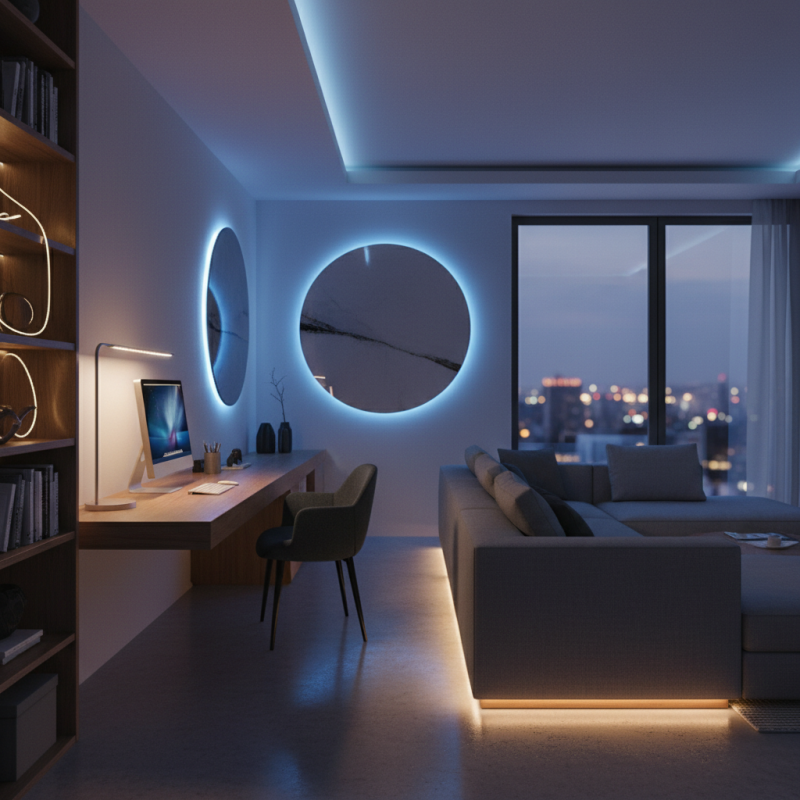
Consider highlighting architectural features with LED strip lighting. They can be installed along shelves, under cabinets, or behind televisions to create a captivating ambiance. Using warm white LEDs tends to create a cozy atmosphere, while cool white options offer a more modern feel. A study by the Lighting Research Center states that color temperature can affect perceived space size, further enhancing any area.
Tips: Always measure the space before purchasing. This avoids unnecessary waste and disappointment. Also, consider utilizing a dimmer switch. It allows you to adjust brightness as needed. While LED strips are energy-efficient, improper installation can lead to uneven light distribution. It’s vital to plan the layout carefully for the best results. Experimenting with different color combinations may yield surprising outcomes, so don’t hesitate to try new ideas.
Top 10 Benefits of Using LED Strip Lights for Your Projects
| Benefit | Description |
| Energy Efficiency | LED strip lights consume significantly less energy compared to traditional lighting, resulting in lower electricity bills. |
| Longevity | LED strip lights have a lifespan of up to 50,000 hours, reducing the frequency of replacements. |
| Flexibility | The flexible nature of LED strips allows for installation in various shapes and curves, adapting to any project design. |
| Variety of Colors | LED strip lights are available in a wide spectrum of colors, enhancing the aesthetic appeal of any space. |
| Safety | LED lights produce less heat compared to traditional bulbs, reducing the risk of burns and fire hazards. |
| Easy Installation | Many LED strip lights come with adhesive backing, making them easy to install without professional help. |
| Dimmability | Many LED strip lights can be dimmed, allowing for customized lighting intensity based on preference. |
| Eco-Friendly | LEDs contain no harmful substances like mercury, making them safe for the environment. |
| Low Voltage | LED strip lights operate on low voltage, which can enhance safety in applications. |
| Versatility | LED strips can be used in various settings including homes, commercial spaces, and outdoor areas. |
Longevity and Durability of LED Strip Lights
LED strip lights stand out for their longevity and durability, making them an excellent choice for various projects. When comparing them to traditional lighting options, LEDs can last up to 25 times longer. This means less frequent replacements and less waste over time. The tough exterior of many LED strips also protects them from accidental damage. They can withstand minor impacts without affecting performance.
In addition, LED strip lights perform well in diverse conditions. They can function effectively in both indoor and outdoor settings. Waterproof options are available for outdoor use, adding to their adaptability. However, using them in extreme temperatures can pose challenges. Careful selection based on the environment is essential. Regularly checking the lights for any wear can help maintain their impressive lifespan.
User experience shows that proper handling and installation further enhance their durability. While LEDs are durable, they are not indestructible. Overloading circuits can lead to failures, so it’s important to follow installation guidelines.
Easy Installation and Customization of LED Strip Lights
LED strip lights are gaining popularity for their versatility and aesthetic appeal. One of their standout features is easy installation. These lights come with adhesive backing, allowing you to stick them almost anywhere without the need for complex tools. This simplicity makes them ideal for DIY projects. Whether you want to illuminate shelves, cabinets, or even outdoor spaces, installation is a breeze.
Customization is another significant benefit. LED strip lights are available in a variety of colors and lengths. You can cut them to fit your specific needs. This flexibility means that your lighting can match your project perfectly, enhancing the overall look. However, cutting requires careful attention to avoid damage. The challenge lies in ensuring you cut at the right points, as this could affect functionality.
The adaptability of LED strip lights makes them a great choice for various applications, from home decor to event planning. They can create a cozy ambiance or serve as task lighting. Yet, users must be mindful of power supply requirements. A mismatch can lead to dim lights or even failure. This complexity can be frustrating, but with proper research, you can navigate it effectively.