2026 Top Offshore Technology Trends for Global Buyers

2026 Top Offshore Technology Trends for Global Buyers

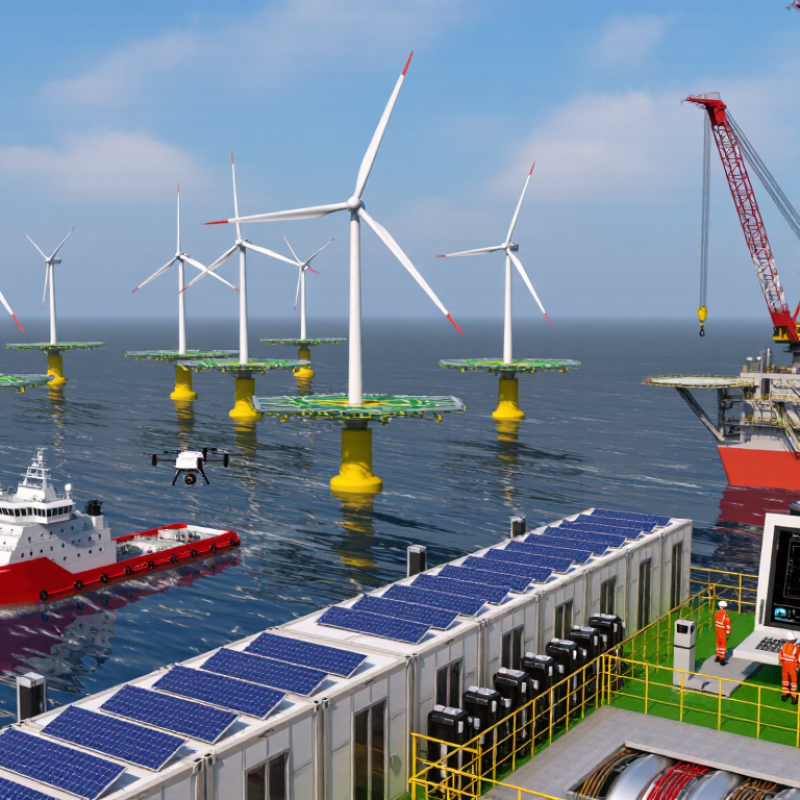
Offshore Technology is entering a practical, demanding phase. Global buyers are no longer choosing equipment based on specifications alone. They are examining uptime, cybersecurity, emissions, maintenance access, and total lifecycle cost. A subsea inspection drone may save one vessel visit, while a reliable digital twin can reveal pressure changes before a shutdown occurs. Small gains matter offshore.

Remi Eriksen, Group President and CEO of DNV, has said, “Digitalization is the key to unlocking the potential of the energy transition.” His observation remains highly relevant for 2026 procurement decisions. Buyers are evaluating autonomous inspection systems, AI-supported maintenance, floating wind platforms, low-carbon offshore power, and connected control rooms. These technologies can improve safety and operational visibility. They also introduce data-quality risks, integration problems, and new training requirements.

The strongest suppliers will provide evidence, not impressive promises. Independent certification, field performance records, transparent test methods, and clear service agreements should guide purchasing teams. Regional weather, port capacity, local skills, and regulatory expectations also affect technology value. A solution proven in calm waters may struggle in severe winter conditions. That is easy to overlook.

No forecast is perfect. Some projected systems will arrive later than expected. Others may cost more than planned. This article examines the trends most likely to influence global offshore buying in 2026, while questioning where enthusiasm exceeds practical readiness. The goal is not to praise every innovation. It is to help decision-makers compare credible performance with measurable risk.

2026 Top Offshore Technology Trends for Global Buyers

Defining Offshore Technology and Its 2026 Global Market Context

Offshore technology covers the equipment and digital systems operating in marine environments. It includes fixed and floating turbines, subsea cables, inspection robots, sensors, and corrosion controls. These assets face saltwater, strong waves, limited access, and costly repairs. A small design error can become a major scheduling problem.

The International Energy Agency’s World Energy Outlook 2024 reports that global clean-energy investment is nearly twice fossil-fuel investment. This wider shift is shaping offshore procurement in 2026. The Global Wind Energy Council’s Global Offshore Wind Report 2024 recorded more than 75 gigawatts of offshore wind capacity worldwide by the end of 2023. Growth is expected, but grid connections, vessel availability, and port capacity remain practical constraints.

Data platforms now help buyers monitor vibration, cable temperature, corrosion, and weather windows. Digital twins can support maintenance decisions before technicians travel offshore. However, software quality depends on sensor accuracy and disciplined data collection. That part is often underestimated. Floating systems may expand access to deeper waters, yet their mooring and installation costs remain difficult to predict. Buyers should examine whole-life performance, local service capability, cybersecurity controls, and supply-chain resilience rather than focusing only on purchase price. Forecasts are useful, but marine conditions remain stubbornly uncertain.

2026 Top Offshore Technology Trends for Global Buyers

Offshore technology covers equipment and digital systems used in marine energy production, including fixed-bottom and floating wind, subsea electrical infrastructure, marine construction, remote monitoring, and predictive maintenance. The chart shows cumulative offshore wind capacity at the end of 2024, providing the latest established global market baseline for 2026 technology planning.

Capacity is shown in gigawatts and rounded by region. Asia leads deployment, while Europe remains a major market for offshore grid integration, floating wind demonstrations, digital vessel operations, and asset-life optimization. Source: International Renewable Energy Agency, Renewable Capacity Statistics 2025, cross-checked with Global Wind Energy Council, Global Offshore Wind Report 2025.

Key 2026 Buyer Considerations

  • Prioritize reliable subsea cables, offshore substations, corrosion protection, and condition-monitoring systems.
  • Evaluate floating wind technology for deeper waters where fixed-bottom foundations are not technically or economically suitable.
  • Require interoperable data platforms for predictive maintenance, remote inspection, and vessel coordination.
  • Compare total lifecycle cost, installation capability, local-content requirements, and grid-connection readiness.

Mapping the Forces Driving Offshore Technology Adoption in 2026

2026 Top Offshore Technology Trends for Global Buyers

Mapping the Forces Driving Offshore Technology Adoption in 2026

Offshore technology adoption is being shaped by cost pressure, grid constraints, and harsher operating conditions. The Global Wind Energy Council reported 75.2 gigawatts of offshore wind capacity worldwide by the end of 2023. Its 2024 outlook projects roughly 410 gigawatts by 2030. That growth will demand more than larger turbines. Buyers will seek floating foundations, modular substations, and inspection systems that reduce vessel days.

The economics remain difficult. The International Renewable Energy Agency reported a global weighted average offshore wind cost of about 0.075 dollars per kilowatt-hour in 2023. That figure improved sharply from 2010, but financing, seabed surveys, and cable delays still weaken project certainty. Digital twins can help teams compare loading, corrosion, and maintenance scenarios before equipment reaches the water. Useful, but not magical. Poor sensor data can create confident mistakes.

Autonomous inspection is gaining practical value. Compact underwater vehicles can examine cable routes, scour protection, and foundation joints during short weather windows. Artificial intelligence may prioritize defects, yet engineers still need to verify abnormal readings. Floating wind also attracts attention where deep water limits fixed structures. Commercial maturity remains uneven. Buyers should test lifetime service plans, cybersecurity controls, spare-parts access, and local repair capability. The cheapest quotation may become expensive after one failed export cable.

2026 Top Offshore Technology Trends for Global Buyers

Mapping the Forces Driving Offshore Technology Adoption in 2026
Technology Trend Verified Market Baseline or Policy Signal Primary Adoption Driver in 2026 Buyer Data Dimensions Commercial Readiness Recommended Procurement Focus
Floating Offshore Wind Floating projects remain at pilot and early-commercial scale, while fixed-bottom offshore wind dominates installed capacity. Floating systems enable development in deeper waters where fixed foundations are technically or economically unsuitable. Access to stronger wind resources, limited shallow-water space, and national offshore renewable-energy targets. Water depth; platform type; mooring configuration; dynamic-cable design; port requirements; installation vessel availability; levelized cost of electricity. Emerging to early commercial Prioritize modular floaters, proven mooring systems, installation methodology, towing procedures, and lifecycle maintenance plans.
Larger Turbines and High-Voltage Export Offshore projects are moving toward higher-capacity turbines and higher-voltage export systems to reduce the number of foundations, cables, and offshore electrical components per megawatt. Pressure to lower balance-of-plant costs and reduce losses over long transmission distances. Rated power; rotor diameter; array voltage; export voltage; cable losses; substation footprint; grid-code compliance. Commercially established Evaluate complete electrical-system compatibility, spare-part availability, power-quality performance, and grid-connection risk.
Digital Twins and Predictive Maintenance Remote condition monitoring, vibration analysis, drone inspection, and digital-twin platforms are increasingly used to support offshore asset management and reduce unnecessary offshore visits. High vessel and helicopter costs, difficult weather windows, aging assets, and the need to improve availability. Unplanned downtime; mean time between failures; inspection hours; false-alarm rate; data latency; model accuracy; maintenance cost per megawatt. Commercially established Require open data interfaces, cybersecurity controls, explainable analytics, data ownership terms, and measurable maintenance-performance guarantees.
Autonomous and Remote Offshore Operations Uncrewed surface vessels, remotely operated vehicles, automated inspection tools, and remote-operation centers are being deployed for surveying, subsea inspection, and routine monitoring. Personnel safety, lower operating expenditure, reduced emissions from support vessels, and improved access during marginal weather conditions. Autonomy level; endurance; sensor range; navigation redundancy; remote-control latency; intervention frequency; safety-case maturity. Application-specific Purchase systems with clear fallback modes, human override, validated navigation, remote diagnostics, and documented regulatory approval pathways.
Subsea Electrification and Low-Carbon Power Electrification of offshore equipment and power supplied from shore or renewable sources can reduce the use of offshore combustion generators and lower operational emissions. Carbon-reduction commitments, fuel-cost exposure, air-quality requirements, and offshore energy-efficiency targets. Electrical load; voltage level; power availability; conversion efficiency; emissions avoided; backup duration; harmonic performance. Commercially established for selected applications Assess total installed capacity, redundancy, hazardous-area compliance, battery integration, and compatibility with existing offshore power systems.
Offshore Carbon Capture and Storage Global carbon-capture facilities had approximately 50 million tonnes per year of operational capture capacity in 2024, with a much larger project pipeline. Offshore storage is being assessed in depleted fields and saline formations. Industrial decarbonization, emissions regulations, shared transport infrastructure, and demand for permanent geological storage. Capture rate; CO₂ purity; compression pressure; injection rate; storage capacity; monitoring frequency; leakage risk; transport distance. Early commercial and project-specific Verify storage characterization, monitoring plans, permitting status, chain-of-custody controls, and long-term liability arrangements.
Offshore Hydrogen and Power-to-X Low-emissions hydrogen accounted for less than 1% of global hydrogen production in 2023. Offshore hydrogen projects therefore remain primarily demonstration or early-development opportunities. Use of surplus renewable power, reduced electricity-grid congestion, and demand for low-carbon fuels and industrial feedstocks. Electrolyzer efficiency; water treatment; hydrogen output; storage pressure; transport method; intermittency; safety-zone requirements. Demonstration to early commercial Use stage-gated procurement, confirm offtake arrangements, and test offshore safety, maintenance, water supply, and export logistics before scale-up.
Methane Detection and Leak Reduction Satellite, aircraft, drone, and fixed-sensor monitoring is improving the detection of methane emissions from offshore production and processing equipment. Methane regulations, emissions reporting, product-market requirements, and the high short-term warming impact of methane. Detection threshold; measurement frequency; source localization; repair response time; emissions intensity; data verification level. Commercially available Specify continuous or periodic monitoring requirements, independent measurement verification, response-time targets, and auditable reporting formats.
Offshore Cybersecurity and Zero-Trust Architecture Greater connectivity between operational technology, remote-control systems, cloud platforms, and supply-chain networks expands the potential cyberattack surface of offshore assets. Critical-infrastructure regulation, ransomware risk, remote operations, and increasing dependence on digital control systems. Network segmentation; patching time; privileged-access controls; backup recovery time; incident-detection time; supplier security maturity. Essential capability Include IEC 62443-aligned controls, asset inventories, secure remote access, offline recovery procedures, penetration testing, and supplier incident obligations.
Circularity and Low-Carbon Materials Offshore infrastructure requires large quantities of steel, cement, copper, composites, and cable materials. Lifecycle carbon accounting and end-of-life planning are becoming more important in procurement decisions. Embodied-carbon reporting, waste-reduction targets, material-security concerns, and increasing decommissioning activity. Embodied carbon; recycled content; design life; repairability; reuse potential; recycling rate; decommissioning cost. Commercially available Request product-carbon declarations, material traceability, design-for-disassembly requirements, recycling plans, and whole-life cost comparisons.
Port, Vessel, and Supply-Chain Digitization Offshore projects face constraints in specialized vessels, heavy-lift equipment, port space, cable manufacturing, and construction windows. Digital logistics tools are increasingly used to coordinate these resources. Project delays, inflation, constrained vessel availability, weather dependence, and the need for better schedule visibility. Installation time; vessel utilization; port throughput; weather downtime; inventory turnover; schedule variance; logistics emissions. Commercially established Integrate digital scheduling, supplier visibility, weather forecasting, contingency inventory, and contract provisions for delay and substitution risks.
Data note: Market baselines and policy signals are based on publicly reported information from the International Energy Agency, International Renewable Energy Agency, International Maritime Organization, European Commission, Global CCS Institute, and recognized international technical standards. The 2026 adoption outlook is an analytical interpretation of these verified signals; it is not a guaranteed market forecast.

Examining the Leading Offshore Technology Trends for Global Buyers

Offshore technology is moving toward safer, more connected, and lower-emission operations. Global buyers are examining subsea robots, digital twins, remote inspection, and electrified platform systems. These tools can reduce vessel trips and expose equipment problems earlier. A camera-guided robot may inspect a pipeline while engineers review live footage from shore. However, performance depends on water depth, weather, network quality, and crew training. No system works perfectly everywhere.

Tips: Ask for field evidence, not attractive forecasts. Check inspection accuracy, maintenance needs, data ownership, and cybersecurity controls. Require independent testing against recognized maritime and industrial standards. Also, calculate the full operating cost. A cheaper device may need frequent specialist support.

Interoperability is becoming a decisive buying factor. Equipment should exchange data with existing control, maintenance, and emergency systems. Buyers also value modular designs because offshore assets operate for decades. A replaceable sensor or software module can prevent a major retrofit. Artificial intelligence may improve predictive maintenance, but poor historical data can produce confident errors. Human review remains necessary, especially during unusual sea conditions or safety-critical decisions. Procurement teams should compare vendors through controlled trials, documented assumptions, and measurable service targets. My practical view is simple: technology should fit the asset, not force the asset to fit the technology. That sounds obvious, yet rushed projects still overlook it.

Evaluating Offshore Solutions by Performance, Cost, Security, and Scale

2026 Top Offshore Technology Trends for Global Buyers

Evaluating Offshore Solutions by Performance, Cost, Security, and Scale

Global buyers are examining offshore systems with sharper questions than before. Performance is no longer measured by peak output alone. Buyers should review uptime, recovery speed, energy use, and maintenance access. A subsea sensor may perform well in calm trials but struggle during rough weather. Field evidence matters.

Cost evaluation must include installation vessels, specialist crews, replacement parts, and software updates. Our early estimates were too optimistic when transport delays extended a project by several weeks. A lower purchase price can create higher operating costs. Transparent lifecycle models provide a more reliable comparison.

Security is operational. Offshore equipment needs encrypted communications, controlled access, audit logs, and tested incident procedures. Physical protection also matters, especially for remote platforms with limited staff. Buyers should request independent testing and clear responsibility for updates.

Scale changes everything. A solution designed for one platform may fail across twenty sites because training, data management, and spare inventory grow quickly. Standard interfaces can support expansion, but they may reduce flexibility. That trade-off deserves honest review.

Performance, cost, security, and scale should be tested together, not in separate procurement stages.

Assessing Regulatory, Supply Chain, and Sustainability Considerations

2026 Top Offshore Technology Trends for Global Buyers

Regulation is becoming a purchasing specification, not a legal footnote.

The 2023 IMO GHG Strategy targets net-zero greenhouse gas emissions from international shipping by around 2050. It also sets indicative reductions of 20–30% by 2030 and 70–80% by 2040, compared with 2008 levels. Buyers should request verified fuel, emissions, and maintenance records before signing contracts. A low-carbon claim without measurable evidence remains weak.

Supply chains will favor equipment that survives disruption.

UNCTAD’s Review of Maritime Transport 2024 states that shipping carries over 80% of global merchandise trade. Delays can therefore affect turbines, subsea cables, sensors, and replacement seals. Suppliers with regional inventory and tested alternatives may reduce downtime. Digital tracking should connect customs records, factory inspections, and port delivery data. It sounds simple. It rarely is.

Sustainability assessments must examine the whole asset life cycle.

The International Energy Agency’s Renewables 2024 report expects renewable capacity to expand rapidly through 2030, increasing pressure on materials, vessels, and skilled labor. Buyers should measure steel content, repairability, vessel fuel use, and end-of-life recovery. Corrosion sensors and predictive maintenance can extend service intervals, but software quality still depends on clean field data. My concern is practical: many procurement teams measure installation emissions, while ignoring repeated offshore transfers and emergency repairs. That gap deserves harder questioning.

Get In Touch

Drop Us A Message

    Our Contact Details

    • IPS Group BV | Head Office (NB), Technopol 4, 5026 SB Tilburg, The Netherlands

      IPS Group BV | Rhijnspoor 239, 2901 LB Capelle a/d IJssel, The Netherlands
    • sale@qbhardware.org
    • +31 (0) 10 303 2625