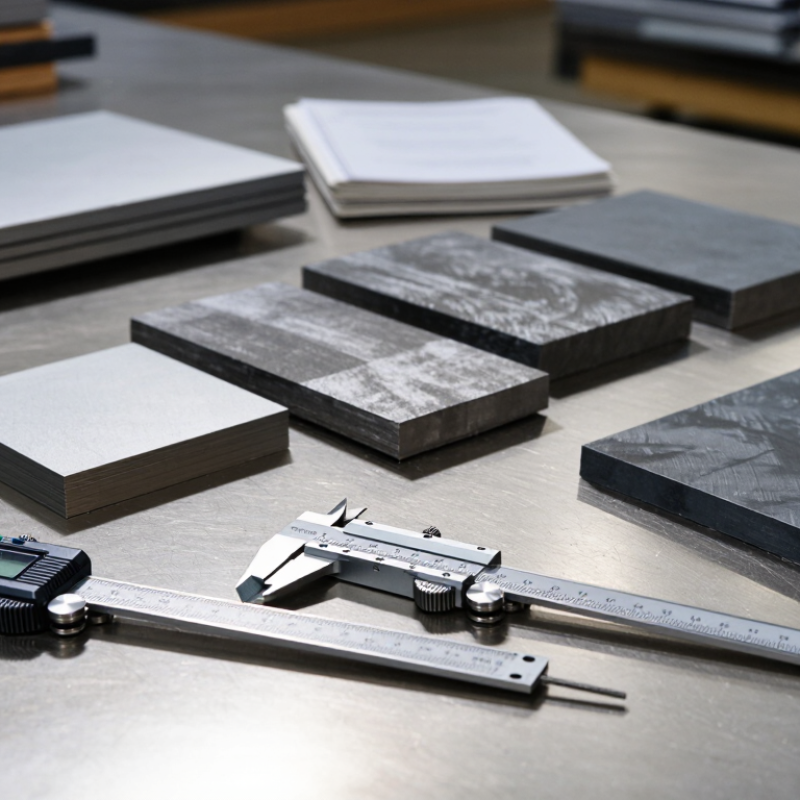
| Commercially Pure Niobium Plate | Niobium balance; controlled interstitial elements such as oxygen, nitrogen, carbon and hydrogen. | Approximately 0.5–50 mm; thicker sections are normally produced to order. | Excellent corrosion resistance, good ductility and weldability, melting point approximately 2,468°C, density approximately 8.57 g/cm³. | Chemical-processing equipment, sputtering targets, superconducting components, laboratory and vacuum equipment. | Positive material identification, chemical analysis, thickness mapping, surface inspection, flatness, tensile testing and ultrasonic examination for critical thicknesses. | Ability to control interstitial impurities, traceability from melt to plate, certified test reports and documented vacuum or inert-gas processing when required. |
| Niobium–1% Zirconium Plate | Approximately 1% zirconium, balance niobium; exact limits depend on the agreed material specification. | Approximately 1–40 mm. | Higher strength and improved creep resistance than commercially pure niobium while retaining useful corrosion resistance and fabricability. | High-temperature components, vacuum-furnace parts, nuclear and aerospace research equipment, and corrosion-resistant fabrications. | Alloy chemistry, tensile properties at the specified test temperature, grain structure, weld qualification, dimensional tolerances and non-destructive testing. | Consistent zirconium control, heat-treatment records, test-method alignment, export documentation and proven capability for repeat lots. |
| Niobium–10% Hafnium–1% Titanium Plate | Nominally 10% hafnium and 1% titanium, balance niobium; commonly referred to as a C-103-type alloy. | Approximately 0.8–25 mm; thicker plate may require special rolling schedules. | High-temperature strength, useful creep resistance and good performance in vacuum or controlled atmospheres; oxidation protection is normally required in air at elevated temperature. | Rocket and propulsion hardware, thermal shields, high-temperature fixtures and aerospace test components. | Hafnium and titanium analysis, tensile and creep data where applicable, grain-size evaluation, weld-zone inspection, surface condition and ultrasonic testing. | High-temperature manufacturing experience, control of oxygen and other interstitials, documented furnace atmosphere, weld procedure qualification and lot-level traceability. |
| Niobium–Tungsten–Zirconium Plate | Typical compositions use several percent tungsten with a smaller zirconium addition; the exact grade must be specified by purchase order. | Approximately 2–30 mm. | Higher elevated-temperature strength than commercially pure niobium; heavier alloying can reduce room-temperature formability and increase fabrication requirements. | High-temperature structural parts, furnace hardware, experimental aerospace components and specialized thermal systems. | Complete alloy analysis, hardness or tensile verification, edge cracking, internal discontinuities, dimensional stability and weldability assessment. | Ability to produce homogeneous alloy plate, control rolling reductions, provide process records and meet agreed mechanical-property ranges. |
| Cold-Rolled Niobium Sheet and Thin Plate | Commercially pure niobium or a specified niobium alloy, supplied in a cold-worked or annealed condition. | Approximately 0.05–3 mm. | Good thickness uniformity and surface finish; condition strongly affects hardness, ductility, springback and forming behavior. | Electronic components, thin vacuum parts, laboratory assemblies, diaphragms and formed precision components. | Micrometer or coordinate-measuring checks, surface roughness, pinholes, scratches, burrs, hardness, bend testing and visual inspection under controlled lighting. | Control of annealing condition, surface-protection film, coil-to-sheet traceability, packaging quality and capability to maintain tight thickness tolerances. |
| Hot-Rolled Heavy Niobium Plate | Commercially pure niobium or a specified niobium alloy, supplied in hot-rolled, annealed or stress-relieved condition. | Approximately 10–100 mm, subject to mill capability and final-use requirements. | Suitable for machining and structural fabrication; internal soundness, residual stress and flatness become increasingly important as thickness rises. | Large vacuum components, furnace structures, research equipment and machined high-temperature parts. | Ultrasonic testing, thickness grid measurements, flatness, squareness, surface-breaking indications, macrostructure and residual-stress control. | Large-format rolling capability, qualified NDT personnel, repair and rejection procedures, lifting protection and export-grade moisture-resistant packaging. |
| Custom-Cut and Precision-Machined Niobium Plate | Any approved niobium grade, with chemistry and temper defined before cutting or machining. | Based on the parent plate; finished dimensions commonly range from small laboratory pieces to large engineered panels. | Reduces downstream processing but introduces requirements for dimensional accuracy, burr control, heat input and contamination prevention. | Prototype parts, vacuum flanges, targets, brackets, shields and complex experimental assemblies. | Drawing review, dimensional inspection, edge and hole quality, surface roughness, cleanliness, material traceability and final visual release. | Engineering-change control, calibrated inspection equipment, contamination-control procedures, first-article inspection and protective packaging. |