
2026 Best Hood Filter for Commercial Kitchens?

Choosing the best Hood Filter for a commercial kitchen is not simply a matter of buying the thickest or cheapest option. The right choice depends on hood dimensions, cooking volume, equipment compatibility, and the airflow range specified by the hood manufacturer. Grease capture matters. So does pressure drop. A filter that captures grease effectively but restricts airflow may affect exhaust performance and comfort near the cooking line.

This guide compares common filter materials and designs, including stainless steel baffle filters and mesh options where suitable. It also considers fit, cleaning effort, durability, and replacement costs. Check the product specifications before ordering; a filter that looks right may not fit the frame or suit the system. Small details matter, such as the direction of a baffle’s channels and whether a filter can be removed safely for routine cleaning. No single model is best for every kitchen. Menu, appliance output, and daily cleaning habits can change what works in practice. That sounds obvious, but it is easy to overlook when comparing prices alone. We’ll outline what to verify, which trade-offs deserve attention, and when manufacturer guidance is more useful than a generic recommendation. Because filter performance depends on the complete exhaust setup, treat product claims as a starting point, not a guarantee. A careful choice can support cleaner operation; it cannot replace proper maintenance.
2026 Best Hood Filter for Commercial Kitchens?

What a Commercial Kitchen Hood Filter Does

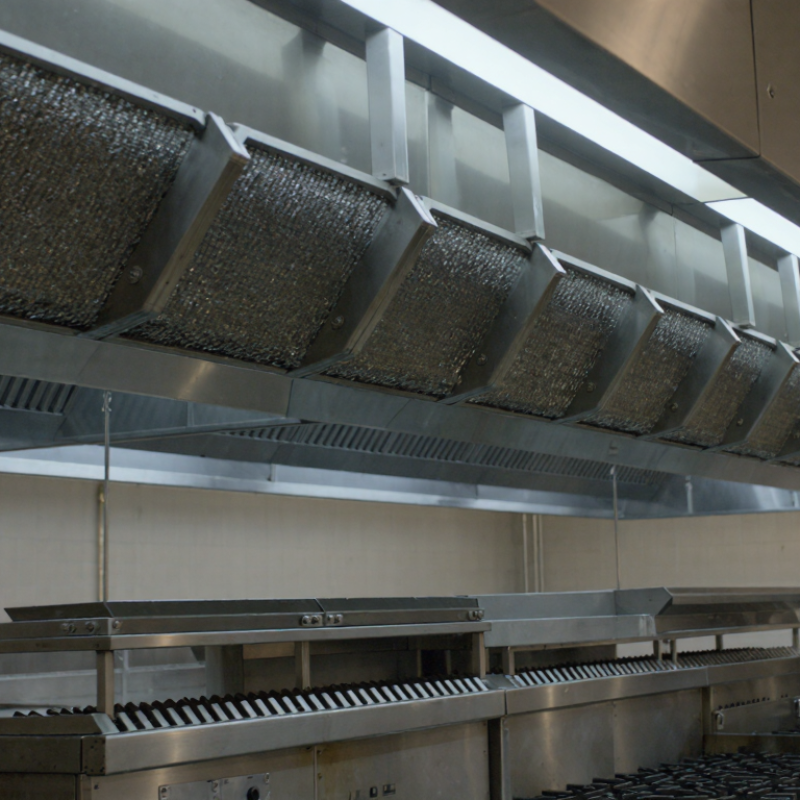
A commercial kitchen hood filter sits between the cooking line and the exhaust duct. Its main job is to capture airborne grease before it travels deeper into the ventilation system. As hot vapors rise from a fryer or grill, the filter redirects airflow through narrow channels. Grease droplets strike the metal surfaces and drain into a collection area. Small part. Important work.

This reduces grease buildup in ducts and fans, which can support safer, steadier exhaust performance. A filter does not eliminate fire risk, smoke, or cooking odors, and it cannot replace regular hood and duct cleaning. It is easy to overestimate what the filter alone can do. For a practical fit, check the hood’s specified filter size and type, then consider the kitchen’s cooking volume. Stainless steel models are often sturdy; lighter materials may suit other setups. The right choice depends on compatibility, not appearance.

Routine checks matter. Look for loose handles, bent edges, clogged channels, or grease that remains after washing. A filter can look clean at a glance and still restrict airflow. Clean it according to the equipment maker’s instructions and the kitchen’s actual workload; a busy fryer station may need attention more often than a light-use line. Even experienced staff can miss a damaged corner. That small gap deserves a closer look.

Main Types of Commercial Hood Filters

Main Types of Commercial Hood Filters

Commercial hood filters do more than catch visible grease; they help limit grease carried into exhaust ducts. Baffle filters, commonly made from stainless steel, use angled channels to collect grease as airflow changes direction. They are durable and removable for washing, but still need frequent cleaning.

Mesh filters trap grease in layers of metal screen. They can clog faster, so use them only where the hood design permits. Small detail matters. UL 1046 addresses grease filters for exhaust ducts; check a filter’s listing and compatibility before purchase.

Some kitchens use water-wash systems, which clean filters with automatic spray cycles. These require suitable plumbing and regular maintenance. Charcoal filters help control odors, but do not replace grease filters.

NFPA’s 2023 report, Structure Fires in Eating and Drinking Establishments, estimated 7,410 such fires annually from 2017 to 2021. Cooking equipment was involved in 61 percent. That scale puts routine care in perspective.

Match the filter to cooking volume, airflow, hood design, and listed specifications. Measure the frame before ordering. One caution: even a suitable filter can perform poorly if it fits loosely or cleaning gets skipped.

How to Compare Hood Filter Performance and Materials

A commercial hood filter should be compared by grease capture, airflow resistance, durability, and cleaning effort—not by material alone. Baffle filters redirect airflow through angled channels, helping separate grease while maintaining a steady path for exhaust. Mesh filters use layered screens, but heavy cooking loads can clog them faster and restrict airflow. Fit matters.

Stainless steel resists corrosion and repeated washing, making it practical for busy kitchens. Aluminum is lighter and often easier to handle, though rough cleaning can bend its frame. Check the filter’s dimensions, channel depth, welds, and handle before comparing prices. Look closely. A loose edge can let grease-laden air bypass the filter, even when the material performs well.

Ask suppliers for pressure-drop and grease-removal data under stated test conditions; figures without test methods are difficult to compare. Match those details to the cooking line: a fryer-heavy menu creates different demands than a small sauté station. Cleaning access matters too; filters that are difficult to remove may be cleaned less consistently. Still, no single material wins everywhere. Menu, exhaust volume, wash routine, and correct sizing all shape real performance. “Better” may mean lower airflow resistance or easier maintenance—not necessarily both.

2026 Best Hood Filter for Commercial Kitchens? How to Compare Hood Filter Performance and Materials

Typical initial pressure drop by filter type at a comparable face velocity of 2.5 m/s. Lower pressure drop can reduce airflow resistance, but it does not by itself indicate better grease capture.

Values are representative planning estimates, not results from a single standardized product test. Actual pressure drop depends on filter dimensions, construction, airflow, and loading. Compare certified grease-capture performance, fit, cleanability, and corrosion resistance alongside pressure drop.

Key Factors for Choosing a Hood Filter in 2026

2026 Best Hood Filter for Commercial Kitchens?

Key Factors for Choosing a Hood Filter in 2026

Start with the hood’s specifications, not a product photo. Filter dimensions, thickness, and installation angle must match the hood. Even a small gap can let grease bypass the filter.

Fit matters.

Next, consider airflow and cooking volume. A filter that creates too much resistance may weaken capture at the hood, while a lightly built option may not handle heavy grease loads well. Check the exhaust system’s requirements and the filter’s stated performance before buying. The best choice depends on the appliances, menu, and hours of operation—not just the kitchen’s size.

Material affects durability and upkeep. Stainless steel baffle filters are commonly chosen for busy kitchens because their rigid channels capture grease and can be removed for cleaning. Mesh filters may suit some setups, but they need careful compatibility checks. Check the details. A thicker filter is not automatically better; it could restrict airflow if the system was not designed for it. Make sure staff can remove and reinstall each filter safely, without tools or awkward lifting. Cleaning access matters. Inspect for bent edges, loose seams, and grease buildup during routine maintenance. It is easy to focus on purchase price and overlook labor, replacement frequency, and fit after repeated cleaning. A simple maintenance log can reveal whether the selected filter is holding up in real service.

Installation, Cleaning, and Replacement Requirements

Choose a hood filter that matches the hood’s dimensions, airflow needs, and cooking volume. Check the equipment manual before ordering; a filter that fits loosely can let grease bypass its surface. During installation, switch off the fan and seat every edge securely. Follow the marked airflow direction, if provided. No gaps. If the frame is bent or the fit remains uncertain, ask a qualified technician to inspect it.

Tips: Keep a spare filter on hand. Label the date of installation, and note when cleaning is due. Small details matter.

Cleaning frequency depends on menu, cooking hours, and visible grease buildup. Remove filters carefully, then clean them using the method approved for their material. Avoid harsh chemicals or forceful scrubbing that could damage the mesh or frame. Let each filter dry fully before reinstalling it. A damp filter may collect grime faster. Inspect for cracks, loose welds, corrosion, or persistent blockage; replace damaged filters rather than trying to patch them. There is no single schedule that fits every kitchen, so use the manufacturer’s guidance and applicable local fire and ventilation requirements. A quick visual check helps, though it cannot replace routine cleaning.

Get In Touch

Drop Us A Message

    Our Contact Details

    • IPS Group BV | Head Office (NB), Technopol 4, 5026 SB Tilburg, The Netherlands

      IPS Group BV | Rhijnspoor 239, 2901 LB Capelle a/d IJssel, The Netherlands
    • sale@qbhardware.org
    • +31 (0) 10 303 2625